1. Specifications Comparison
| Feature | Category | Nothing Phone (2) | Xiaomi Redmi 13 | Practical Impact |
|---|---|---|---|---|
| Dimensions | Design | 162.1 x 76.4 x 8.6 mm, 201.2g | 168.6 x 76.3 x 8.3 mm, 205g | The Redmi 13 is slightly larger and heavier, potentially less comfortable for one-handed use. |
| Build | Design | Build materials are not specified for either phone, limiting comparison. | ||
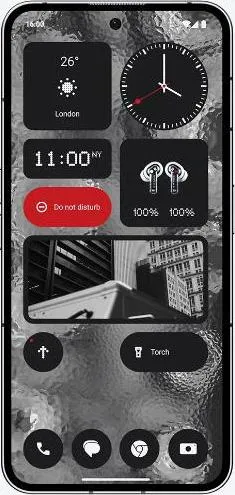
| Display Type | Display | LTPO OLED, 1B colors, 120Hz | IPS LCD, 90Hz | The Phone (2)'s OLED offers superior contrast, deeper blacks, and potentially better power efficiency due to LTPO. Its higher refresh rate results in smoother animations. |
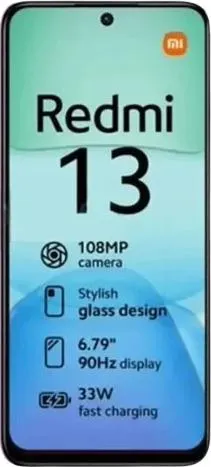
| Display Size & Resolution | Display | 6.7", 1080x2412 | 6.79", 1080x2460 | Negligible difference in size and sharpness. |
| Peak Brightness | Display | 1600 nits | 550 nits (typical), Unknown Peak | The Phone (2) will be significantly more readable in direct sunlight. |
| Chipset | Performance | Snapdragon 8+ Gen 1 (4nm) | MediaTek Helio G91 Ultra (12 nm) | The Phone (2)'s Snapdragon 8+ Gen 1 provides significantly better performance in demanding tasks like gaming and multitasking. |
| CPU & GPU | Performance | Octa-core (1x3.0 GHz Cortex-X2 & 3x2.5 GHz Cortex-A710 & 4x1.80 GHz Cortex-A510), Adreno 730 | Octa-core (2x2.0 GHz Cortex-A75 & 6x1.8 GHz Cortex-A55), Mali-G52 MC2 | The Phone (2) offers a more powerful CPU and GPU architecture, translating to smoother performance and better gaming capabilities. |
| RAM & Storage | Performance | 12GB RAM, 256/512GB Storage | 8GB RAM, 256 GB Storage | The Phone (2) offers more RAM, enabling better multitasking. |
| Battery Capacity | Battery | 4700 mAh | 5030 mAh | The Redmi 13 has a larger battery capacity, potentially offering longer battery life. However, real-world usage will depend on other factors like display and processor efficiency. |
| Charging Speed | Battery | Not specified | Not specified | Charging speed comparison is not possible due to missing information. |
| Main Camera | Camera | Not specified | Not specified | Camera quality comparison is impossible without sensor details and aperture information. |
| Video Recording | Camera | Up to 4K@60fps with OIS/EIS | 1080p@30fps | The Phone (2) offers superior video recording capabilities with higher resolution and frame rates, along with stabilization. |
| OS & Updates | Software | Android 13, upgradable to 16 | Android 14 | Both phones run relatively recent Android versions. The Phone (2) has a confirmed longer update cycle. |
| Sensors | Other | Accelerometer, gyro, proximity, compass, Fingerprint (under display) | Accelerometer, compass, Fingerprint (side-mounted) | The Phone (2) includes a gyroscope for AR applications and gaming. |
| Price | Other | Medium | Low | The Redmi 13 is significantly cheaper. |
2. Key Differences Analysis
Nothing Phone (2) Advantages:
- Superior Display: OLED with higher refresh rate and brightness.
- Significantly Better Performance: More powerful chipset for demanding tasks and gaming.
- Superior Video Recording: Higher resolution and frame rate.
- More RAM: Improved multitasking.
Xiaomi Redmi 13 Advantages:
- Larger Battery: Potentially longer battery life.
- Lower Price: More budget-friendly.
Trade-offs:
- The Phone (2) prioritizes performance and display quality but comes at a higher price.
- The Redmi 13 prioritizes battery life and affordability but compromises on performance and display quality.
3. User Profiles & Recommendations
Nothing Phone (2): Users who value performance, a premium display, and smooth user experience. Suitable for gaming, content creation, and multitasking.
Xiaomi Redmi 13: Budget-conscious users who prioritize battery life and basic functionality. Suitable for everyday tasks like browsing, social media, and communication.
4. Decision Framework
Key Questions:
- What is your budget? The Redmi 13 is a significantly cheaper option.
- What are your primary use cases? Gaming and demanding tasks favor the Phone (2).
- How important is display quality? The Phone (2) offers a vastly superior display.
My Choice: Nothing Phone (2)
While the Redmi 13 offers excellent value for its price, the Nothing Phone (2)'s superior performance, stunning display, and extended software support make it a more compelling choice for me. The difference in price is justifiable considering the significantly improved user experience. I prioritize smooth performance, a vibrant display, and future-proofing through software updates, all of which the Phone (2) delivers. The Redmi 13 is a good budget option, but the compromises in performance and display are too significant for my personal needs.
