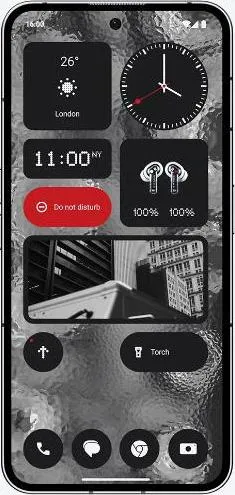

1. Specifications Comparison
| Feature | Category | Nothing Phone (2) | Xiaomi Poco C65 | Practical Impact |
|---|---|---|---|---|
| Dimensions | Design | 162.1 x 76.4 x 8.6 mm, 201.2g | 168 x 78 x 8.1 mm, 192g | The Poco C65 is slightly larger and lighter. The Nothing Phone (2) might feel slightly denser in hand. |
| Build | Design | Glass front, aluminum frame | Unspecified | Material differences impact durability and premium feel. Lack of information on the Poco C65 limits comparison. |
| Display Type | Display | 6.7" LTPO OLED, 1B colors, 120Hz | 6.74" IPS LCD, 90Hz | The Nothing Phone (2)'s OLED offers superior contrast, deeper blacks, and potentially better power efficiency. Its 120Hz refresh rate provides smoother animations and scrolling compared to the Poco C65's 90Hz. |
| Resolution | Display | 1080 x 2412 (394 ppi) | 720 x 1600 (260 ppi) | The Nothing Phone (2) has a significantly sharper display due to its higher resolution and pixel density. Text and images will appear clearer and more detailed. |
| Peak Brightness | Display | 1600 nits | 600 nits (HBM) | The Nothing Phone (2) can get much brighter, making it easier to use outdoors in direct sunlight. |
| Chipset | Performance | Snapdragon 8+ Gen 1 (4nm) | MediaTek Helio G85 (12nm) | The Snapdragon 8+ Gen 1 in the Nothing Phone (2) is significantly more powerful, enabling smoother multitasking, faster app loading, and better gaming performance. |
| CPU | Performance | Octa-core (1x3.0 GHz Cortex-X2 & 3x2.5 GHz Cortex-A710 & 4x1.80 GHz Cortex-A510) | Octa-core (2x2.0 GHz Cortex-A75 & 6x1.8 GHz Cortex-A55) | The Nothing Phone (2)'s CPU architecture provides a substantial performance advantage in demanding tasks. |
| GPU | Performance | Adreno 730 | Mali-G52 MC2 | The Adreno 730 offers significantly better graphics performance for gaming and visually demanding applications. |
| RAM & Storage | Performance | 12GB RAM, 256/512GB storage | 8GB RAM, 256GB storage | The Nothing Phone (2) offers more RAM, potentially improving multitasking performance. Both have ample storage. |
| Battery | Battery | 4700 mAh | 5000 mAh | The Poco C65 has a slightly larger battery capacity, potentially offering longer battery life. However, real-world usage will depend on software optimization and usage patterns. |
| Charging Speed | Battery | Not specified | Not specified | Charging speed comparison is impossible without this information. |
| Main Camera | Camera | Not specified | Not specified | Camera comparison is impossible without detailed sensor and lens information. |
| Video Recording | Camera | 4K@30/60fps, 1080p@30/60fps (with OIS/EIS) | 1080p@30fps | The Nothing Phone (2) supports higher resolution video recording at various frame rates and benefits from optical and electronic image stabilization (OIS/EIS) for smoother footage. |
2. Key Differences Analysis
Nothing Phone (2) Advantages:
- Significantly superior performance: The Snapdragon 8+ Gen 1 and Adreno 730 offer a massive performance advantage for demanding tasks and gaming.
- Much better display: The OLED display with 120Hz refresh rate and higher resolution provides a vastly improved visual experience.
- Brighter Screen: Superior outdoor visibility.
- Superior Video Recording: Higher resolution, frame rates, and stabilization.
Xiaomi Poco C65 Advantages:
- Potentially longer battery life: The larger 5000mAh battery may last longer on a single charge, but this depends on usage patterns and software.
- Lower price: Belonging to a lower price range, it offers better affordability.
3. User Profiles & Recommendations
Nothing Phone (2): Ideal for users who prioritize performance, a premium display, and smooth user experience. Suitable for demanding tasks like gaming, content creation, and multitasking.
Xiaomi Poco C65: Best suited for budget-conscious users who prioritize basic functionality, long battery life, and affordability over high-end features. Good for casual usage like web browsing, social media, and communication.
4. Decision Framework
Key Questions for Buyers:
- What is your budget? The Poco C65 is a budget option, while the Nothing Phone (2) is a mid-range device.
- What are your primary use cases? For demanding tasks, the Nothing Phone (2) is essential. For basic usage, the Poco C65 might suffice.
- How important is display quality and performance? The Nothing Phone (2) significantly outperforms the Poco C65 in these areas.
My Choice
I would choose the Nothing Phone (2). While the Poco C65 offers a larger battery and lower price, the significant performance difference, vastly superior display, and brighter screen of the Nothing Phone (2) are far more important to me. I value a smooth and responsive user experience, which the Snapdragon 8+ Gen 1 and 120Hz OLED display deliver. The higher resolution and brightness also contribute significantly to daily usability. The price difference is justifiable for the substantial upgrade in overall quality and user experience. While battery life is important, I'd prioritize performance and display quality and supplement with power banks or faster charging if needed.
