
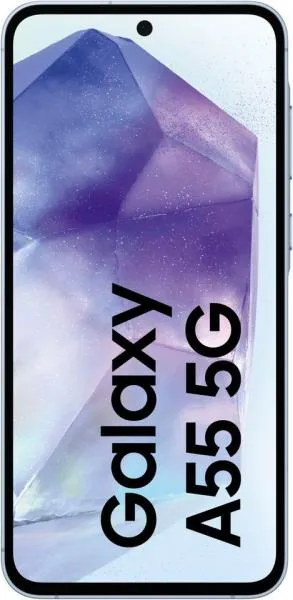
1. Specifications Comparison
| Feature | Category | Nothing Phone (2) | Samsung Galaxy A55 | Practical Impact |
|---|---|---|---|---|
| Dimensions | Design | 162.1 x 76.4 x 8.6 mm | 161.1 x 77.4 x 8.2 mm | Virtually identical in hand feel; A55 slightly thinner. |
| Weight | Design | 201.2 g | 213 g | Noticeable difference; Phone (2) feels lighter. |
| Build | Design | Missing | Missing | Material differences (e.g., glass vs. plastic) impact durability and premium feel, but information is lacking. |
| Display Type | Display | LTPO OLED, 1B colors | Super AMOLED | Both offer vibrant colors and deep blacks. LTPO allows for more granular refresh rate control, potentially saving battery. |
| Display Size | Display | 6.7" | 6.6" | Negligible size difference. |
| Resolution | Display | 1080 x 2412 | 1080 x 2340 | Similar sharpness; minimal practical difference. |
| Refresh Rate | Display | 120Hz | 120Hz | Both offer smooth scrolling and animations. |
| Peak Brightness | Display | 1600 nits | Missing | Phone (2) likely offers superior outdoor visibility. Missing A55 value prevents definitive conclusion. |
| Chipset | Performance | Snapdragon 8+ Gen 1 | Exynos 1480 | Phone (2) likely offers significantly better performance in demanding tasks and gaming. |
| CPU | Performance | Octa-core (1x3.0 GHz Cortex-X2 & 3x2.5 GHz Cortex-A710 & 4x1.80 GHz Cortex-A510) | Octa-core (4x2.75 GHz Cortex-A78 & 4x2.0 GHz Cortex-A55) | Phone (2)'s more modern CPU architecture suggests superior performance and efficiency. |
| GPU | Performance | Adreno 730 | Xclipse 530 | Phone (2) likely offers better gaming and graphics performance. |
| RAM | Performance | 12GB | 8GB/12GB | 12GB offers better multitasking; impact depends on the A55 variant chosen. |
| Storage | Performance | 256GB/512GB | 256GB | Comparable storage options for most users. |
| Battery Capacity | Battery | 4700 mAh | 5000 mAh | A55 has a larger battery, potentially offering longer battery life. Real-world usage will vary. |
| OS | Software | Android 13 | Android 14 | A55 launches with a newer Android version, potentially offering more features and longer software support. |
| Main Camera | Camera | Missing | Missing | Crucial information missing to compare camera quality. |
| Video Capabilities | Camera | 4K@30/60fps (OIS, EIS) | 4K@30fps (EIS) | Phone (2) offers more advanced video recording capabilities with optical image stabilization (OIS) at higher frame rates. |
2. Key Differences Analysis
Nothing Phone (2) Advantages:
- Superior Performance: The Snapdragon 8+ Gen 1 provides significantly better performance for demanding tasks, gaming, and multitasking.
- Brighter Display: The 1600 nits peak brightness ensures excellent outdoor visibility.
- More Advanced Video Recording: OIS and higher frame rate options enable smoother, more stable videos.
Samsung Galaxy A55 Advantages:
- Larger Battery: The 5000 mAh battery may offer longer battery life.
- Newer OS: Ships with Android 14, offering potential feature and software update advantages.
- Potentially Lower Price: While both are mid-range, the A55 might be priced lower depending on RAM configuration.
3. User Profiles & Recommendations
Nothing Phone (2): Ideal for users who prioritize performance, a vibrant display, and smooth gaming. Excellent for power users, mobile gamers, and content creators.
Samsung Galaxy A55: Potentially a good choice for users who prioritize battery life and value a newer operating system. Suitable for everyday users who focus on communication, social media, and light content consumption.
4. Decision Framework
Key Questions:
- What is your budget? Compare prices for specific storage/RAM configurations.
- What are your primary smartphone uses? Gaming, photography, social media, etc.
- How important is long-term software support?
Scenario-Based Recommendations:
- Heavy Gamer: Nothing Phone (2) due to its superior performance.
- Budget-Conscious User: A55 if it offers better value for the price.
- User Prioritizing Battery Life: A55, pending real-world battery tests.
My Choice: Nothing Phone (2)
While lacking complete camera specifications and concrete pricing information limits a definitive conclusion, the Nothing Phone (2) offers a compelling package based on the available data. The significant performance advantage offered by the Snapdragon 8+ Gen 1, combined with the brighter display and advanced video capabilities, outweighs the potential benefits of the A55's larger battery and newer OS for my personal use. I prioritize a smooth and responsive user experience, especially for gaming and multitasking, making the Phone (2) the more attractive option. However, if battery life is paramount and budget is a major constraint, the A55 could be a viable alternative pending further investigation, particularly around real-world battery performance and pricing.
