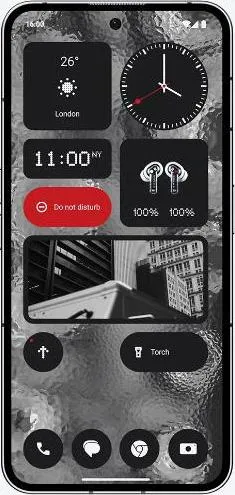

1. Specifications Comparison
| Feature | Category | Nothing Phone (2) | Realme 12+ | Practical Impact | |
|---|---|---|---|---|---|
| Dimensions | Design | 162.1 x 76.4 x 8.6 mm, 201.2g | 163 x 75.5 x 7.9 mm, 190g | Realme 12+ is slightly lighter and thinner, potentially improving one-handed use. | |
| Build | Design | Glass front (Gorilla Glass), aluminum frame | Missing Information | Build material impacts durability and premium feel. Lack of information for Realme 12+ limits comparison. | |
| Display Type | Display | LTPO OLED, 1B colors | AMOLED | Both offer vibrant colors and deep blacks. LTPO allows for dynamic refresh rate adjustment on the Nothing Phone (2), potentially saving battery. | |
| Display Size & Resolution | Display | 6.7", 1080 x 2412 | 6.67", 1080 x 2400 | Negligible difference in size and resolution; both offer sharp visuals. | |
| Peak Brightness | Display | 1600 nits (typical), 1600 nits (peak) | 600 nits (typical), 2000 nits (peak) | Realme 12+ has a higher peak brightness, improving outdoor visibility. | |
| Refresh Rate | Display | 120Hz | 120Hz | Both offer smooth scrolling and animations. | |
| Chipset | Performance | Snapdragon 8+ Gen 1 (4nm) | Dimensity 7050 (6nm) | Snapdragon 8+ Gen 1 offers significantly better performance in demanding tasks and gaming. | |
| CPU | Performance | Octa-core (1x3.0 GHz Cortex-X2 & 3x2.5 GHz Cortex-A710 & 4x1.80 GHz Cortex-A510) | Octa-core (2x2.6 GHz Cortex-A78 & 6x2.0 GHz Cortex-A55) | Nothing Phone (2)'s CPU architecture provides superior processing power and efficiency. | |
| GPU | Performance | Adreno 730 | Mali-G68 MC4 | Adreno 730 delivers a more powerful graphics performance for gaming and visually intensive applications. | |
| RAM & Storage | Performance | 256GB/12GB, 512GB/12GB | 256GB/8GB | Nothing Phone (2) offers more RAM, improving multitasking and overall responsiveness. | |
| Battery Capacity | Battery | 4700 mAh | 5000 mAh | Realme 12+ has a larger battery, potentially offering longer battery life. | |
| Charging Speed | Battery | Missing Information | Missing Information | Charging speed significantly impacts usability; this information is crucial for comparison. | |
| Main Camera | Camera | Missing Information | Missing Information | Camera specifications are crucial for comparison and are missing. | |
| Video Recording | Camera | 4K@30/60fps (HDR, OIS, EIS) | 4K@30fps (EIS), 1080p@30/60fps (EIS) | Nothing Phone (2) offers more advanced video recording capabilities with OIS (Optical Image Stabilization) for smoother footage. |
2. Key Differences Analysis
Nothing Phone (2) Advantages:
- Significantly more powerful processor and GPU: Resulting in smoother performance, better gaming, and faster application loading.
- More RAM: Improved multitasking and smoother overall experience.
- More advanced video recording: OIS ensures stable and high-quality video footage.
- LTPO Display: Dynamic refresh rate optimizes battery consumption.
Realme 12+ Advantages:
- Larger battery capacity: Potential for longer battery life.
- Lighter and thinner design: More comfortable for one-handed use.
- Higher peak brightness: Better visibility in direct sunlight.
3. User Profiles & Recommendations
Nothing Phone (2): Ideal for users who prioritize performance, gaming, multitasking, and high-quality video recording.
Realme 12+: Suitable for users who prioritize battery life, a lightweight design, and outdoor visibility. It might also be more budget-friendly given the less powerful processor.
4. Decision Framework
Key Questions for Buyers:
- What is your budget? Both are mid-range but might have price differences.
- What are your primary use cases? (Gaming, photography, general use, etc.)
- How important is battery life versus performance?
Scenario-Based Recommendations:
- Heavy gamer/power user: Nothing Phone (2)
- Casual user prioritizing battery life: Realme 12+
My Choice: Nothing Phone (2)
While the Realme 12+ boasts a larger battery and brighter display, the Nothing Phone (2)'s superior performance due to the Snapdragon 8+ Gen 1 and larger RAM is the deciding factor for me. I prioritize a smooth and responsive user experience, especially for multitasking and demanding applications. The better video recording capabilities with OIS are also a significant advantage. I am willing to compromise slightly on battery life for a noticeable improvement in overall performance. The lack of complete information, especially concerning the Realme 12+'s camera and build quality, makes it difficult to fully endorse. However, if battery life and bright outdoor viewing are absolute priorities, and budget is very tight, the Realme 12+ could be a reasonable alternative pending further investigation.
