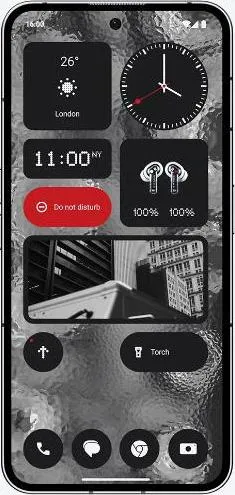
1. Specifications Comparison
| Feature | Category | Nothing Phone (2) | Phone 8 | Practical Impact |
|---|---|---|---|---|
| Dimensions | Design | 162.1 x 76.4 x 8.6 mm | 162 x 75.1 x 8.7 mm | Virtually identical in size and feel. |
| Weight | Design | 201.2 g | 191 g | Phone 8 is noticeably lighter, reducing hand fatigue during extended use. |
| Display Size | Display | 6.7 inches | 6.78 inches | Negligible difference in screen real estate. |
| Display Type | Display | LTPO OLED, 1B colors, 120Hz, HDR10+ | LTPO AMOLED, 1B colors, 120Hz, HDR | Both offer smooth scrolling and vibrant colors. AMOLED generally consumes less power. |
| Peak Brightness | Display | 1600 nits | 6000 nits | Phone 8's significantly higher peak brightness ensures exceptional outdoor visibility. |
| Resolution | Display | 1080 x 2412 | 1264 x 2780 | Phone 8 boasts a sharper display with higher pixel density (450 vs 394 ppi), resulting in crisper text and images. |
| Chipset | Performance | Snapdragon 8+ Gen 1 | Snapdragon 7+ Gen 3 | Phone (2) has a more powerful flagship-level processor, enabling smoother performance in demanding tasks and gaming. |
| CPU | Performance | Octa-core (1x3.0 GHz Cortex-X2 & 3x2.5 GHz Cortex-A710 & 4x1.80 GHz Cortex-A510) | Octa-core (1x2.8 GHz Cortex-X4 & 4x2.6 GHz Cortex-A720 & 3x1.9 GHz Cortex-A520) | Phone (2)'s CPU, while older generation, offers superior clock speeds, potentially translating to faster single-core performance. |
| GPU | Performance | Adreno 730 | Adreno 732 | While similar, the slight advantage of Adreno 732 in Phone 8 may result in slightly better graphics performance. |
| RAM | Performance | 12GB | 12GB | Both phones offer ample RAM for multitasking and smooth operation. |
| Storage | Performance | 256GB/512GB | 512GB | Phone 8 offers only a 512GB option, providing ample storage but limiting choices for users who prefer less storage. |
| Battery Capacity | Battery | 4700 mAh | 5500 mAh | Phone 8's larger battery capacity likely translates to significantly longer battery life. |
| OS | Software | Android 13 | Android 14 | Phone 8 ships with the latest Android version, offering potential new features and longer software support. |
| Video Capabilities | Camera | 4K@30/60fps (HDR, OIS, EIS), 1080p@30/60fps (HDR, OIS, EIS) | 4K@30/60fps (OIS, EIS), 1080p@30/60/120fps (OIS, EIS) | Both offer excellent video recording capabilities. Phone 8 adds 1080p@120fps for slow-motion video. Missing details regarding HDR for Phone 8 limits full comparison. |
2. Key Differences Analysis
Nothing Phone (2) Advantages:
- Superior Processing Power: The Snapdragon 8+ Gen 1 offers a noticeable performance advantage for demanding tasks and gaming.
- Potentially Faster Single-Core Performance: Higher clock speeds on the CPU might translate to quicker app loading and responsiveness.
Phone 8 Advantages:
- Brighter Display: The significantly brighter display ensures excellent readability in direct sunlight.
- Sharper Display: Higher resolution and pixel density deliver a crisper viewing experience.
- Larger Battery: The 5500 mAh battery promises significantly longer usage time between charges.
- Lighter Weight: Noticeably lighter, improving comfort during extended use.
- Latest Android Version: Android 14 offers potential new features and longer-term software updates.
3. User Profiles & Recommendations
Nothing Phone (2): Ideal for users who prioritize performance for gaming or demanding applications and value a slightly more affordable option (assuming price difference based on specs).
Phone 8: Suitable for users who prioritize battery life, a bright and sharp display for media consumption, and the latest software features. Good for users who spend considerable time outdoors.
4. Decision Framework
Key Questions for Buyers:
- What is your budget and storage requirement? Phone 8 lacks storage options and may be more expensive.
- Is top-tier performance for gaming or heavy multitasking a priority? If so, the Nothing Phone (2)'s processor is a significant advantage.
- How important is battery life and outdoor screen visibility? Phone 8 excels in these areas.
Scenario-Based Recommendations:
- Heavy Gamer: Nothing Phone (2)
- Outdoor Enthusiast: Phone 8
- Average User prioritizing battery life: Phone 8
My Choice: Phone 8
While the Nothing Phone (2) offers a more powerful processor, the Phone 8's combination of a brighter and sharper display, significantly larger battery, lighter weight, and the latest Android OS makes it a more compelling overall package for my needs. I prioritize battery life, screen quality, and having the latest software, and I am willing to sacrifice some processing power for those benefits. The lighter weight is also a significant plus for daily comfort. The lack of storage options is a slight concern, but 512GB is sufficient for my usage.
