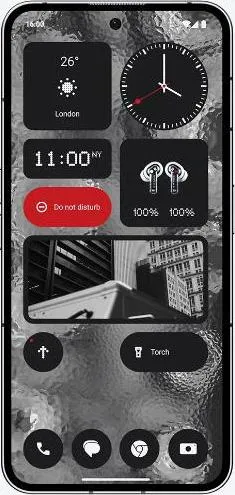
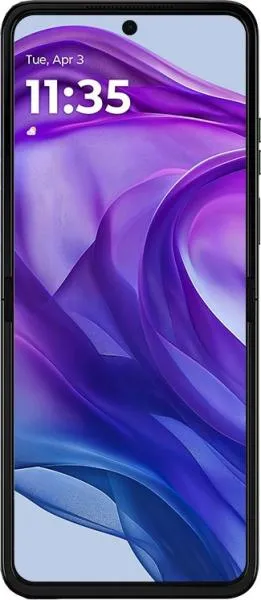
1. Specifications Comparison
| Feature | Category | Nothing Phone (2) | Motorola Razr 50 Ultra | Practical Impact |
|---|---|---|---|---|
| Dimensions | Design | 162.1 x 76.4 x 8.6 mm | 171.4 x 74 x 7.1mm (Unfolded) Folded dimensions not specified | Razr 50 Ultra significantly more compact when folded, enhancing portability. Nothing Phone (2) is thinner when unfolded. Lack of folded dimensions for Razr limits full comparison. |
| Weight | Design | 201.2 g | 189 g | Razr 50 Ultra is lighter despite its complex folding mechanism. |
| Build | Design | Not specified | Not specified | Material durability and feel cannot be compared without further information. |
| Display Type | Display | LTPO OLED, 1B colors, 120Hz, HDR10+ | Foldable LTPO AMOLED, 1B colors, Dolby Vision, 165Hz, HDR10+ | Both offer high-quality displays with vibrant colors and smooth refresh rates. Razr's higher refresh rate (165Hz) may provide slightly smoother animations. Dolby Vision support on the Razr could offer a better HDR experience. Foldable display is the key differentiator, enabling unique usage scenarios. |
| Display Size | Display | 6.7" | 6.9" | Razr offers slightly larger screen real estate when unfolded. |
| Resolution | Display | 1080 x 2412 | 1080 x 2640 | Razr has a slightly higher resolution, but the difference in sharpness will likely be negligible in real-world use. |
| Peak Brightness | Display | 1600 nits | 3000 nits | Razr's significantly higher peak brightness ensures better outdoor visibility in direct sunlight. |
| Chipset | Performance | Snapdragon 8+ Gen 1 (4nm) | Snapdragon 8s Gen 3 (4nm) | Razr 50 Ultra boasts a newer, more powerful processor, leading to potentially faster performance and better efficiency. |
| CPU | Performance | Octa-core (1x3.0 GHz Cortex-X2 & 3x2.5 GHz Cortex-A710 & 4x1.80 GHz Cortex-A510) | Octa-core (1x3.0 GHz Cortex-X4 & 4x2.8 GHz Cortex-A720 & 3x2.0 GHz Cortex-A520) | Razr's CPU architecture is newer and likely to deliver superior performance in demanding tasks and multitasking. |
| GPU | Performance | Adreno 730 | Adreno 735 | Razr's slightly improved GPU should offer a minor advantage in gaming and graphics-intensive applications. |
| RAM | Performance | 12GB | 12GB | Both phones offer ample RAM for smooth multitasking. |
| Storage | Performance | 256GB/512GB | 256GB | Both offer sufficient storage, but the Nothing Phone (2) provides a 512GB option for users needing more space. |
| Battery Capacity | Battery | 4700 mAh | 4000 mAh | Nothing Phone (2) has a significantly larger battery, likely translating to longer battery life. Foldable displays often consume more power, making the Razr's smaller battery a potential concern. |
| Main Camera | Camera | Specifications missing | Specifications missing | Camera performance cannot be compared without detailed sensor and lens information. |
| Video Recording | Camera | Up to 4K@60fps (HDR, OIS, EIS) | Up to 4K@60fps (HDR, EIS), Slow-mo up to 960fps | Both offer standard flagship video recording capabilities. Razr offers significantly higher frame rate slow-motion video recording. OIS absence in Razr could impact video stability. |
2. Key Differences Analysis
Nothing Phone (2) Advantages:
- Larger Battery: Potentially significantly longer battery life.
- Larger Storage Option: 512GB option for users with high storage demands.
- Potentially Lower Price: Older generation chipset could translate to a lower price point.
Motorola Razr 50 Ultra Advantages:
- Foldable Display: Unique form factor enabling compact portability and novel use cases.
- More Powerful Processor: Faster performance and better efficiency.
- Higher Refresh Rate Display: Smoother animations and scrolling.
- Brighter Display: Enhanced outdoor visibility.
- Newer OS: Access to the latest Android features and security updates.
Trade-offs:
- Razr 50 Ultra: Smaller battery capacity for a foldable device, potentially shorter battery life. Higher price expected due to foldable technology.
3. User Profiles & Recommendations
Nothing Phone (2): Ideal for users prioritizing battery life, performance, and value. Suitable for power users who need long-lasting battery and ample storage.
Motorola Razr 50 Ultra: Ideal for users who value portability and cutting-edge technology. The foldable design appeals to those who want a compact device without sacrificing screen size. Suitable for users who prioritize style and innovation.
4. Decision Framework
Key Questions:
- How important is portability? If ultimate portability is paramount, the Razr's foldable design is a significant advantage.
- How much do you prioritize battery life? If all-day battery life is essential, the Nothing Phone (2)'s larger battery is likely the better choice.
- What is your budget? Foldable technology typically commands a premium price.
Scenario-Based Recommendations:
- Heavy user needing long battery life: Nothing Phone (2)
- Style-conscious user prioritizing portability: Motorola Razr 50 Ultra
- User on a budget seeking good performance: Nothing Phone (2)
My Choice: Nothing Phone (2)
While the Razr 50 Ultra's foldable design is intriguing, the combination of the Nothing Phone (2)'s larger battery, potential lower price, and ample storage makes it a more practical choice for my needs. I prioritize battery life and performance over novelty, and the potential trade-offs in battery life and price for the foldable form factor are not compelling enough for me personally. The lack of camera specifications also makes a comprehensive comparison difficult. I value knowing I can rely on my phone throughout a demanding day without needing to constantly recharge. The availability of a 512GB storage option further solidifies the Nothing Phone (2) as the more practical and versatile device for my usage.
