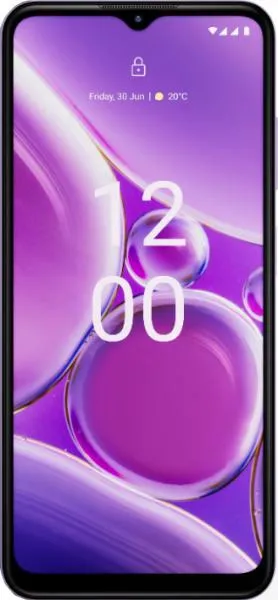
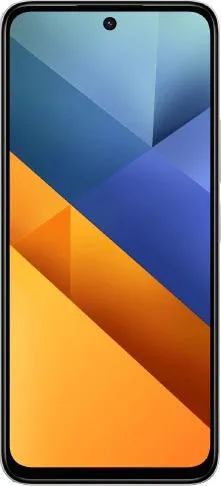
1. Specifications Comparison
| Feature | Nokia G42 | Xiaomi Poco M6 4G | Practical Impact |
|---|---|---|---|
| Design | |||
| Dimensions (mm) | 165 x 75.8 x 8.6 | 168.6 x 76.3 x 8.3 | Poco M6 slightly larger, but thinner |
| Weight (g) | 193.8 | 205 | Poco M6 noticeably heavier |
| Build Material | Not specified | Not specified | Cannot compare build quality and durability |
| Display | |||
| Size (inches) | 6.56 | 6.79 | Poco M6 offers a larger screen for media consumption |
| Resolution | 720 x 1612 | 1080 x 2460 | Poco M6 significantly sharper and more detailed |
| Display Type | IPS LCD | IPS LCD | Similar display technology, but Poco M6's higher resolution provides better visual quality |
| Refresh Rate | 90Hz | 90Hz | Both offer smooth scrolling and animations |
| PPI | 269 | 396 | Poco M6 much sharper due to higher pixel density |
| Performance | |||
| Chipset | Snapdragon 480+ 5G | Helio G91 | Poco M6 likely offers better CPU performance; Snapdragon 480+ has better power efficiency and 5G |
| CPU | Octa-core (2x2.2 GHz Kryo 460 & 6x1.8 GHz Kryo 460) | Octa-core (2x2.0 GHz Cortex-A75 & 6x1.8 GHz Cortex-A55) | Comparable CPU performance, slight edge to Snapdragon in multi-core tasks |
| GPU | Adreno 619 | Mali-G52 MC2 | Poco M6's GPU may offer slightly better gaming performance |
| RAM | 4/6 GB | 6/8 GB | Poco M6 offers more RAM in its higher-end configuration, enabling better multitasking |
| Camera | |||
| Main Camera | 50MP | 108MP | Poco M6 boasts higher resolution; image quality depends on sensor and processing, not just megapixels |
| Front Camera | 8MP | 13MP | Poco M6 likely offers better selfie quality |
| Video Recording | 1080p@30fps | 1080p@30fps, slow-mo @120fps | Poco M6 adds slow-motion video recording capability |
| Battery | |||
| Capacity | 5000 mAh | 5030 mAh | Negligible difference in battery capacity |
| Charging Speed | Not specified | Not specified | Cannot compare charging speeds |
2. Key Differences Analysis
Nokia G42 Advantages:
- 5G Connectivity: Future-proofs the device and enables faster data speeds in areas with 5G coverage.
- Potentially Better Power Efficiency: Snapdragon 480+ known for good power management.
Xiaomi Poco M6 4G Advantages:
- Larger and Sharper Display: Offers a more immersive media experience.
- Higher Resolution Main Camera: Potentially better detail in photos, but real-world performance depends on other factors.
- More RAM: Improves multitasking and overall responsiveness, especially noticeable with the 8GB option.
- Lower Price: Offers better value for money in terms of raw specifications.
3. User Profiles & Recommendations
Nokia G42: Suitable for users who prioritize:
- 5G connectivity: Essential for those in areas with existing or upcoming 5G networks.
- Battery life: Potentially longer battery life due to efficient chipset.
- Compact size: For users who prefer smaller phones.
Xiaomi Poco M6 4G: Suitable for users who prioritize:
- Media consumption: Larger, sharper display enhances viewing experience.
- Gaming: Slightly better GPU and more RAM can improve gaming performance.
- Value for money: Offers compelling specifications at a lower price.
4. Decision Framework
Key Questions for Buyers:
- Is 5G connectivity crucial? If yes, the Nokia G42 is the only option.
- What is your budget? The Poco M6 4G offers better value for the price.
- What is your primary use case? Media consumption and gaming favor the Poco M6; basic tasks and long battery life might favor the G42.
My Choice: Xiaomi Poco M6 4G
While 5G is a significant advantage for future-proofing, the Xiaomi Poco M6 4G offers a much more compelling package for my needs. The significantly improved display, larger RAM, and higher resolution main camera provide tangible benefits in everyday use. The slightly larger size and weight are minor trade-offs for the superior screen real estate. Additionally, the lower price makes it a more attractive value proposition. I'm willing to forego 5G for now, considering the significant improvements in other areas and the lower price point of the Poco M6 4G.
