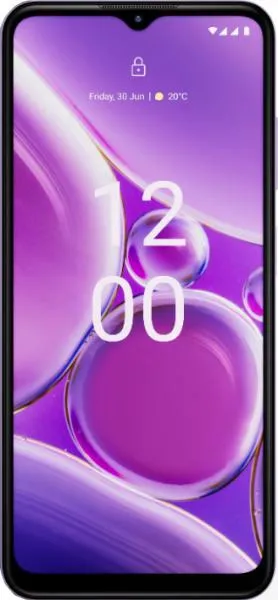
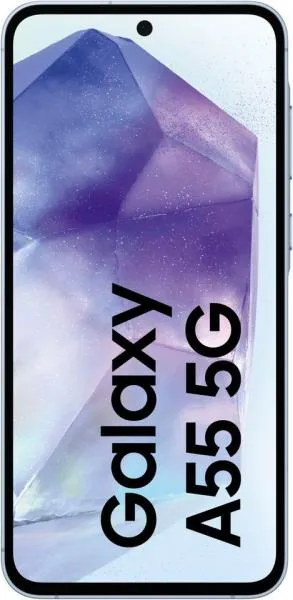
1. Specifications Comparison
| Feature | Nokia G42 | Samsung Galaxy A55 | Practical Impact |
|---|---|---|---|
| Design | |||
| Dimensions (mm) | 165 x 75.8 x 8.6 | 161.1 x 77.4 x 8.2 | A55 is slightly shorter, narrower, and thinner. |
| Weight (g) | 193.8 | 213 | A55 is noticeably heavier. |
| Build | Unspecified | Unspecified | Build quality and materials cannot be compared without further information. |
| Display | |||
| Display Type | IPS LCD | Super AMOLED | AMOLED offers richer colors, deeper blacks, and better power efficiency in dark mode. |
| Display Size (inches) | 6.56 | 6.6 | Negligible size difference. |
| Resolution | 720 x 1612 | 1080 x 2340 | A55 has a significantly sharper display with higher pixel density (390 vs 269 ppi), resulting in clearer text and images. |
| Refresh Rate (Hz) | 90 | 120 | A55 offers smoother scrolling and animations due to the higher refresh rate. |
| HDR | No HDR support detected | HDR10+ | A55 supports HDR content, providing a wider dynamic range and more vibrant visuals in compatible media. |
| Performance | |||
| Chipset | Snapdragon 480+ 5G (8nm) | Exynos 1480 (4nm) | A55's Exynos 1480, built on a smaller process node, is expected to offer significantly better performance and power efficiency. |
| CPU | Octa-core (2x2.2 GHz Kryo 460 & 6x1.8 GHz Kryo 460) | Octa-core (4x2.75 GHz Cortex-A78 & 4x2.0 GHz Cortex-A55) | A55 has faster and more powerful CPU cores, leading to better multitasking and app performance. |
| GPU | Adreno 619 | Xclipse 530 | A55's GPU should provide superior graphics performance for gaming and demanding applications. |
| RAM | 4GB/6GB/8GB | 8GB/12GB | A55 offers more RAM options, with higher base RAM, enabling better multitasking and smoother performance with memory-intensive tasks. |
| Camera | |||
| Rear Camera | 50MP Main + 2MP Depth + 2MP Macro | 50MP Main (OIS) + 13MP Wide + 5MP Macro | A55 features Optical Image Stabilization (OIS) on the main camera for steadier photos and videos, along with a dedicated wide-angle lens, offering more versatility. Nokia G42 lacks OIS and a wide-angle lens. |
| Video Recording | 1080p@30fps | 4K@30fps with EIS, 1080p@60fps with EIS | A55 offers higher resolution video recording with electronic image stabilization (EIS) for smoother footage. |
| Battery | |||
| Capacity (mAh) | 5000 | 5000 | Similar battery capacity, but real-world battery life will depend on software optimization and hardware efficiency. A55's more efficient chipset might provide longer battery life. |
2. Key Differences Analysis
Nokia G42 Advantages:
- Potentially Lower Price: While exact pricing varies, Nokia G series generally targets a more budget-conscious market.
- Repair Focus: Nokia emphasizes repairability, potentially making it easier and cheaper to fix.
Samsung Galaxy A55 Advantages:
- Significantly Better Performance: The Exynos 1480 and higher RAM provide a noticeable performance advantage.
- Superior Display: AMOLED with higher resolution, refresh rate, and HDR support.
- Enhanced Camera System: OIS, wide-angle lens, and 4K video recording.
- Longer Software Support: Samsung typically provides longer software updates for A-series phones.
3. User Profiles & Recommendations
Nokia G42: Users with basic needs (calling, texting, web browsing) on a tight budget, who prioritize repairability and value long-term durability over high-end features.
Samsung Galaxy A55: Users who want a smooth, responsive phone with a great display for media consumption, gaming, and photography. Suitable for those who value performance, features, and longer software support.
4. Decision Framework
Key Questions for Buyers:
- What is your budget? The G42 likely offers a lower entry price.
- What are your primary phone usage patterns? Basic tasks vs. demanding apps and media consumption.
- How important are camera quality, display quality, and performance?
Scenario-Based Recommendations:
- Limited Budget, Basic Usage: Nokia G42
- Balanced Performance and Price: Samsung Galaxy A55.
- Focus on Photography and Multimedia: Samsung Galaxy A55.
My Choice: Samsung Galaxy A55
The Samsung Galaxy A55 is the clear winner for me. While potentially more expensive, the superior display, significantly better performance, enhanced camera system with OIS and a wider lens, along with the promise of longer software updates, make it a far more compelling device for my needs. I prioritize a smooth user experience, good media consumption capabilities, and a capable camera, and the A55 delivers on all fronts. The performance difference between the Snapdragon 480+ and Exynos 1480 would be noticeable in everyday use, making the A55 a more future-proof choice. While the Nokia G42 offers repairability, the A55's overall package justifies the potential price difference for a more satisfying and versatile smartphone experience.
