1. Specifications Comparison
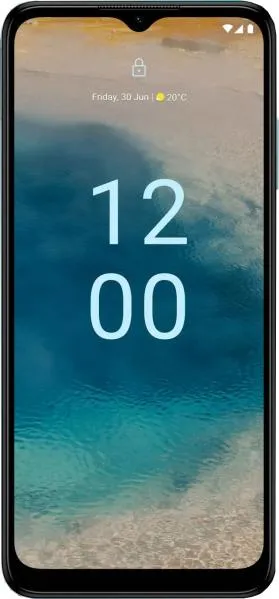
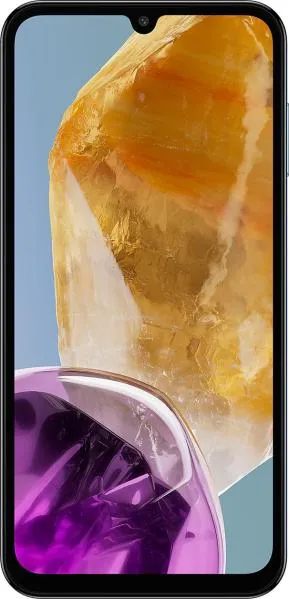
| Feature | Nokia G22 | Samsung Galaxy M15 | Practical Impact |
|---|---|---|---|
| Design | |||
| Dimensions (mm) | 165 x 76.2 x 8.5 | 160.1 x 76.8 x 9.3 | M15 slightly shorter and wider, noticeably thicker. G22 might feel slimmer in hand. |
| Weight (g) | 196.2 | 217 | G22 significantly lighter, reducing hand fatigue during extended use. |
| Build Material | Unspecified | Unspecified | Build quality and durability cannot be compared without this information. |
| Display | |||
| Display Type | IPS LCD | Super AMOLED | AMOLED offers richer colors, deeper blacks, and better power efficiency. G22's LCD might be brighter outdoors. |
| Display Size (inches) | 6.5 | 6.5 | Same screen size, offering similar media consumption experience. |
| Resolution | 720 x 1600 | 1080 x 2340 | M15 has significantly sharper display (396 ppi vs 270 ppi), resulting in clearer text and images. |
| Refresh Rate (Hz) | 90 | 90 | Both offer smooth scrolling and animations thanks to the 90Hz refresh rate. |
| Performance | |||
| Chipset | Unisoc T606 (12 nm) | Mediatek Dimensity 6100+ (6 nm) | M15 boasts a significantly more powerful and efficient processor, leading to smoother multitasking, faster app loading, and better gaming performance. |
| CPU | Octa-core (2x1.6 GHz Cortex-A75 & 6x1.6 GHz Cortex-A55) | Octa-core (2x2.2 GHz Cortex-A76 & 6x2.0 GHz Cortex-A55) | M15 has faster and more modern CPU cores, resulting in superior performance. |
| GPU | Mali-G57 MP1 | Mali-G57 MC2 | M15's GPU is likely more powerful, though specific performance differences are hard to quantify without benchmark data. |
| RAM (GB) | 4 | 4/6 (depending on version) | 6GB RAM variant of M15 will handle multitasking better than the 4GB options in both phones. |
| OS | Android 12 | Android 14 | M15 comes with a newer Android version, offering potential access to newer features, security updates, and performance optimizations. |
| Camera | |||
| Main Camera (MP) | 50 | 50 | Similar megapixel count doesn't guarantee equal image quality. Sensor size and processing play a crucial role. |
| Other Cameras | 2MP Depth, 2MP Macro | 5MP Wide, 2MP Macro | M15 offers a more versatile camera setup with a wider angle lens. |
| Video Recording | 1080p@30fps | 1080p@30fps with EIS | M15 features Electronic Image Stabilization (EIS) for smoother video recording. |
| Battery | |||
| Capacity (mAh) | 5050 | 6000 | M15 packs a larger battery, likely translating to significantly longer battery life. |
| Fast Charging | 20W | 25W | M15 supports slightly faster charging. |
2. Key Differences Analysis
Nokia G22 Advantages:
- Lighter and Slimmer: More comfortable for one-handed use and extended periods.
- Potentially Lower Price: Positioned in the "low price" range.
Samsung Galaxy M15 Advantages:
- Significantly Better Performance: Dimensity 6100+ chipset outperforms the Unisoc T606 in processing power and efficiency.
- Sharper Display: Higher resolution AMOLED screen provides a superior visual experience.
- Larger Battery: Longer battery life for extended usage.
- Newer Android Version: Access to the latest features and security updates.
- More Versatile Camera: Wide-angle lens adds flexibility for photography.
- Video Stabilization: EIS results in smoother video footage.
3. User Profiles & Recommendations
Nokia G22: Budget-conscious users prioritizing basic functionality (calls, messaging, web browsing) and a lightweight design. Suitable for users who are not heavy gamers or power users.
Samsung Galaxy M15: Users who value performance, a great display, long battery life, and a versatile camera. Suitable for gaming, media consumption, multitasking, and photography enthusiasts.
4. Decision Framework
Key Questions for Buyers:
- What is your budget? The G22 is a budget option, while the M15 is mid-range.
- What are your primary smartphone usage patterns? (e.g., calling, social media, gaming, photography)
- How important is performance and battery life? The M15 excels in these areas.
My Choice: Samsung Galaxy M15
While the Nokia G22 offers a lightweight design at a potentially lower price, the Samsung Galaxy M15 is the superior choice for most users. Its significantly better performance, sharper display, larger battery, newer Android version, and more versatile camera system outweigh the G22's advantages. The M15 offers a more future-proof and enjoyable overall user experience. The price difference is likely justified by the significant performance and feature upgrades. However, if budget is extremely tight and basic functionality is the priority, the G22 might suffice.
