1. Specifications Comparison
| Feature | Motorola Razr 40 | ZTE nubia Z50S Pro | Practical Impact |
|---|---|---|---|
| Design | |||
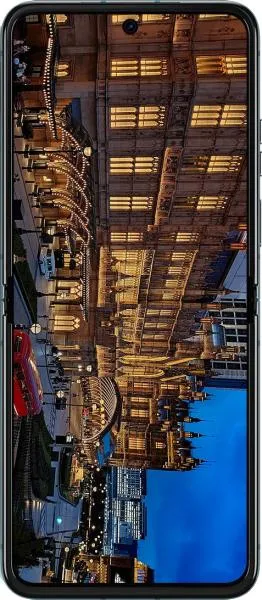
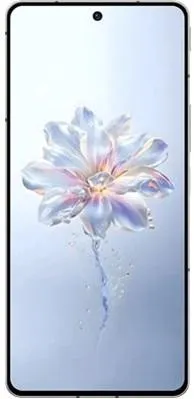
| Form Factor | Foldable | Slab | Razr 40 offers portability and compactness when folded, Z50S Pro offers a traditional form factor. |
| Dimensions (mm) | 170.8 x 74 x 7.4 | 163.9 x 76.3 x 8.3 | Razr 40 is significantly smaller when folded but thicker when unfolded. Z50S Pro is larger overall. |
| Weight (g) | 188.6 | 228 | Razr 40 is noticeably lighter. |
| Display | |||
| Display Size (inches) | 6.9 | 6.8 | Negligible difference in screen real estate. |
| Resolution | 1080 x 2640 | 1260 x 2800 | Z50S Pro has a slightly sharper display. |
| Refresh Rate (Hz) | 144 | 120 | Razr 40 offers smoother scrolling and animations, although the difference might not be perceptible to all users. |
| Display Type | Foldable LTPO AMOLED | AMOLED | Razr 40's foldable display allows for unique use cases like using the cover screen for quick interactions, Z50S Pro offers a robust, traditional display. |
| Peak Brightness (nits) | 1400 | 1200 | Razr 40 might be slightly more visible in direct sunlight. |
| Performance | |||
| Chipset | Snapdragon 7 Gen 1 | Snapdragon 8+ Gen 2 | Z50S Pro has a significantly more powerful processor, resulting in better performance for demanding tasks and gaming. |
| CPU | Octa-core (1x2.4 GHz Cortex-A710 & 3x2.36 GHz Cortex-A710 & 4x1.8 GHz Cortex-A510) | Octa-core (1x3.36 GHz Cortex-X3 & 2x2.8 GHz Cortex-A715 & 2x2.8 GHz Cortex-A710 & 3x2.0 GHz Cortex-A510) | Z50S Pro's CPU offers superior performance in multitasking, app loading, and complex computations. |
| GPU | Adreno 644 | Adreno 740 | Z50S Pro's GPU provides a much better gaming experience and handles graphics-intensive tasks more efficiently. |
| RAM (GB) | 8 | 12 | Z50S Pro offers more RAM, enabling smoother multitasking and better handling of large applications. |
| Camera | |||
| Main Camera (MP) | 64 | 50+8+50 | Z50S Pro offers a triple camera system with a dedicated telephoto lens for optical zoom, and an ultrawide lens; Razr 40 has a dual camera system with a main and ultrawide/macro lens. |
| Video Recording | Up to 4K@30fps | Up to 8K@30fps | Z50S Pro allows for higher resolution video recording. |
| Battery | |||
| Capacity (mAh) | 4200 | 5100 | Z50S Pro has a significantly larger battery, potentially offering longer battery life. |
2. Key Differences Analysis
Motorola Razr 40 Advantages:
- Portability: The foldable design makes it significantly more compact when not in use.
- Lighter Weight: Noticeably easier to carry and handle.
- Higher Refresh Rate Display: Potentially smoother scrolling and animations.
ZTE nubia Z50S Pro Advantages:
- Significantly More Powerful: The Snapdragon 8+ Gen 2 offers a substantial performance advantage for demanding tasks and gaming.
- Larger Battery: Potentially longer battery life.
- More Versatile Camera System: Triple camera setup with telephoto and ultrawide lenses provides greater flexibility for photography.
- Larger RAM: Smoother multitasking and better performance with demanding applications.
3. User Profiles & Recommendations
Motorola Razr 40: Ideal for users who prioritize portability and compactness above all else and are willing to compromise on raw performance. Suitable for everyday tasks, social media, and casual photography.
ZTE nubia Z50S Pro: Ideal for users who demand high performance for gaming, demanding applications, and content creation. Suitable for power users, mobile gamers, and photography enthusiasts.
4. Decision Framework
Key Questions for Buyers:
- Is portability your top priority? If yes, the Razr 40's foldable design is a strong contender.
- Do you need the highest possible performance? If yes, the Z50S Pro's Snapdragon 8+ Gen 2 is the clear winner.
- What is your budget? While both are mid-range, specific pricing should be compared in your region.
My Choice: ZTE nubia Z50S Pro
While the Razr 40's foldable design is appealing, the Z50S Pro's superior performance, larger battery, more versatile camera system, and larger RAM make it a more compelling device for my needs. I prioritize performance and longevity in a smartphone, and the Z50S Pro delivers in these areas. The slightly larger size and traditional form factor are acceptable trade-offs for the significant performance gains. I would prefer a phone that can handle demanding tasks and last throughout the day without needing frequent recharges.
