
1. Specifications Comparison
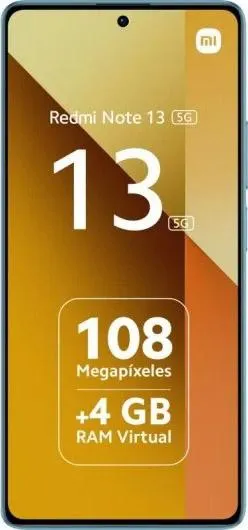
| Feature | Motorola Razr 40 | Xiaomi Redmi Note 13 | Practical Impact |
|---|---|---|---|
| Design | |||
| Form Factor | Foldable | Standard | Razr 40 offers portability and a unique form factor, Redmi Note 13 is a traditional slab phone. |
| Dimensions (mm) | 170.8 x 74 x 7.4 (folded) | 161.1 x 75 x 7.6 | Razr 40 is significantly more compact when folded, but thicker when unfolded. Redmi Note 13 is thinner overall. |
| Weight (g) | 188.6 | 174.5 | Razr 40 is slightly heavier. |
| Display | |||
| Display Type | Foldable LTPO AMOLED | AMOLED | Razr 40's foldable display allows for a larger screen in a smaller device, but may have a crease. Redmi Note 13 offers a standard, uninterrupted display. |
| Size (inches) | 6.9 | 6.67 | Razr 40 offers a slightly larger main display. |
| Resolution | 1080 x 2640 | 1080 x 2400 | Similar sharpness, but Razr 40 is slightly taller due to aspect ratio. |
| Refresh Rate (Hz) | 144 | 120 | Razr 40 will offer smoother animations and scrolling. |
| Performance | |||
| Chipset | Snapdragon 7 Gen 1 (4nm) | Dimensity 6080 (6nm) | Snapdragon 7 Gen 1 generally offers better performance and efficiency. |
| CPU | Octa-core (1x2.4 GHz A710 & 3x2.36 GHz A710 & 4x1.8 GHz A510) | Octa-core (2x2.4 GHz A76 & 6x2.0 GHz A55) | Snapdragon 7 Gen 1's architecture should provide superior performance in demanding tasks. |
| GPU | Adreno 644 | Mali-G57 MC2 | Adreno 644 generally offers better gaming performance. |
| RAM (GB) | 8 | 8/12 | Both offer ample RAM for multitasking, Redmi Note 13 has a 12GB option for even more demanding users. |
| Camera | |||
| Main Camera (MP) | 64 | 108 | Redmi Note 13 boasts higher resolution, but megapixels alone don't determine image quality. |
| Video Recording | 4K@30fps with EIS | 1080p@30fps | Razr 40 offers higher resolution video recording. |
| Battery | |||
| Capacity (mAh) | 4200 | 5000 | Redmi Note 13 has significantly larger battery capacity, likely leading to longer battery life. |
2. Key Differences Analysis
Motorola Razr 40 Advantages:
- Portability: Foldable design offers a larger screen in a pocket-friendly size.
- Higher Refresh Rate Display: Smoother scrolling and animations.
- More Powerful Chipset: Better overall and gaming performance.
- Higher Resolution Video Recording: Captures more detailed videos.
Xiaomi Redmi Note 13 Advantages:
- Larger Battery: Potentially significantly longer battery life.
- Lower Price: Offers a more budget-friendly option.
- Larger Sensor Size on Main Camera: Potentially better low-light performance and depth of field, although real-world performance depends on image processing.
3. User Profiles & Recommendations
Motorola Razr 40: Ideal for users who prioritize portability and a unique form factor, and are willing to pay a premium for it. Suitable for those who consume media, play casual games, and value a compact device.
Xiaomi Redmi Note 13: Ideal for budget-conscious users who prioritize battery life and a large screen. Suitable for everyday tasks, media consumption, and light gaming. The 12GB RAM option caters to power users who need extensive multitasking.
4. Decision Framework
Key Questions for Buyers:
- How important is portability? A foldable phone offers significant size advantages.
- What is your budget? The Redmi Note 13 is significantly cheaper.
- What are your primary use cases? Consider performance needs for gaming, battery life for heavy usage, and camera quality for photography enthusiasts.
Scenario-Based Recommendations:
- Frequent Traveler: Razr 40 for its compact size.
- Heavy Media Consumer: Redmi Note 13 for longer battery life, unless the foldable form factor is a priority.
- Budget Gamer: Redmi Note 13 offers decent performance at a lower price point.
My Choice: Xiaomi Redmi Note 13
While the Razr 40 is undeniably cool with its foldable design and superior performance, the Redmi Note 13 offers a more compelling package for my needs. I prioritize battery life and value, and the Redmi Note 13 excels in both areas. The significantly larger battery capacity outweighs the performance benefits of the Razr 40 for my typical usage. The price difference is substantial, making the Redmi Note 13 a more practical choice. While I appreciate the innovative design of the Razr 40, the price premium and potential compromises associated with foldable technology (crease, durability) are not compelling enough for me to choose it over the Redmi Note 13. Finally, the 108MP camera with a larger sensor has the potential for excellent image quality, though this needs to be verified by reviews.
