
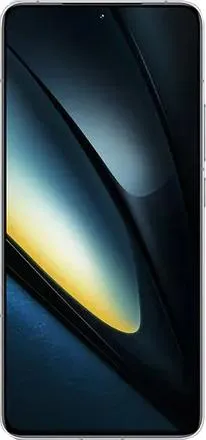
1. Specifications Comparison
| Feature | Motorola Razr 40 | Xiaomi Poco F6 Pro | Practical Impact |
|---|---|---|---|
| Design | |||
| Form Factor | Foldable | Standard | Razr 40 offers portability and a compact design when folded; Poco F6 Pro is a traditional slab phone. |
| Dimensions (mm) | 170.8 x 74 x 7.4 | 160.9 x 75 x 8.2 | Razr 40 is significantly more compact when folded but thicker when unfolded. Poco F6 Pro is thinner overall but larger. |
| Weight (g) | 188.6 | 209 | Razr 40 is noticeably lighter. |
| Display | |||
| Display Type | Foldable LTPO AMOLED | AMOLED | Razr 40 has a foldable screen with a crease; Poco F6 Pro offers a larger, uninterrupted display. |
| Size (inches) | 6.9 | 6.67 | Poco F6 Pro has a slightly larger screen size for media consumption. |
| Resolution | 1080 x 2640 | 1440 x 3200 | Poco F6 Pro has a significantly sharper display with higher pixel density (526 ppi vs 413 ppi). |
| Refresh Rate (Hz) | 144 | 120 | Razr 40 offers smoother scrolling and animations. |
| Peak Brightness (nits) | 1400 | 4000 | Poco F6 Pro is much brighter outdoors and in direct sunlight. |
| Performance | |||
| Chipset | Snapdragon 7 Gen 1 | Snapdragon 8 Gen 2 | Poco F6 Pro boasts a significantly more powerful processor, resulting in faster performance and better multitasking. |
| CPU | Octa-core (1x2.4 GHz Cortex-A710 & 3x2.36 GHz Cortex-A710 & 4x1.8 GHz Cortex-A510) | Octa-core (1x3.2 GHz Cortex-X3 & 2x2.8 GHz Cortex-A715 & 2x2.8 GHz Cortex-A710 & 3x2.0 GHz Cortex-A510) | Poco F6 Pro offers significantly improved CPU performance. |
| GPU | Adreno 644 | Adreno 740 | Poco F6 Pro has a more powerful GPU for demanding gaming and graphics tasks. |
| RAM (GB) | 8 | 12 | Poco F6 Pro has more RAM for smoother multitasking and app switching. |
| Camera | |||
| Main Camera (MP) | 64 | 50 | While Razr 40 has a higher megapixel count, Poco F6 Pro uses a larger sensor (1/1.55") and wider aperture (f/1.6) potentially leading to better low-light performance. |
| Video Recording | 4K@30fps | 8K@24fps | Poco F6 Pro supports higher resolution video recording. |
| Battery | |||
| Capacity (mAh) | 4200 | 5000 | Poco F6 Pro has a larger battery capacity, likely resulting in longer battery life. |
2. Key Differences Analysis
Motorola Razr 40 Advantages:
- Portability: The foldable design offers unmatched portability.
- Higher Refresh Rate: Smoother scrolling and animations.
- Lighter Weight: More comfortable for extended use and one-handed operation.
Xiaomi Poco F6 Pro Advantages:
- Superior Performance: Significantly faster processor and GPU for demanding tasks and gaming.
- Sharper Display: Higher resolution and pixel density for a more detailed visual experience.
- Brighter Display: Better visibility outdoors.
- Larger Battery: Potentially longer battery life.
- 8K Video Recording: Higher resolution video capture.
- More RAM: Improved multitasking capabilities.
3. User Profiles & Recommendations
Motorola Razr 40: Ideal for users who prioritize portability and compactness above all else. Suitable for those who value a unique form factor and are willing to compromise on raw performance. Excellent for those constantly on the move.
Xiaomi Poco F6 Pro: Ideal for users who prioritize performance, a large and sharp display, and long battery life. Suitable for gamers, power users, and multimedia enthusiasts. Best for those who want the latest and greatest hardware.
4. Decision Framework
Key Questions for Buyers:
- Form Factor Priority: Is a foldable design with its portability benefits more important than a larger, traditional screen?
- Performance Needs: Do you require top-tier processing power for demanding tasks and gaming, or is a mid-range chip sufficient?
- Budget Considerations: While both are mid-range, slight price differences might exist. Which features justify the cost?
Scenario-Based Recommendations:
- Frequent Traveler: Razr 40 for its compact size.
- Mobile Gamer: Poco F6 Pro for its powerful hardware.
- Casual User: Either phone could suffice depending on individual preferences for form factor vs. performance.
My Choice: Xiaomi Poco F6 Pro
While the Razr 40's foldable design is intriguing, the Poco F6 Pro's superior performance, sharper and brighter display, larger battery, and more advanced camera features make it a more compelling overall package for my needs. I prioritize performance and a high-quality viewing experience, and the Poco F6 Pro delivers in these areas. The larger battery also offers peace of mind for all-day usage. While foldables are innovative, the crease and potential durability concerns, coupled with the performance difference, make the Poco F6 Pro the better choice for me.
