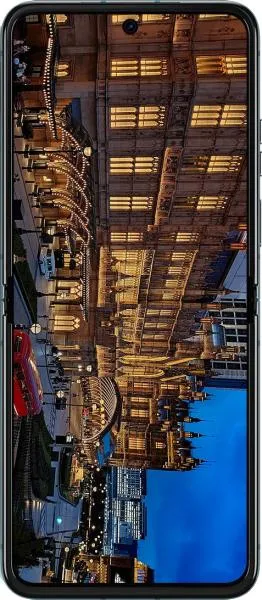

1. Specifications Comparison
| Feature | Motorola Razr 40 | Xiaomi Poco C65 | Practical Impact |
|---|---|---|---|
| Design | |||
| Dimensions (mm) | 170.8 x 74 x 7.4 | 168 x 78 x 8.1 | Razr 40 is significantly thinner and slightly taller when unfolded, crucial for portability due to its foldable nature. Poco C65 is wider and thicker. |
| Weight (g) | 188.6 | 192 | Razr 40 is lighter despite its complex folding mechanism. |
| Foldable | Yes | No | Razr 40 offers a compact folded size for pocketability. |
| Display | |||
| Type | Foldable LTPO AMOLED | IPS LCD | Razr 40 provides superior contrast, deeper blacks, and potentially better power efficiency with LTPO. |
| Size (inches) | 6.9 | 6.74 | Similar screen real estate when unfolded, but Razr 40's foldability is the key differentiator. |
| Resolution | 1080 x 2640 | 720 x 1650* | Razr 40 has a much sharper display (413 ppi vs ~267 ppi), resulting in crisper text and images. |
| Refresh Rate (Hz) | 144 | 90 | Razr 40 offers smoother animations and scrolling. |
| Performance | |||
| Chipset | Snapdragon 7 Gen 1 (4 nm) | Helio G85 (12 nm) | Razr 40 boasts significantly better CPU and GPU performance, enabling smoother multitasking and gaming. 7 Gen 1 is also more power-efficient. |
| CPU | Octa-core (1x2.4 GHz A710 & 3x2.36 GHz A710 & 4x1.8 GHz A510) | Octa-core (2x2.0 GHz A75 & 6x1.8 GHz A55) | Razr 40's newer CPU architecture provides a substantial performance advantage. |
| RAM (GB) | 8 | 6/8 (Variant Dependent) | 8GB RAM on Razr 40 allows for more apps to run in the background without performance slowdown. We received specification for the 8GB variant of the Poco C65. |
| Camera | |||
| Main Camera (MP) | 64 | 50 | While megapixels aren't everything, the Razr 40 likely offers better detail and low-light performance, though sensor specifics are missing for both. |
| Ultrawide/Macro | 13 MP Ultrawide + Macro | dedicated 2MP Macro | Razr offers a more versatile ultrawide, while Poco C65 has a dedicated macro lens. Practical usability depends on individual needs. |
| Video | 4K@30fps | 1080p@30fps | Razr 40 offers higher resolution video recording. |
| Battery | |||
| Capacity (mAh) | 4200 | 5000 | Poco C65 has a larger battery, potentially offering longer battery life. However, Razr 40's more efficient processor and AMOLED display could offset this difference. |
* Note: There's a discrepancy in the Poco C65's reported resolution. Spec sheet states 1600p, but detailed specs state 1650p. Using 1650p for calculation as it's more common for this screen size.
2. Key Differences Analysis
Motorola Razr 40 Advantages:
- Form Factor: The foldable design is the key differentiator, offering unparalleled portability.
- Superior Display: Sharper, smoother, and with better contrast thanks to the AMOLED technology and higher refresh rate.
- Significantly Better Performance: The Snapdragon 7 Gen 1 outperforms the Helio G85 in all aspects.
- Higher Resolution Video Recording: Captures more detail in videos.
Xiaomi Poco C65 Advantages:
- Larger Battery: Potentially longer battery life, though real-world usage will depend on various factors.
- Lower Price: Significantly more affordable.
- Dedicated Macro Lens: While only 2MP, may be preferred by users who frequently take extreme close-up shots.
Trade-offs:
- Razr 40: Higher price for the foldable technology and premium features. Smaller battery capacity compared to Poco C65.
- Poco C65: Lower performance, less sharp display, lower resolution video recording capabilities.
3. User Profiles & Recommendations
Motorola Razr 40: Ideal for users who prioritize portability and premium features like a high-quality display and strong performance. Suitable for users who value compactness and are willing to pay a premium. Use cases include professionals needing a powerful device on the go, content creators, and trendsetters.
Xiaomi Poco C65: Best suited for budget-conscious users who prioritize battery life and basic smartphone functionality. Ideal for users who primarily use their phones for calling, texting, social media browsing, and light gaming.
4. Decision Framework
Key Questions for Buyers:
- Budget: How much are you willing to spend?
- Portability vs. Battery Life: Which is more important: a compact, pocketable device or longer battery life?
- Performance Needs: Do you need a powerful phone for demanding tasks or is basic functionality sufficient?
Scenario-Based Recommendations:
- Limited Budget, Basic Needs: Poco C65
- Premium Experience, Portability Focused: Razr 40
- Balanced Approach (considering price and performance): Consider other options in the mid-range segment that might offer a better balance than either of these two.
My Choice: Motorola Razr 40
While the Poco C65 offers incredible value for its price, I would choose the Motorola Razr 40. The foldable form factor is a game-changer for portability, and the superior display and performance significantly enhance the user experience. While the price is higher, I value the combination of cutting-edge technology, compact design, and a smooth user experience. The Snapdragon 7 Gen 1, despite being a mid-range chip, offers a significant performance leap over the Helio G85, making it a more future-proof choice. The higher refresh rate display also contributes to a more enjoyable daily usage. While battery life is a concern, I'm willing to compromise slightly in that area for the significant benefits offered by the Razr 40's design and performance.
