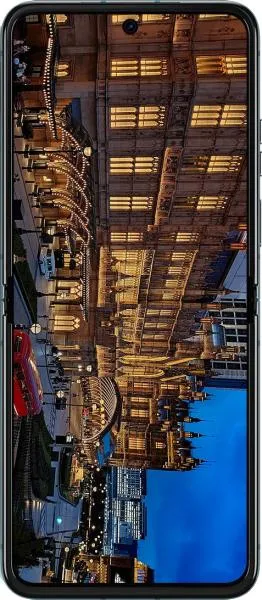
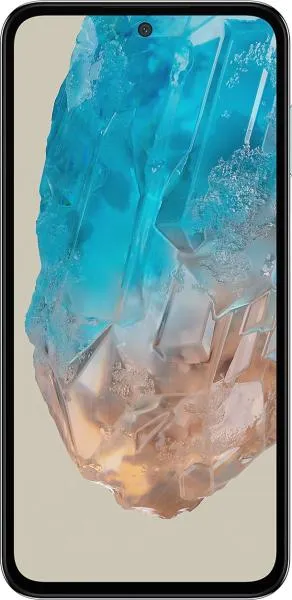
1. Specifications Comparison
| Feature | Motorola Razr 40 | Samsung Galaxy M35 | Practical Impact |
|---|---|---|---|
| Design | |||
| Form Factor | Foldable | Standard | Razr 40 offers portability and a unique form factor, M35 is a traditional slab phone. |
| Dimensions (mm) | 170.8 x 74 x 7.4 | 162.3 x 78.6 x 9.1 | Razr 40 is significantly more compact when folded, but thicker when unfolded. M35 is thinner overall but larger in footprint. |
| Weight (g) | 188.6 | 222 | Razr 40 is noticeably lighter. |
| Display | |||
| Display Type | Foldable LTPO AMOLED | Super AMOLED | Razr 40's foldable display allows for a larger screen in a smaller device, but introduces a crease. M35 offers a standard, uninterrupted display. |
| Size (inches) | 6.9 | 6.6 | Razr 40 has a slightly larger main display. |
| Resolution | 1080 x 2640 | 1080 x 2340 | Both have similar resolutions, resulting in comparable sharpness. Razr 40's taller aspect ratio may be better for scrolling webpages. |
| Refresh Rate (Hz) | 144 | 120 | Razr 40 offers smoother animations and scrolling, although the difference might not be noticeable for all users. |
| Performance | |||
| Chipset | Snapdragon 7 Gen 1 | Exynos 1380 | Both chipsets offer good mid-range performance. Exynos 1380 generally benchmarks slightly higher in CPU tasks. |
| CPU | Octa-core (1x2.4 GHz Cortex-A710 & 3x2.36 GHz Cortex-A710 & 4x1.8 GHz Cortex-A510) | Octa-core (4x2.4 GHz Cortex-A78 & 4x2.0 GHz Cortex-A55) | Performance differences will be minimal for everyday tasks. |
| GPU | Adreno 644 | Mali-G68 MP5 | Gaming performance should be comparable, though specific game optimization may favor one GPU over the other. |
| RAM (GB) | 8 | 8 | Both phones offer ample RAM for multitasking. |
| Camera | |||
| Main Camera (MP) | 64 | 50 | Razr 40 has a higher resolution main sensor. Image quality will depend on factors beyond resolution, such as sensor size and processing. |
| Ultrawide (MP) | 13 | 8 | Razr 40 offers a higher resolution ultrawide camera. |
| Macro (MP) | N/A | 2 | M35 includes a dedicated macro camera, Razr 40's ultrawide likely doubles as a macro lens. |
| Selfie (MP) | 32 | 13 | Razr 40 has a significantly higher resolution selfie camera. |
| Video | 4K@30fps | 4K@30fps | Both can record 4K video, M35 offers a higher frame rate slow-motion option (480fps vs 120fps). |
| Battery | |||
| Capacity (mAh) | 4200 | 6000 | M35 offers significantly longer battery life. |
2. Key Differences Analysis
Motorola Razr 40 Advantages:
- Portability: The foldable design makes it incredibly compact.
- Higher Refresh Rate Display: Smoother scrolling and animations.
- Higher Resolution Selfie Camera: Better quality for video calls and self-portraits.
Samsung Galaxy M35 Advantages:
- Significantly Longer Battery Life: Larger battery capacity for extended usage.
- Slightly Better CPU Performance: Potentially faster for demanding applications.
- Dedicated Macro Camera: Allows for detailed close-up shots.
- More Affordable: Based on listed prices.
3. User Profiles & Recommendations
Motorola Razr 40: Ideal for users who prioritize portability and a unique, stylish design. Suitable for those who value a compact phone for easy one-handed use and pocket-ability.
Samsung Galaxy M35: Best for users who prioritize battery life and value a traditional smartphone experience. Suitable for those who heavily use their phone throughout the day and need long battery endurance.
4. Decision Framework
Key Questions:
- How important is portability? If ultimate portability is paramount, the Razr 40 is the clear winner.
- How much do you value battery life? If all-day battery life is a necessity, the M35 is the better choice.
- What is your budget? The M35 appears to be more affordable.
Scenario-Based Recommendations:
- Frequent Traveler: Razr 40 for its compact size.
- Heavy User: M35 for its superior battery life.
- Budget-Conscious Buyer: M35 offers better value for its price.
My Choice: Samsung Galaxy M35
While the Razr 40's foldable design is intriguing, the significantly larger battery of the M35 is more compelling for my needs. I prioritize all-day battery life and generally prefer a traditional smartphone form factor. The slightly better CPU performance and lower price further solidify the M35 as the better option for me. While I appreciate the Razr 40's portability, I am willing to compromise on size for the significant gains in battery life and affordability. The dedicated macro lens is a nice bonus, although not a deciding factor.
