1. Specifications Comparison
| Feature | Motorola Razr 40 | Google Pixel 9 | Practical Impact |
|---|---|---|---|
| Design | |||
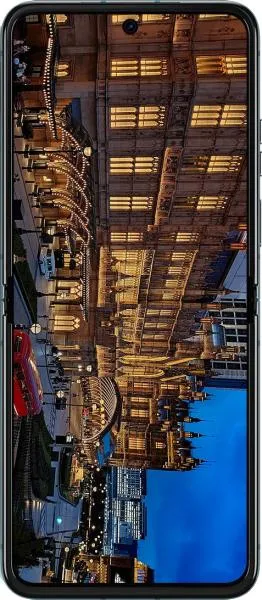
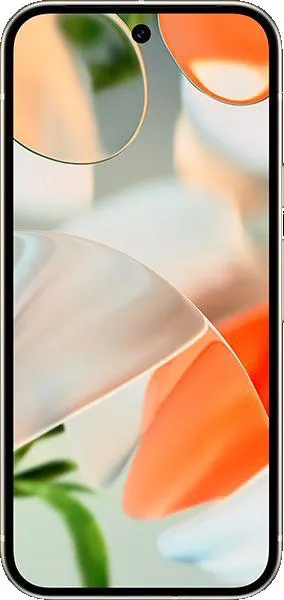
| Form Factor | Foldable | Standard | Razr 40 offers portability and a smaller footprint when folded, but introduces a crease on the main display. Pixel 9 is a traditional slab design. |
| Dimensions (mm) | 170.8 x 74 x 7.4 | 152.8 x 72 x 8.5 | Razr 40 is taller and narrower when unfolded, Pixel 9 is more pocketable when unfolded. |
| Weight (g) | 188.6 | 198 | Razr 40 is slightly lighter. |
| Display | |||
| Display Type | Foldable LTPO AMOLED | OLED | Razr 40's folding display allows for a larger screen in a smaller device, but may have a crease. Pixel 9 offers a more traditional, flat display. |
| Size (inches) | 6.9 | 6.3 | Razr 40 provides significantly more screen real estate when unfolded. |
| Resolution (px) | 1080 x 2640 | 1080 x 2424 | Both offer similar sharpness, but Razr 40 is slightly sharper due to the larger display with a similar resolution. |
| Refresh Rate (Hz) | 144 | 120 | Razr 40 offers smoother scrolling and animations. |
| Peak Brightness (nits) | 1400 | 2700 | Pixel 9 offers significantly better outdoor visibility. |
| Performance | |||
| Chipset | Snapdragon 7 Gen 1 | Google Tensor G4 | Tensor G4 is expected to be more powerful overall, especially in AI tasks. Snapdragon 7 Gen 1 is a more mid-range chip focused on efficiency. |
| CPU | Octa-core (1x2.4 GHz A710 & 3x2.36 GHz A710 & 4x1.8 GHz A510) | Octa-core (1x3.1 GHz X4 & 3x2.6 GHz A720 & 4x1.92 GHz A520) | Pixel 9's CPU boasts faster clock speeds and a more powerful core architecture, leading to better performance in demanding tasks. |
| GPU | Adreno 644 | Mali-G715 MC7 | Mali-G715 should offer better graphics performance. |
| RAM (GB) | 8 | 12 | Pixel 9 offers significantly more RAM for better multitasking. |
| Camera | |||
| Main Camera (MP) | 64 | 50 | Pixel 9 utilizes a larger sensor (specified in details) and advanced computational photography, likely resulting in better image quality despite lower resolution. |
| Ultrawide (MP) | 13 | 48 | Pixel 9 offers a higher resolution ultrawide camera. |
| Video Capabilities | 4K@30fps | Up to 4K@60fps, 1080p@240fps | Pixel 9 provides more comprehensive video recording options, including higher resolution and frame rates, as well as slow-motion capabilities. |
| DxOMark Score | Not Available | 154 | Pixel 9 has a quantifiable measure of camera quality indicating excellent performance. |
| Battery | |||
| Capacity (mAh) | 4200 | 4700 | Pixel 9 has a larger battery capacity, potentially offering longer battery life. |
2. Key Differences Analysis
Motorola Razr 40 Advantages:
- Portability: The foldable design makes it significantly more compact when folded.
- Higher Refresh Rate Display: Smoother scrolling and animations.
Google Pixel 9 Advantages:
- Performance: More powerful CPU and GPU for demanding tasks and gaming.
- Camera: Superior camera system with larger sensor, better computational photography, and more video recording options.
- Battery Life: Larger battery capacity.
- Software Support: Longer OS update guarantee from Google.
- Brighter Display: Much better outdoor visibility.
Trade-offs:
- Razr 40: Foldable design introduces a crease and potential durability concerns; less powerful performance.
- Pixel 9: Larger overall size; potentially higher price.
3. User Profiles & Recommendations
Motorola Razr 40: Users who prioritize portability and a unique form factor over raw performance. Ideal for users who value compact size for easy pocketability and are willing to compromise on some performance and camera capabilities.
Google Pixel 9: Users who prioritize performance, camera quality, and battery life. Suitable for power users, photographers, and videographers.
4. Decision Framework
Key Questions for Buyers:
- How important is portability? If ultimate portability is paramount, the Razr 40's foldable design is a strong contender.
- What is your budget? The Pixel 9 is likely to be more expensive.
- What are your primary use cases? (e.g., social media, gaming, photography) The Pixel 9 excels in demanding tasks and photography, while the Razr 40 is sufficient for everyday use.
Scenario-Based Recommendations:
- Frequent Traveler: Razr 40 for its compact size.
- Mobile Gamer/Power User: Pixel 9 for its superior performance.
- Photography Enthusiast: Pixel 9 for its advanced camera system.
My Choice: Google Pixel 9
While the Razr 40's foldable design is intriguing, the Pixel 9's superior performance, significantly better camera system, longer software support, and brighter display make it the more compelling choice for me. I prioritize a smooth user experience, high-quality photos and videos, and long-term software updates. The larger battery is also a significant benefit. While the Razr 40 offers better portability, the trade-offs in performance and other key areas are too significant for my personal needs. The Pixel 9 provides a more well-rounded and future-proof package.
