
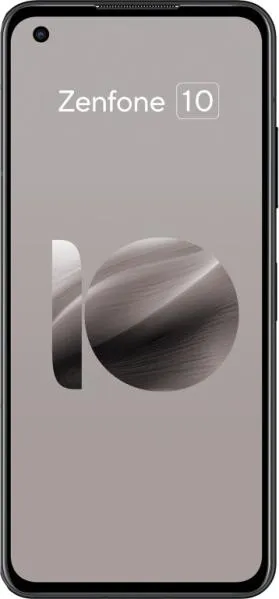
1. Specifications Comparison
| Feature | Motorola Razr 40 | Asus Zenfone 10 | Practical Impact |
|---|---|---|---|
| Design | |||
| Form Factor | Foldable | Traditional Slab | Razr 40 offers compact portability when folded, Zenfone 10 prioritizes single-screen simplicity. |
| Dimensions (mm) | 170.8 x 74 x 7.4 (unfolded) | 146.5 x 68.1 x 9.4 | Razr 40 is significantly thinner when unfolded but longer; Zenfone 10 is more pocketable in one dimension. |
| Weight (g) | 188.6 | 172 | Razr 40 is slightly heavier. |
| Display | |||
| Display Type | Foldable LTPO AMOLED | Super AMOLED | Razr 40's folding screen allows for a larger display in a smaller device; Zenfone 10's traditional screen may be more durable. |
| Size (inches) | 6.9 | 5.92 | Significantly larger screen real estate on the Razr 40 for media consumption and multitasking. |
| Resolution (px) | 1080 x 2640 | 1080 x 2400 | Both are 1080p, but Razr 40 is slightly taller due to aspect ratio. Negligible difference in sharpness. |
| Refresh Rate (Hz) | 144 | 144 | Both offer smooth scrolling and animations. |
| Peak Brightness (nits) | 1400 | 1100 | Razr 40 should be more visible in direct sunlight. |
| Performance | |||
| Chipset | Snapdragon 7 Gen 1 | Snapdragon 8 Gen 2 | Zenfone 10 boasts significantly more powerful CPU and GPU for demanding tasks and gaming. |
| CPU | Octa-core (1x2.4 GHz Cortex-A710 & 3x2.36 GHz Cortex-A710 & 4x1.8 GHz Cortex-A510) | Octa-core (1x3.2 GHz Cortex-X3 & 2x2.8 GHz Cortex-A715 & 2x2.8 GHz Cortex-A710 & 3x2.0 GHz Cortex-A510) | Zenfone 10 will handle heavy multitasking and demanding applications much better. |
| RAM (GB) | 8 | 8/16 | Zenfone 10 offers a 16GB RAM option for even smoother performance. |
| Camera | |||
| Main Camera (MP) | 64 | 50 (Sony IMX766) | While Razr has higher resolution, Zenfone 10 uses a larger, well-regarded sensor likely resulting in better low-light performance and dynamic range. |
| Ultrawide (MP) | 13 | 13 | Comparable ultrawide cameras. |
| Video Recording | 4K@30fps | 8K@24fps | Zenfone 10 offers higher resolution video recording. |
| Battery | |||
| Capacity (mAh) | 4200 | 4300 | Zenfone 10 has a slightly larger battery, but real-world battery life will depend on usage and software optimization. Foldable displays often consume more power. |
2. Key Differences Analysis
Motorola Razr 40 Advantages:
- Portability: The folding design offers unmatched portability.
- Larger Display: Provides a bigger screen for media consumption in a compact device.
- Higher Peak Brightness: Better outdoor visibility.
Asus Zenfone 10 Advantages:
- Flagship Performance: Significantly faster processor for demanding tasks and gaming.
- Superior Main Camera Sensor: Likely better image quality, especially in low light.
- Higher Resolution Video Recording: Up to 8K video capture.
- Slightly Larger Battery: Potentially longer battery life, although this can be impacted by the smaller, more efficient display on the Zenfone.
3. User Profiles & Recommendations
Motorola Razr 40: Ideal for users who prioritize portability and a large screen for media consumption on the go, and are willing to compromise on raw performance. Best for social media, web browsing, and casual gaming.
Asus Zenfone 10: Ideal for power users who demand top-tier performance for gaming, demanding applications, and content creation. Also suitable for photography enthusiasts.
4. Decision Framework
Key Questions:
- Portability vs. Performance: Is ultimate portability or flagship performance more important?
- Content Consumption vs. Creation: Will you primarily use the phone for consuming media or creating content?
- Budget & Feature Prioritization: Given the similar price range, which features are most valuable to you?
Scenario-Based Recommendations:
- Frequent Traveler: Razr 40 for its compact size.
- Mobile Gamer: Zenfone 10 for its powerful processor and GPU.
- Photography Enthusiast: Zenfone 10 for its superior camera system.
My Choice: Asus Zenfone 10
While the Razr 40's foldable design is intriguing, the Zenfone 10's superior performance, camera, and potentially longer battery life are more compelling to me. I value a smooth and responsive user experience for productivity and gaming, and the Snapdragon 8 Gen 2 delivers that. The improved camera sensor on the Zenfone 10 is also a significant factor, as I prioritize image quality. Although the Razr 40 offers a larger screen, the Zenfone 10's size is still comfortable for one-handed use and pocketability, making it a more well-rounded device for my needs.
