1. Specifications Comparison
| Feature | Motorola Razr 40 Ultra | ZTE nubia Z50S Pro | Practical Impact |
|---|---|---|---|
| Design | |||
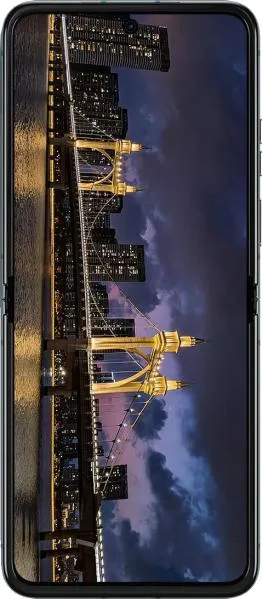
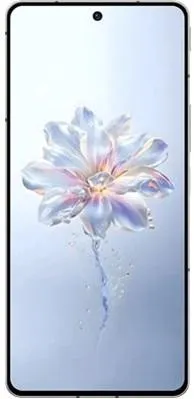
| Form Factor | Foldable | Slab | Razr offers portability and a unique form factor; Z50S Pro provides a traditional, larger screen experience. |
| Dimensions (mm) | 170.8 x 74 x 7 | 163.9 x 76.3 x 8.3 | Razr is significantly more compact when folded but thicker when unfolded. Z50S Pro is larger overall. |
| Weight (g) | 184.5 | 228 | Razr is noticeably lighter, improving one-handed usability, especially when folded. |
| Display | |||
| Display Type | Foldable LTPO AMOLED | AMOLED | Razr's foldable display allows for compact storage; Z50S Pro has a larger, potentially more immersive display. |
| Size (inches) | 6.9 | 6.8 | Negligible difference in screen real estate when unfolded. |
| Resolution | 1080 x 2640 | 1260 x 2800 | Z50S Pro offers a slightly sharper display due to higher resolution. |
| Refresh Rate (Hz) | 165 | 120 | Razr provides smoother animations and scrolling; however, the difference might not be noticeable for all users. |
| Peak Brightness (nits) | 1400 | 1500 | Z50S Pro offers slightly better outdoor visibility. |
| Performance | |||
| Chipset | Snapdragon 8+ Gen 1 | Snapdragon 8+ Gen 2 | Z50S Pro boasts a newer, more powerful chipset, resulting in faster processing and potentially better gaming performance. |
| CPU | Octa-core (1x3.19 GHz Cortex-X2 & 3x2.75 GHz Cortex-A710 & 4x1.80 GHz Cortex-A510) | Octa-core (1x3.36 GHz Cortex-X3 & 2x2.8 GHz Cortex-A715 & 2x2.8 GHz Cortex-A710 & 3x2.0 GHz Cortex-A510) | Z50S Pro's CPU offers performance improvements in demanding tasks and multitasking. |
| GPU | Adreno 730 | Adreno 740 | Z50S Pro's GPU provides a significant advantage in graphics-intensive applications and games. |
| RAM (GB) | 8 | 12 | Z50S Pro offers more RAM, enabling better multitasking and smoother performance with multiple apps open. |
| Camera | |||
| Main Camera (MP) | 12 | 54 | Z50S Pro has a much higher resolution main sensor, potentially capturing more detail. |
| Ultrawide (MP) | 13 | 50 | Z50S Pro's ultrawide offers higher resolution. |
| Telephoto | No | Yes (8MP) | Z50S Pro offers optical zoom capabilities, absent in the Razr. |
| Selfie (MP) | 32 | 16 | Razr boasts a higher resolution selfie camera. |
| Battery | |||
| Capacity (mAh) | 3800 | 5100 | Z50S Pro has significantly larger battery capacity, translating to longer usage time. |
2. Key Differences Analysis
Motorola Razr 40 Ultra Advantages:
- Portability: The foldable design offers unmatched portability.
- Lighter Weight: Noticeably lighter than the Z50S Pro.
- Higher Resolution Selfie Camera: Better for video calls and self-portraits.
- Faster Refresh Rate: Smoother scrolling and animations.
ZTE nubia Z50S Pro Advantages:
- Performance: Significantly more powerful processor and GPU.
- Larger Battery: Considerably longer battery life.
- Higher Resolution Main and Ultrawide Cameras: More detailed photos and videos.
- Optical Zoom: Versatility in capturing different perspectives.
- Larger RAM: Improved multitasking and overall performance.
3. User Profiles & Recommendations
Motorola Razr 40 Ultra: Ideal for users prioritizing portability and style. Best for those who value a compact phone for easy carrying and moderate usage.
ZTE nubia Z50S Pro: Suitable for users who demand top-tier performance, long battery life, and a versatile camera system. Excellent for power users, gamers, and photography enthusiasts.
4. Decision Framework
Key Questions for Buyers:
- Portability vs. Performance: Which is more important: a compact, foldable phone or a powerful device with a larger screen and longer battery life?
- Camera Needs: Do you prioritize selfie quality or a versatile rear camera system with optical zoom?
- Budget: While both are in the medium price range, specific configurations may vary in price.
Scenario-Based Recommendations:
- Frequent Traveler: Razr 40 Ultra for its compact size.
- Mobile Gamer: Z50S Pro for its superior performance.
- Photography Enthusiast: Z50S Pro for its versatile camera system.
My Choice: ZTE nubia Z50S Pro
While the Razr 40 Ultra's foldable design is intriguing, the Z50S Pro's superior performance, longer battery life, and versatile camera system are more compelling for my needs. I prioritize a smooth user experience, long usage time between charges, and the ability to capture high-quality photos and videos. The added benefit of a larger display for media consumption further solidifies my choice. The slight increase in size and weight is a trade-off I'm willing to make for the significant gains in performance and functionality. The newer, more powerful chipset of the Z50S Pro ensures future-proofing and a longer period of optimal performance.
