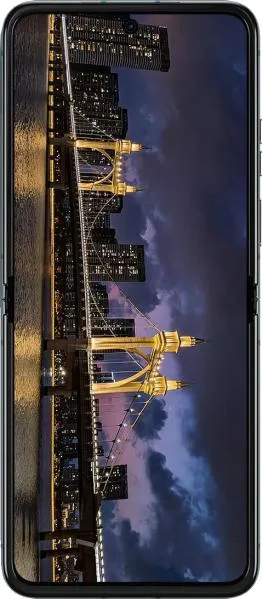
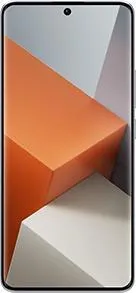
1. Specifications Comparison
| Feature | Motorola Razr 40 Ultra | Xiaomi Redmi Note 13 Pro+ | Practical Impact |
|---|---|---|---|
| Design | |||
| Form Factor | Foldable | Standard | Razr offers portability and a unique form factor, Redmi offers a traditional slab design. |
| Dimensions (mm) | 170.8 x 74 x 7 | 161.4 x 74.2 x 8.9 | Razr is significantly thinner when folded but taller when unfolded. Redmi is a larger, more conventional size. |
| Weight (g) | 184.5 | 199 | Razr is noticeably lighter, improving one-handed usability, especially when folded. |
| Display | |||
| Display Type | Foldable LTPO AMOLED | AMOLED | Razr's foldable display allows for a larger screen in a compact device. Redmi offers a standard, larger display. |
| Size (inches) | 6.9 | 6.67 | Comparable screen sizes when unfolded, but Razr offers a secondary external display for quick interactions. |
| Resolution | 1080 x 2640 | 1220 x 2712 | Redmi boasts a slightly sharper display due to higher pixel density. |
| Refresh Rate (Hz) | 165 | 120 | Razr provides smoother scrolling and animations, beneficial for gaming and fast-paced content. |
| Peak Brightness (nits) | 1400 | 1800 | Redmi's higher peak brightness enhances outdoor visibility. |
| Performance | |||
| Chipset | Snapdragon 8+ Gen 1 | Dimensity 7200 Ultra | Both are powerful chipsets, but Snapdragon 8+ Gen 1 generally offers better performance in benchmarks. Real-world performance differences may be subtle for average users. |
| CPU | Octa-core (1x3.19 GHz Cortex-X2 & 3x2.75 GHz Cortex-A710 & 4x1.80 GHz Cortex-A510) | Octa-core (2x2.8 GHz Cortex-A715 & 6x2.0 GHz Cortex-A510) | Snapdragon 8+ Gen 1's core configuration suggests a higher potential for peak performance. |
| GPU | Adreno 730 | Mali-G610 MC4 | Adreno 730 generally provides superior graphics performance, benefiting demanding games and visual tasks. |
| RAM (GB) | 8/12 | 8/12/16 | Both offer similar RAM options, sufficient for multitasking and demanding applications. |
| Camera | |||
| Main Camera (MP) | 12 | 200 | Redmi boasts significantly higher resolution, potentially capturing more detail. |
| Ultrawide (MP) | 13 | 8 | Razr has a higher resolution ultrawide, potentially capturing wider and more detailed shots. |
| Other Cameras | 32MP Selfie | 2MP Depth, 16MP Selfie | Redmi's dedicated depth sensor may improve portrait mode shots. Razr offers a higher resolution selfie camera. |
| Battery | |||
| Capacity (mAh) | 3800 | 5000 | Redmi offers substantially longer battery life. |
2. Key Differences Analysis
Motorola Razr 40 Ultra Advantages:
- Portability: The foldable design makes it incredibly compact when closed.
- High Refresh Rate Display: Smoother visuals and more responsive interactions.
- Potentially Superior Performance: Snapdragon 8+ Gen 1 generally benchmarks higher.
Xiaomi Redmi Note 13 Pro+ Advantages:
- Larger Battery: Significantly longer battery life.
- Higher Resolution Main Camera: Potentially capturing more detail in photos.
- Brighter Display: Enhanced outdoor visibility.
- Lower Price: While both are mid-range, the Redmi generally offers a lower starting price for similar storage configurations.
Trade-offs:
- Razr: Shorter battery life due to the foldable design and smaller physical space. Higher price for the foldable technology.
- Redmi: Larger and heavier, less pocketable. Lower peak performance compared to the Snapdragon 8+ Gen 1.
3. User Profiles & Recommendations
Motorola Razr 40 Ultra:
- Ideal User: Style-conscious users prioritizing portability and a unique form factor, willing to compromise on battery life for compactness.
- Use Cases: Frequent travelers, those who value pocketability, users who appreciate a high refresh rate display for gaming and media consumption.
Xiaomi Redmi Note 13 Pro+:
- Ideal User: Users prioritizing battery life, camera resolution, and value for money.
- Use Cases: Power users, mobile photographers, users who consume a lot of media, individuals looking for a reliable all-rounder at a competitive price.
4. Decision Framework
Key Questions for Buyers:
- How important is portability? A foldable phone prioritizes compactness over a larger battery and conventional design.
- What is your budget? The Razr's innovative design comes at a premium.
- What are your primary use cases? Consider whether battery life, camera quality, performance, or portability are most important.
Scenario-Based Recommendations:
- Heavy user, long battery life crucial: Redmi Note 13 Pro+.
- Frequent traveler, ultimate portability needed: Razr 40 Ultra.
- Gamer, prioritizing smooth visuals: Razr 40 Ultra for its 165Hz display.
- Photographer, seeking high-resolution images: Redmi Note 13 Pro+ for its 200MP main camera.
My Choice: Xiaomi Redmi Note 13 Pro+
While the Razr 40 Ultra's foldable design is intriguing, the Redmi Note 13 Pro+ offers a more compelling package for my needs. I prioritize battery life, a good camera, and value for money. The Redmi's larger battery, higher resolution main camera, and brighter display outweigh the benefits of the foldable form factor for my daily usage. The lower price point further solidifies its value proposition. While the Razr's higher refresh rate is attractive, the difference between 120Hz and 165Hz is less impactful in everyday use compared to the substantial difference in battery life. The Redmi's solid performance and feature set make it a well-rounded device that excels in various practical scenarios.
