
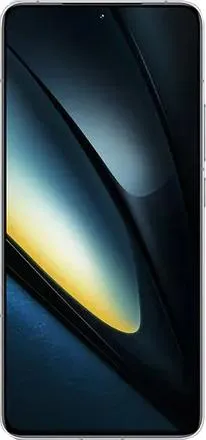
1. Specifications Comparison
| Feature | Motorola Razr 40 Ultra | Xiaomi Poco F6 Pro | Practical Impact |
|---|---|---|---|
| Design | |||
| Dimensions (mm) | 170.8 x 74 x 7 | 160.9 x 75 x 8.2 | Razr 40 Ultra significantly thinner and more compact when folded, but taller unfolded. Poco F6 Pro is a more traditional candybar design. |
| Weight (g) | 184.5 | 209 | Razr 40 Ultra noticeably lighter, important for portability, especially with a foldable. |
| Foldable | Yes | No | Razr 40 Ultra offers greater portability and a unique form factor. Poco F6 Pro provides a larger, uninterrupted screen. |
| Display | |||
| Display Type | Foldable LTPO AMOLED | AMOLED | Razr offers flexibility with external display for quick interactions. Poco F6 Pro has a larger, more immersive single screen. |
| Size (inches) | 6.9 | 6.67 | Poco F6 Pro offers a slightly larger main display for media consumption and multitasking. |
| Resolution | 1080 x 2640 | 1440 x 3200 | Poco F6 Pro has a significantly sharper display with higher pixel density (526 ppi vs 413 ppi), resulting in crisper text and images. |
| Refresh Rate (Hz) | 165 | 120 | Both offer smooth scrolling and animations, but the Razr 40 Ultra has a potentially smoother experience in supported content. |
| Peak Brightness (nits) | 1400 | 4000 | Poco F6 Pro's display is much brighter, significantly improving outdoor visibility. |
| Performance | |||
| Chipset | Snapdragon 8+ Gen 1 | Snapdragon 8 Gen 2 | Poco F6 Pro has a newer, more powerful processor, leading to faster performance and better efficiency. |
| CPU | Octa-core (1x3.19 GHz Cortex-X2 & 3x2.75 GHz Cortex-A710 & 4x1.80 GHz Cortex-A510) | Octa-core (1x3.2 GHz Cortex-X3 & 2x2.8 GHz Cortex-A715 & 2x2.8 GHz Cortex-A710 & 3x2.0 GHz Cortex-A510) | Poco F6 Pro's CPU architecture is newer and more efficient, resulting in better performance and potentially longer battery life. |
| GPU | Adreno 730 | Adreno 740 | Poco F6 Pro features a more powerful GPU, leading to improved gaming and graphics performance. |
| RAM | 8GB (reviewed model) | 12GB/16GB | Poco F6 Pro offers more RAM, allowing for better multitasking and smoother performance with demanding applications. |
| Camera | |||
| Main Camera | 12MP | 50MP (OmniVision OV50E) | Poco F6 Pro has a higher resolution main sensor, potentially capturing more detail. Sensor and image processing quality impact real-world results, which cannot be fully assessed with provided data. |
| Ultrawide | 13MP | 8MP | Razr has a higher resolution ultrawide. However, sensor quality and lens performance are crucial and unknown. |
| Selfie | 32MP | 16MP | Razr boasts a higher resolution selfie camera. Again, image quality depends on factors beyond resolution. |
| Video | Up to 4K@60fps | Up to 8K@24fps | Poco F6 Pro can record higher resolution video, but practical usability depends on storage space and processing power. |
| Battery | |||
| Capacity (mAh) | 3800 | 5000 | Poco F6 Pro has significantly larger battery capacity, likely translating to longer battery life. |
2. Key Differences Analysis
Motorola Razr 40 Ultra Advantages:
- Portability: Significantly smaller and lighter due to the foldable design.
- Unique Form Factor: The flip phone design offers a nostalgic appeal and a more compact option. External display allows for quick interactions.
Xiaomi Poco F6 Pro Advantages:
- Performance: Newer and more powerful processor, GPU, and more RAM for superior performance.
- Display: Larger, sharper, and brighter display for a more immersive experience.
- Battery Life: Significantly larger battery capacity.
3. User Profiles & Recommendations
Motorola Razr 40 Ultra: Users who prioritize portability and style above raw performance and battery life. Ideal for those who value a compact phone and appreciate the unique foldable design.
Xiaomi Poco F6 Pro: Users who prioritize performance, battery life, and a large, high-quality display. Suitable for power users, gamers, and multimedia enthusiasts.
4. Decision Framework
Key Questions for Buyers:
- How important is portability? If ultimate portability is paramount, the Razr 40 Ultra is the clear winner.
- What is your budget and performance requirement? The Poco F6 Pro offers significantly better performance and battery life for a comparable price.
- Do you value a foldable design? The Razr's unique form factor offers a different user experience compared to traditional smartphones.
My Choice: Xiaomi Poco F6 Pro
While the Motorola Razr 40 Ultra's design is intriguing, the Xiaomi Poco F6 Pro is the better overall phone for me. The significantly improved performance, larger battery, brighter and sharper display, and the more versatile camera system outweigh the Razr's portability advantage. The Poco F6 Pro provides a more well-rounded user experience for my needs, which prioritize performance, battery life, and a great display for multimedia consumption and productivity. The price difference, while not substantial based on listed prices, further solidifies the Poco F6 Pro as the better value proposition.
