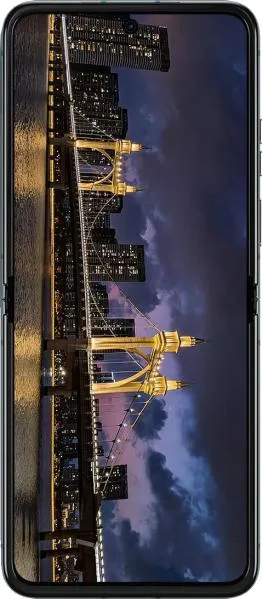

1. Specifications Comparison
| Feature | Motorola Razr 40 Ultra | Xiaomi Poco C65 | Practical Impact |
|---|---|---|---|
| Design | |||
| Dimensions (mm) | 170.8 x 74 x 7 | 168 x 78 x 8.1 | Razr 40 Ultra significantly thinner and more pocketable due to its foldable design. Poco C65 is larger and thicker. |
| Weight (g) | 184.5 | 192 | Razr 40 Ultra is lighter despite its complex hinge mechanism. |
| Foldable | Yes | No | Razr 40 Ultra offers a compact folded size and a larger screen when unfolded. Poco C65 is a traditional slab phone. |
| Display | |||
| Display Type | Foldable LTPO AMOLED | IPS LCD | Razr 40 Ultra provides deeper blacks, more vibrant colors, and better power efficiency. |
| Display Size (inches) | 6.9 | 6.74 | Similar screen sizes when unfolded, but Razr offers a secondary external display for quick interactions. |
| Resolution | 1080 x 2640 | 720 x 1650 | Razr 40 Ultra has a much sharper display (413 ppi vs 267 ppi), resulting in clearer text and images. |
| Refresh Rate (Hz) | 165 | 90 | Razr 40 Ultra offers smoother animations and scrolling. |
| Performance | |||
| Chipset | Snapdragon 8+ Gen 1 | Helio G85 | Razr 40 Ultra boasts significantly faster processing power for demanding tasks and gaming. |
| CPU | Octa-core (1x3.19 GHz Cortex-X2 & 3x2.75 GHz Cortex-A710 & 4x1.80 GHz Cortex-A510) | Octa-core (2x2.0 GHz Cortex-A75 & 6x1.8 GHz Cortex-A55) | Razr 40 Ultra has a more powerful and efficient CPU architecture. |
| RAM (GB) | 8/12 | 6/8 | Razr 40 Ultra offers more RAM in some variants, enabling better multitasking. |
| Camera | |||
| Main Camera (MP) | 12 | 50 | While Poco C65 boasts higher megapixels, Razr 40 Ultra's larger sensor and wider aperture (f/1.5) likely result in better low-light performance. Image quality depends on processing, not just megapixels. |
| Selfie Camera (MP) | 32 | 8 | Razr 40 Ultra has a much higher resolution selfie camera. |
| Video Recording | Up to 4K@60fps with HDR, EIS | 1080p@30fps | Razr 40 Ultra offers higher resolution and frame rate video recording with image stabilization. |
| Battery | |||
| Capacity (mAh) | 3800 | 5000 | Poco C65 has a significantly larger battery capacity, potentially offering longer battery life. However, Razr's more efficient display might offset this difference. |
2. Key Differences Analysis
Motorola Razr 40 Ultra Advantages:
- Form Factor: Foldable design for portability and a larger screen when needed.
- Superior Display: Higher resolution, refresh rate, and AMOLED technology.
- Flagship Performance: Powerful Snapdragon 8+ Gen 1 chipset for smooth performance.
- External Display: Enables quick interactions without unfolding.
Xiaomi Poco C65 Advantages:
- Larger Battery: Potentially longer battery life.
- Lower Price: Significantly more affordable.
3. User Profiles & Recommendations
Motorola Razr 40 Ultra: Users who value portability, a premium design, a great display, and top-tier performance. Ideal for those who want a compact phone without sacrificing screen size or power. Suitable for professionals, content creators, and tech enthusiasts.
Xiaomi Poco C65: Budget-conscious users who prioritize battery life and basic functionality. Suitable for students, casual users, and those seeking a large screen for media consumption.
4. Decision Framework
Key Questions for Buyers:
- Budget: How much are you willing to spend?
- Priorities: What features are most important to you (portability, performance, battery life, camera)?
- Usage: How will you primarily use your phone (social media, gaming, productivity)?
Scenario-Based Recommendations:
- Limited Budget, Basic Needs: Poco C65
- Premium Experience, Portability Focus: Razr 40 Ultra
- Balanced Needs, Value Seeker: Consider other options that offer a balance of features and price.
My Choice: Motorola Razr 40 Ultra
While the Poco C65 offers great value for its price, the Motorola Razr 40 Ultra aligns better with my personal preferences. I value the innovative foldable design, the significantly superior display and performance, and the convenience of the external screen. The compact size when folded is a major advantage for portability. I'm willing to compromise on battery life for the overall premium experience and cutting-edge technology offered by the Razr 40 Ultra. The price difference is significant, but the Razr provides a substantial upgrade in almost every other aspect.
