1. Specifications Comparison
| Feature | Motorola Razr 40 Ultra | Xiaomi 13T Pro | Practical Impact |
|---|---|---|---|
| Design | |||
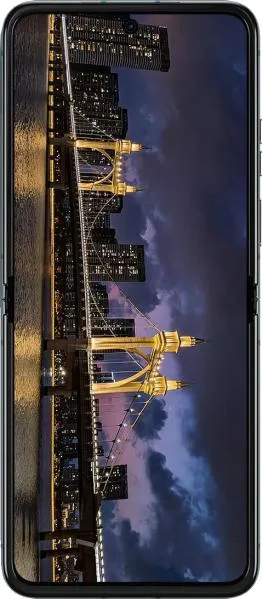
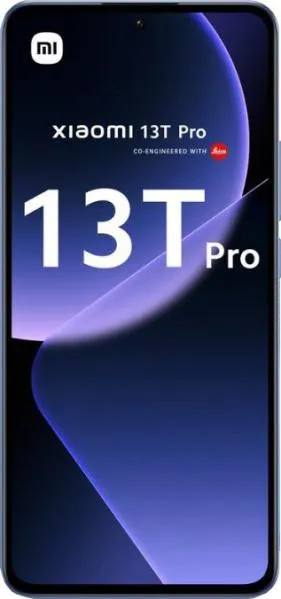
| Form Factor | Foldable | Standard | Razr offers portability and a unique form factor; 13T Pro is a traditional slab design. |
| Dimensions (mm) | 170.8 x 74 x 7 | 162.2 x 75.7 x 8.5 | Razr is significantly thinner when folded but taller unfolded; 13T Pro is more pocketable when unfolded. |
| Weight (g) | 184.5 | 200 | Razr is lighter, despite the folding mechanism. |
| Display | |||
| Size (inches) | 6.9 (main), ~3.6 (cover) | 6.67 | Razr's larger main display provides more screen real estate for media consumption; cover display allows for quick interactions without unfolding. |
| Resolution (px) | 1080 x 2640 | 1220 x 2712 | 13T Pro has a slightly sharper display (446 ppi vs 413 ppi). |
| Refresh Rate (Hz) | 165 | 144 | Both offer high refresh rates for smooth scrolling and gaming, but the difference is negligible in real-world use. |
| Display Type | Foldable LTPO AMOLED | AMOLED | Razr's foldable display is more prone to creasing and potential damage. 13T Pro uses a durable, flat AMOLED. |
| Performance | |||
| Chipset | Snapdragon 8+ Gen 1 | Dimensity 9200+ | Both are high-end chipsets offering excellent performance; Dimensity 9200+ generally benchmarks slightly higher. |
| CPU | Octa-core (1x3.19 GHz X2 & 3x2.75 GHz A710 & 4x1.80 GHz A510) | Octa-core (1x3.35 GHz X3 & 3x3.0 GHz A715 & 4x2.0 GHz A510) | Both CPUs provide flagship-level performance; differences will be minor for most users. |
| RAM (GB) | 8 (tested model) | 12/16 (multiple versions) | 13T Pro offers more RAM in some configurations, beneficial for multitasking and demanding applications. |
| Camera | |||
| Main Camera (MP) | 12 | 50 (Sony IMX707) | 13T Pro boasts a significantly higher resolution main sensor and a superior sensor (Sony IMX707), potentially capturing more detail. |
| Other Cameras | 13MP ultrawide, 32MP selfie | 50MP telephoto, 13MP ultrawide, 20MP selfie | 13T Pro offers a dedicated telephoto lens for optical zoom, absent in the Razr. |
| Video Recording | Up to 4K@60fps | Up to 8K@24fps | 13T Pro offers higher resolution video recording capabilities. |
| Battery | |||
| Capacity (mAh) | 3800 | 5000 | 13T Pro has a significantly larger battery capacity, likely resulting in longer battery life. |
2. Key Differences Analysis
Motorola Razr 40 Ultra Advantages:
- Portability: The foldable design offers unmatched portability.
- Unique Form Factor: The clamshell design is nostalgic and stylish.
- Functional Cover Display: Allows for many tasks without unfolding.
Xiaomi 13T Pro Advantages:
- Superior Performance: Slightly more powerful chipset and more RAM options.
- Better Camera System: Higher resolution sensors, dedicated telephoto lens, and 8K video recording.
- Significantly Longer Battery Life: Larger battery capacity.
- More Durable Display: Traditional glass display is less prone to damage than a foldable screen.
Trade-offs:
- Razr: Portability and unique design come at the cost of battery life, camera quality, and potential durability concerns with the foldable screen.
- 13T Pro: Lacks the novelty and portability of a foldable phone.
3. User Profiles & Recommendations
Motorola Razr 40 Ultra: Ideal for users who prioritize portability and style above all else and are willing to compromise on battery life and camera quality. Suitable for users who value the quick interactions offered by the cover screen.
Xiaomi 13T Pro: Ideal for users who prioritize performance, camera quality, and battery life. Suitable for power users, mobile gamers, photographers, and videographers.
4. Decision Framework
Key Questions for Buyers:
- How important is portability to you? If ultimate portability is paramount, the Razr is the clear winner.
- What is your budget and how do you prioritize features? The Razr prioritizes form factor over raw specs, while the 13T Pro delivers more conventional value for its price.
- What are your primary use cases? (e.g., social media, photography, gaming) The 13T Pro excels in demanding tasks, while the Razr focuses on portability and quick communication.
My Choice: Xiaomi 13T Pro
While the Motorola Razr 40 Ultra's foldable design is undeniably appealing, the Xiaomi 13T Pro offers a more well-rounded package for my needs. I prioritize performance, camera quality, and battery life, all areas where the 13T Pro excels. The significantly larger battery, superior camera system with a dedicated telephoto lens, and more powerful processor make it a more practical choice for everyday use. Although I appreciate the Razr's innovative design, the trade-offs in other areas are too significant for me personally. The 13T Pro provides a more compelling combination of performance, features, and value.
