1. Specifications Comparison
| Feature | Motorola Razr 40 Ultra | Xiaomi 13T | Practical Impact |
|---|---|---|---|
| Design | |||
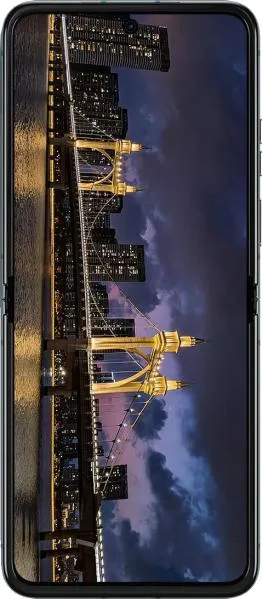
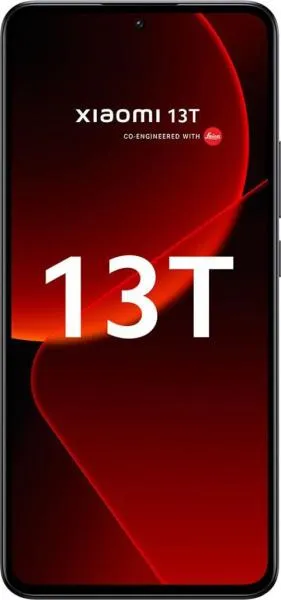
| Form Factor | Foldable | Standard | Razr offers portability and a unique form factor, Xiaomi offers a traditional slab design. |
| Dimensions (mm) | 170.8 x 74 x 7 | 162.2 x 75.7 x 8.5 | Razr is significantly thinner when folded but taller unfolded. Xiaomi is wider and thicker overall. |
| Weight (g) | 184.5 | 219 | Razr is noticeably lighter, more comfortable for extended use and pocket carry. |
| Display | |||
| Display Type | Foldable LTPO AMOLED | AMOLED | Razr's foldable screen allows for a larger display in a smaller device, but introduces a crease. Xiaomi has a traditional flat display. |
| Size (inches) | 6.9 | 6.67 | Comparable screen real estate despite different form factors. |
| Resolution | 1080 x 2640 | 1220 x 2712 | Xiaomi has a slightly sharper display due to higher resolution. |
| Refresh Rate (Hz) | 165 | 144 | Both offer smooth scrolling and animations; Razr has a marginal advantage in smoothness. |
| Peak Brightness (nits) | 1400 | 2600 | Xiaomi's display is significantly brighter, improving outdoor visibility. |
| Performance | |||
| Chipset | Snapdragon 8+ Gen 1 | Dimensity 8200 Ultra | Both are high-performance chipsets, but Snapdragon generally holds a slight edge in benchmark tests. Real-world performance differences might be negligible for average users. |
| CPU | Octa-core (1x3.19 GHz Cortex-X2 & 3x2.75 GHz Cortex-A710 & 4x1.80 GHz Cortex-A510) | Octa-core (1x3.1 GHz Cortex-A78 & 3x3.0 GHz Cortex-A78 & 4x2.0 GHz Cortex-A55) | Slight architectural differences; Snapdragon 8+ Gen 1 likely offers better single-core performance. |
| GPU | Adreno 730 | Mali-G610 MC6 | Adreno 730 generally offers better gaming performance. |
| RAM (GB) | 8/12 | 8/12 | Both offer ample RAM for multitasking. |
| Camera | |||
| Main Camera (MP) | 12 | 50 | Xiaomi boasts a significantly higher resolution main sensor, potentially capturing more detail. |
| Telephoto | No dedicated telephoto lens | 50MP Telephoto | Xiaomi offers optical zoom capabilities, absent in the Razr. |
| Ultrawide (MP) | 13 | 13 | Comparable ultrawide cameras. |
| Battery | |||
| Capacity (mAh) | 3800 | 5000 | Xiaomi offers substantially longer battery life. |
2. Key Differences Analysis
Motorola Razr 40 Ultra Advantages:
- Portability: The foldable design offers unmatched portability.
- Lighter Weight: More comfortable for extended use.
- Unique Form Factor: Appeals to users seeking novelty and style.
Xiaomi 13T Advantages:
- Superior Display: Brighter, sharper, and more immersive.
- Longer Battery Life: Significantly larger battery capacity.
- Better Camera System: Higher resolution sensors and optical zoom.
- Potentially Lower Price: Depending on specific configurations and market.
3. User Profiles & Recommendations
Motorola Razr 40 Ultra: Ideal for users who prioritize portability and style above all else. Best for those who value a compact device for easy pocket carry and are willing to compromise on battery life and camera capabilities for the unique foldable experience.
Xiaomi 13T: Suitable for users who prioritize performance, battery life, and camera quality. Best for those who consume multimedia, play games, and capture photos/videos frequently. Excellent value for its price.
4. Decision Framework
Key Questions for Buyers:
- How important is portability? If ultimate portability is paramount, the Razr is the clear winner.
- What is your primary use case? Multimedia consumption, gaming, and photography favor the Xiaomi 13T.
- What is your budget? While both are mid-range, the Xiaomi 13T generally offers better value for its price.
My Choice: Xiaomi 13T
While the Razr 40 Ultra's foldable design is intriguing, the Xiaomi 13T offers a more well-rounded package for my needs. I prioritize a long-lasting battery, a bright and sharp display, and a capable camera system. The Xiaomi 13T excels in these areas while offering strong performance at a competitive price. The significantly larger battery and superior camera system outweigh the Razr's portability advantage for me. I am willing to carry a slightly larger and heavier phone for the benefits the Xiaomi 13T provides. The inclusion of a dedicated telephoto lens for optical zoom is a significant advantage for my photography needs.
