1. Specifications Comparison
| Feature | Motorola Razr 40 Ultra | Tecno Pova 6 Pro | Practical Impact |
|---|---|---|---|
| Design | |||
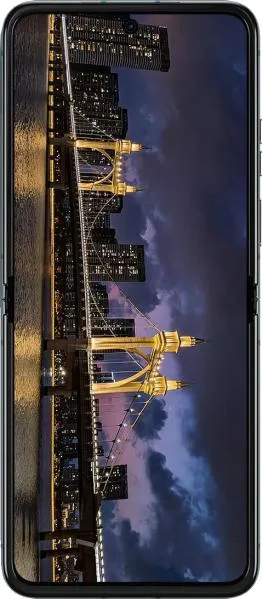
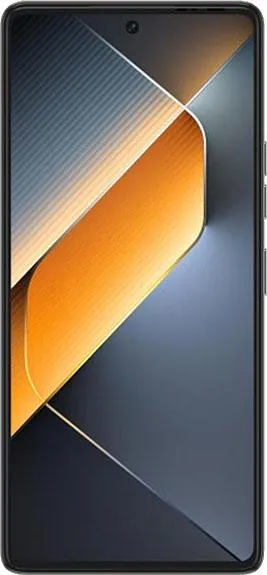
| Form Factor | Foldable | Standard | Razr offers portability and a unique form factor, Pova 6 Pro is a traditional slab phone. |
| Dimensions (mm) | 170.8 x 74 x 7 | 165.5 x 76.1 x 7.9 | Razr is significantly thinner when folded, but taller when unfolded. Pova 6 Pro is larger overall. |
| Weight (g) | 184.5 | 198 | Razr is noticeably lighter. |
| Display | |||
| Display Type | Foldable LTPO AMOLED | AMOLED | Razr's foldable display allows for a larger screen in a smaller device, but may have a crease. Pova 6 Pro offers a standard, uninterrupted display. |
| Size (inches) | 6.9 | 6.78 | Very similar screen real estate when unfolded. |
| Resolution | 1080 x 2640 | 1080 x 2436 | Comparable sharpness, though aspect ratios differ slightly. |
| Refresh Rate (Hz) | 165 | 120 | Razr offers smoother scrolling and animations, but potentially higher battery drain. |
| Peak Brightness (nits) | 1400 | 1300 | Razr should be slightly more visible in direct sunlight. |
| Performance | |||
| Chipset | Snapdragon 8+ Gen 1 | Dimensity 6080 | Razr offers significantly more powerful CPU and GPU performance, leading to smoother multitasking, gaming, and demanding tasks. |
| CPU | Octa-core (1x3.19 GHz Cortex-X2 & 3x2.75 GHz Cortex-A710 & 4x1.80 GHz Cortex-A510) | Octa-core (2x2.4 GHz Cortex-A76 & 6x2.0 GHz Cortex-A55) | Razr's CPU architecture is newer and more powerful. |
| RAM (GB) | 8/12 | 6/12 | More RAM on both higher-end variants allows for better multitasking. |
| Camera | |||
| Main Camera (MP) | 12 | 108 | Pova 6 Pro boasts higher resolution, but sensor size and other factors are missing, making a direct comparison difficult. |
| Selfie Camera (MP) | 32 | 32 | Similar resolution. More details on aperture and features are needed for in-depth comparison. |
| Video Recording | Up to 4K@60fps with HDR, EIS | Up to 1440p@30fps | Razr offers higher resolution and frame rate video recording with HDR and better stabilization (EIS). |
| Battery | |||
| Capacity (mAh) | 3800 | 6000 | Pova 6 Pro has a much larger battery, likely resulting in significantly longer battery life. Razr's smaller battery is a trade-off for the foldable design. |
2. Key Differences Analysis
Motorola Razr 40 Ultra Advantages:
- Form Factor: The foldable design offers unique portability and a larger screen in a compact device.
- Performance: Significantly more powerful processor for demanding tasks and gaming.
- Higher Refresh Rate Display: Smoother animations and scrolling.
- Superior Video Recording: Higher resolution, frame rates, and features.
Tecno Pova 6 Pro Advantages:
- Battery Life: Much larger battery capacity, promising significantly longer usage time.
- Potentially Lower Price: Depending on specific configurations.
- Larger Main Camera Sensor: Potentially better low-light performance, but more data is needed for comparison.
3. User Profiles & Recommendations
Motorola Razr 40 Ultra: Users who prioritize portability, a unique design, and strong performance, even at the cost of battery life. Ideal for those who value having a larger screen that can easily fit in a pocket.
Tecno Pova 6 Pro: Users who prioritize long battery life and a larger display in a traditional form factor. Suitable for those who consume a lot of media, play casual games, and require a phone that can last all day on a single charge.
4. Decision Framework
Key Questions for Buyers:
- How important is portability and a unique design? If paramount, the Razr is the clear winner.
- What is your typical usage pattern? Heavy users who need all-day battery life will prefer the Pova 6 Pro. Performance-focused users will lean towards the Razr.
- What is your budget? While both are in the "medium price" range, specific configurations may sway the decision.
My Choice: Motorola Razr 40 Ultra
While the Tecno Pova 6 Pro offers a compelling battery life, the Motorola Razr 40 Ultra's unique foldable design, significantly superior performance, and better display and video recording capabilities make it the more appealing choice for me. I prioritize portability and a smooth user experience, and I'm willing to compromise on battery life to achieve that. I also appreciate the higher refresh rate display and the advanced camera features offered by the Razr. The foldable form factor is a game-changer for portability, allowing for a large screen without the bulk. The Snapdragon 8+ Gen 1 guarantees a smooth and responsive experience for years to come.
