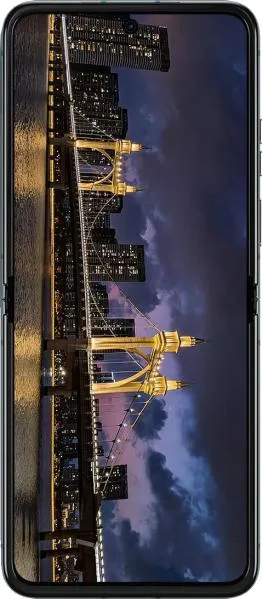

1. Specifications Comparison
| Feature | Motorola Razr 40 Ultra | Samsung Galaxy M35 | Practical Impact |
|---|---|---|---|
| Design | |||
| Form Factor | Foldable | Standard | Razr offers portability and a unique form factor, M35 is a traditional slab phone. |
| Dimensions (mm) | 170.8 x 74 x 7 | 162.3 x 78.6 x 9.1 | Razr is significantly thinner when folded but taller unfolded. M35 is thicker but potentially more comfortable for one-handed use. |
| Weight (g) | 184.5 | 222 | Razr is noticeably lighter, improving portability. |
| Display | |||
| Display Type | Foldable LTPO AMOLED | Super AMOLED | Razr's foldable display allows for a larger screen in a smaller device, but crease visibility and durability are concerns. M35 offers a standard, potentially more robust display. |
| Size (inches) | 6.9 | 6.6 | Razr offers a larger main display for media consumption. |
| Resolution | 1080 x 2640 | 1080 x 2340 | Similar sharpness, but Razr's taller aspect ratio might be better for scrolling web pages. |
| Refresh Rate (Hz) | 165 | 120 | Razr's higher refresh rate results in smoother animations and scrolling. |
| Performance | |||
| Chipset | Snapdragon 8+ Gen 1 | Exynos 1380 | Snapdragon 8+ Gen 1 generally offers better performance in demanding tasks and gaming. |
| CPU | Octa-core (1x3.19 GHz X2 & 3x2.75 GHz A710 & 4x1.80 GHz A510) | Octa-core (4x2.4 GHz A78 & 4x2.0 GHz A55) | Razr's CPU configuration suggests superior peak and sustained performance. |
| GPU | Adreno 730 | Mali-G68 MP5 | Adreno 730 typically provides a better gaming experience. |
| RAM (GB) | 8/12 | 6/8 | More RAM in some Razr variants allows for better multitasking. |
| Camera | |||
| Main Camera (MP) | 12 | 50 | While the M35 has a higher megapixel count, sensor size and other factors (unspecified for Razr) greatly influence image quality. Direct comparison is difficult without more information. |
| Selfie Camera (MP) | 32 | 13 | Razr offers a significantly higher resolution selfie camera. |
| Video Capabilities | Up to 4K@60fps with HDR, EIS | Up to 4K@30fps with EIS | Razr supports higher resolution and frame rate video recording. |
| Battery | |||
| Capacity (mAh) | 3800 | 6000 | M35 has a much larger battery, likely resulting in significantly longer battery life. Foldable phones often have smaller batteries due to space constraints. |
2. Key Differences Analysis
Motorola Razr 40 Ultra Advantages:
- Form Factor: The foldable design offers unmatched portability and a unique user experience.
- Performance: Superior processing power for demanding tasks and gaming.
- Higher Refresh Rate Display: Smoother visuals and more responsive user experience.
- Higher Resolution Selfie Camera: Better quality for video calls and self-portraits.
Samsung Galaxy M35 Advantages:
- Battery Life: Significantly larger battery capacity, likely resulting in much longer usage time between charges.
- Potentially More Durable: Traditional slab phones are generally more robust than foldable devices.
- Lower Price: Based on provided data, the M35 is significantly cheaper.
3. User Profiles & Recommendations
Motorola Razr 40 Ultra: Ideal for users who prioritize portability and a unique, stylish device. Suitable for those who value a large screen for media consumption on the go but are willing to compromise on battery life.
Samsung Galaxy M35: Best suited for users who prioritize battery life and reliability. A good choice for those seeking a solid, affordable phone for everyday tasks without needing cutting-edge performance or a foldable design.
4. Decision Framework
Key Questions for Buyers:
- How important is portability and a unique design?
- What is your budget and how much do you value performance?
- How heavily do you rely on your phone throughout the day (battery life)?
Scenario-Based Recommendations:
- Frequent Traveler: Razr 40 Ultra for its compact size and large screen for entertainment during commutes.
- Heavy User: Galaxy M35 for its long battery life to last throughout the day.
- Budget-Conscious Gamer: Neither phone perfectly fits this category. Razr has better performance but a higher price; M35 is cheaper but performance is less impressive.
My Choice: Samsung Galaxy M35
While the Razr 40 Ultra is a fascinating device, the significantly larger battery of the M35 and the lower price are deciding factors for me. I prioritize all-day battery life and find the potential durability concerns and higher price of foldable phones less appealing. The M35 offers a solid, reliable experience for everyday use at a lower cost. The performance difference, while noticeable in benchmarks, is unlikely to significantly impact my typical usage. The larger battery of the M35 outweighs the benefits of the foldable design and slightly faster performance of the Razr for my personal needs.
