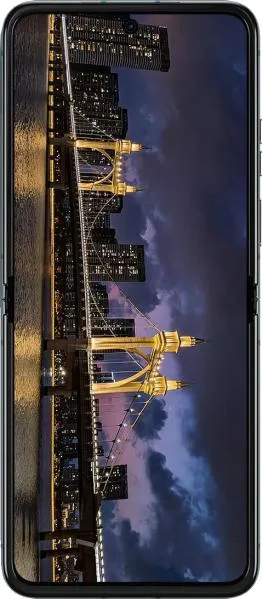
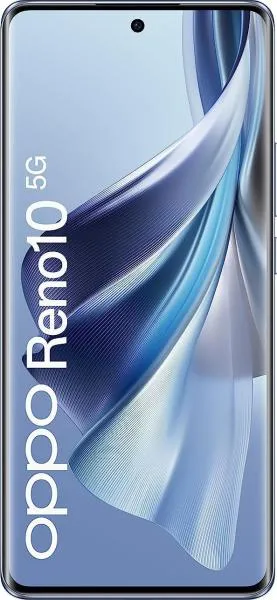
1. Specifications Comparison
| Feature | Motorola Razr 40 Ultra | Oppo Reno10 | Practical Impact |
|---|---|---|---|
| Design | |||
| Form Factor | Foldable | Standard | Razr offers portability and a unique form factor, Reno10 is a traditional slab phone. Folding phones can be more pocketable but have a crease on the main screen. |
| Dimensions (mm) | 170.8 x 74 x 7 | 162.4 x 74.2 x 8 | Razr is significantly thinner when folded but taller when unfolded. Reno10 is slightly wider and thicker overall. |
| Weight (g) | 184.5 | 185 | Negligible weight difference. |
| Display | |||
| Display Type | Foldable LTPO AMOLED | AMOLED | Razr's foldable display allows for a larger screen in a smaller device, but may have a crease. Reno10 offers a standard, uninterrupted display. |
| Size (inches) | 6.9 | 6.7 | Razr offers a larger main display. |
| Resolution (px) | 1080 x 2640 | 1080 x 2412 | Similar sharpness, but Razr is slightly taller due to the aspect ratio. |
| Refresh Rate (Hz) | 165 | 120 | Razr offers smoother scrolling and animations. |
| Peak Brightness (nits) | 1400 | 950 | Razr's display will be more visible in direct sunlight. |
| Performance | |||
| Chipset | Snapdragon 8+ Gen 1 | Dimensity 7050 | Razr offers significantly better CPU and GPU performance, leading to faster app loading, smoother multitasking, and better gaming capabilities. |
| CPU | Octa-core (1x3.19 GHz Cortex-X2 & 3x2.75 GHz Cortex-A710 & 4x1.80 GHz Cortex-A510) | Octa-core (2x2.6 GHz Cortex-A78 & 6x2.0 GHz Cortex-A55) | Razr's CPU architecture is more powerful and efficient. |
| GPU | Adreno 730 | Mali-G68 MC4 | Razr provides a superior gaming and graphics rendering experience. |
| RAM (GB) | 8/12 | 8 | Both have sufficient RAM for everyday tasks, but the Razr offers a 12GB option for even more demanding usage. |
| Camera | |||
| Main Camera (MP) | 12 | 64 | While Reno10 has higher megapixel count, sensor size and processing are crucial for image quality, which is not detailed enough here to compare. |
| Other Cameras | 13MP Ultrawide, 32MP Selfie | 8MP Ultrawide, 32MP Telephoto, 32MP Selfie | Reno10 offers a dedicated telephoto lens for optical zoom, while Razr has a higher resolution ultrawide. Both have similar resolution selfie cameras. |
| Battery | |||
| Capacity (mAh) | 3800 | 5000 | Reno10 has significantly longer battery life. Foldable phones often compromise on battery capacity. |
2. Key Differences Analysis
Motorola Razr 40 Ultra Advantages:
- Form Factor: The foldable design offers unique portability and a larger screen in a compact device.
- Performance: Significantly more powerful processor and GPU for demanding tasks and gaming.
- Display: Higher refresh rate and peak brightness for a smoother and more vibrant visual experience.
- External Display: Offers greater functionality compared to most foldable.
Oppo Reno10 Advantages:
- Battery Life: Substantially larger battery capacity for extended usage.
- Camera System: Dedicated telephoto lens for optical zoom. Potentially better low-light performance due to larger main sensor (though more information is needed to confirm).
- Price: Likely more affordable than the Razr 40 Ultra (exact pricing comparison needed).
3. User Profiles & Recommendations
Motorola Razr 40 Ultra: Users who prioritize portability, a unique design, and top-tier performance. Ideal for those who value a compact phone with a large screen for media consumption and multitasking.
Oppo Reno10: Users who prioritize battery life, camera versatility (especially zoom capabilities), and value for money. Suitable for everyday users who need a reliable phone with good all-around performance.
4. Decision Framework
Key Questions for Buyers:
- Form Factor Preference: Do you value the portability and novelty of a foldable phone, or prefer a traditional slab design?
- Performance Needs: Do you require the highest performance for demanding tasks and gaming, or is good enough performance sufficient?
- Battery Life Importance: Is all-day battery life a critical requirement, or can you compromise for other features?
Scenario-Based Recommendations:
- Heavy User, Values Portability: Razr 40 Ultra
- Casual User, Prioritizes Battery Life: Oppo Reno10
- Gamer, Wants the Best Performance: Razr 40 Ultra
- Photographer, Needs Optical Zoom: Oppo Reno10
My Choice: Motorola Razr 40 Ultra
While the battery life of the Oppo Reno10 is tempting, the superior performance, innovative form factor, and bright, high refresh rate display of the Razr 40 Ultra are more compelling to me. I value having a powerful and pocketable device that can handle demanding tasks and provide a great media consumption experience. I'm willing to compromise slightly on battery life to gain these benefits, especially considering the advancements in fast charging technology. The larger and more functional external display on the Razr is a huge selling point for me, as it allows for more tasks to be completed without opening the main display. The significantly faster processor in the Razr will provide a noticeable difference in day-to-day usage, making it a more future-proof choice.
