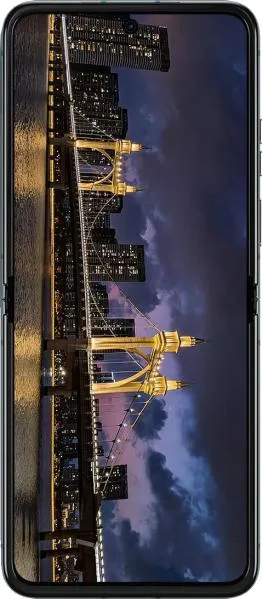
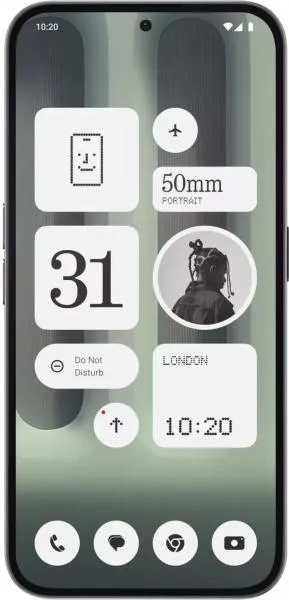
1. Specifications Comparison
| Feature | Motorola Razr 40 Ultra | Nothing Phone (2a) Plus | Practical Impact |
|---|---|---|---|
| Design | |||
| Form Factor | Foldable | Slab | Razr offers portability and a unique form factor; Nothing Phone prioritizes a traditional, larger screen experience. |
| Dimensions (mm) | 170.8 x 74 x 7 | 161.7 x 76.3 x 8.5 | Razr is significantly more compact when folded but thicker when unfolded. Nothing Phone is larger overall. |
| Weight (g) | 184.5 | 190 | Weight difference is negligible in practical use. |
| Display | |||
| Display Type | Foldable LTPO AMOLED | AMOLED | Razr's foldable display allows for a larger screen in a smaller device, but introduces a crease. Nothing Phone offers a standard, uninterrupted display. |
| Size (inches) | 6.9 | 6.7 | Razr provides a slightly larger main screen. |
| Resolution | 1080 x 2640 | 1080 x 2412 | Similar sharpness; Razr is slightly taller due to aspect ratio. |
| Refresh Rate (Hz) | 165 | 120 | Razr offers smoother scrolling and animations, but may consume more battery. |
| Peak Brightness (nits) | 1400 | 1300 | Razr should be slightly more visible in direct sunlight. |
| Performance | |||
| Chipset | Snapdragon 8+ Gen 1 | Dimensity 7350 Pro | Snapdragon 8+ Gen 1 offers significantly better performance for demanding tasks and gaming. |
| CPU | Octa-core (1x3.19 GHz X2 & 3x2.75 GHz A710 & 4x1.80 GHz A510) | Octa-core (2x3.0 GHz A715 & 6x 2.0 GHz A510) | Razr's CPU boasts higher clock speeds and a more powerful core architecture, resulting in faster processing. |
| GPU | Adreno 730 | Mali-G610 MC4 | Adreno 730 provides superior graphics performance for gaming and visually intensive applications. |
| RAM (GB) | 8/12 | 12 | Both offer ample RAM for multitasking, though specific configurations vary. |
| Camera | |||
| Main Camera (MP) | 12 | 50 | Nothing Phone has a higher resolution main sensor. Image quality depends on sensor size and processing, not just megapixels. |
| Ultrawide (MP) | 13 | 50 | Nothing Phone has a higher resolution ultrawide sensor. |
| Selfie (MP) | 32 | 50 | Nothing Phone boasts a higher resolution selfie camera. |
| Video Capabilities | Up to 4K@60fps with HDR, EIS | Up to 4K@30fps with EIS | Razr supports higher resolution and frame rate video recording. |
| Battery | |||
| Capacity (mAh) | 3800 | 5000 | Nothing Phone has a significantly larger battery, likely resulting in longer battery life. |
2. Key Differences Analysis
Motorola Razr 40 Ultra Advantages:
- Portability: Foldable design offers unmatched portability.
- Higher-End Performance: Significantly faster processor and GPU for demanding tasks and gaming.
- Smoother Display: 165Hz refresh rate provides a more fluid user experience.
- Brighter Display: Better visibility outdoors.
- Higher Resolution Video Recording: Captures more detailed videos.
Nothing Phone (2a) Plus Advantages:
- Longer Battery Life: Larger battery capacity suggests significantly better longevity.
- Larger Sensor Size for Photography: Potentially better low-light performance and dynamic range in photos. More details needed for a definitive comparison.
- Lower Price: Generally more affordable.
- Traditional Form Factor: Larger, uninterrupted display preferred by some users.
3. User Profiles & Recommendations
Motorola Razr 40 Ultra: Ideal for users who prioritize portability and a unique form factor and are willing to compromise on battery life for performance and a compact design. Suitable for users who value a premium, pocketable device for on-the-go productivity and entertainment.
Nothing Phone (2a) Plus: Best suited for users who prioritize battery life, value a large display, and prefer a more traditional smartphone experience at a competitive price point. Excellent for users focused on content consumption, casual gaming, and all-day usage without frequent charging.
4. Decision Framework
Key Questions for Buyers:
- Form Factor Priority: Is portability and a foldable design a must-have, or do you prefer a traditional smartphone?
- Performance Needs: Do you require top-tier processing power for demanding tasks and gaming, or is moderate performance sufficient?
- Battery Life Importance: Is all-day battery life crucial, or are you willing to compromise for other features?
Scenario-Based Recommendations:
- Frequent Traveler: Razr 40 Ultra for its compact size.
- Heavy Gamer: Razr 40 Ultra for its superior performance.
- Power User: Razr 40 Ultra for performance, but consider battery life limitations.
- Casual User: Nothing Phone (2a) Plus for battery life and affordability.
My Choice: Nothing Phone (2a) Plus
While the Razr 40 Ultra is a compelling device with its unique foldable design and powerful performance, I would choose the Nothing Phone (2a) Plus. My personal priorities lean towards longer battery life and a larger, uninterrupted display for media consumption. The performance difference, while noticeable, is less crucial for my typical usage. Additionally, the likely price difference makes the Nothing Phone a more compelling value proposition for my needs. The significantly larger battery capacity of the Nothing Phone outweighs the benefits of the foldable design and higher performance of the Razr for my daily use. I am willing to sacrifice some portability and peak performance for significantly extended battery life.
