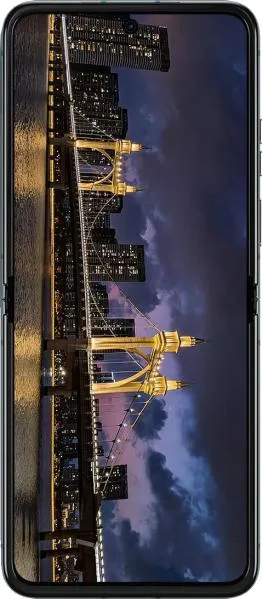
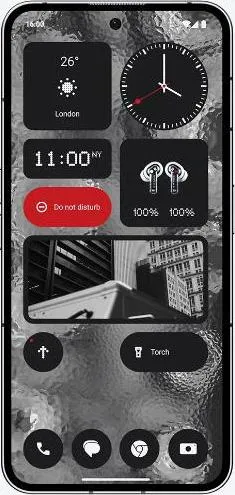
1. Specifications Comparison
| Feature | Motorola Razr 40 Ultra | Nothing Phone (2) | Practical Impact |
|---|---|---|---|
| Design | |||
| Form Factor | Foldable | Slab | Razr offers pocket portability, Nothing Phone (2) a traditional design. |
| Dimensions (mm) | 170.8 x 74 x 7 (unfolded) | 162.1 x 76.4 x 8.6 | Razr significantly smaller when folded, but thicker; Nothing Phone (2) thinner and larger when unfolded. |
| Weight (g) | 184.5 | 201.2 | Razr lighter despite foldable design. |
| Display | |||
| Display Type | Foldable LTPO AMOLED | LTPO OLED | Razr offers a foldable screen with crease; Nothing Phone (2) a standard flat display. |
| Size (inches) | 6.9 (main), 3.6 (cover) | 6.7 | Razr's main display larger; cover display allows quick interactions without unfolding. |
| Resolution | 1080 x 2640 | 1080 x 2412 | Similar sharpness, slightly taller aspect ratio on Razr. |
| Refresh Rate (Hz) | 165 | 120 | Smoother animations and scrolling on Razr. |
| Peak Brightness (nits) | 1400 | 1600 | Nothing Phone (2) slightly brighter outdoors. |
| Performance | |||
| Chipset | Snapdragon 8+ Gen 1 | Snapdragon 8+ Gen 1 | Identical chipsets, performance should be similar. However, CPU clock speeds differ slightly, potentially giving Razr a slight edge in demanding tasks. |
| CPU | Octa-core (1x3.19 GHz X2 & 3x2.75 GHz A710 & 4x1.80 GHz A510) | Octa-core (1x3.0 GHz X2 & 3x2.5 GHz A710 & 4x1.80 GHz A510) | Razr's slightly higher clock speeds may offer a marginal performance advantage. |
| GPU | Adreno 730 | Adreno 730 | Identical GPUs. |
| RAM (GB) | 8/12 | 8/12 | Both offer configurations with ample RAM for multitasking. |
| Camera | |||
| Main Camera (MP) | 12 | 50 | Nothing Phone (2) boasts a significantly higher resolution main sensor likely capturing more detail. Sensor size information missing for Razr, limiting detailed analysis. |
| Ultrawide (MP) | 13 | 50 | Nothing Phone (2) again with a much higher resolution ultrawide. |
| Selfie (MP) | 32 | 32 | Identical resolution; practical image quality will depend on sensor and processing. |
| Battery | |||
| Capacity (mAh) | 3800 | 4700 | Nothing Phone (2) has a significantly larger battery, likely leading to longer battery life. |
2. Key Differences Analysis
Motorola Razr 40 Ultra Advantages:
- Portability: Foldable design offers unmatched portability.
- Cover Display: Enables quick interactions without unfolding.
- Higher Refresh Rate: Smoother visuals for gaming and scrolling.
- Potentially Slightly Faster CPU: Marginal performance advantage in demanding tasks.
Nothing Phone (2) Advantages:
- Larger Battery: Significantly longer battery life.
- Higher Resolution Cameras: Potentially better image quality and detail.
- Larger Main Display: More immersive media consumption experience.
- More Affordable: Generally priced lower than the Razr.
3. User Profiles & Recommendations
Motorola Razr 40 Ultra: Ideal for users who prioritize portability and style. Suitable for those who value a compact device and utilize the cover screen for quick tasks.
Nothing Phone (2): Ideal for users who prioritize battery life, camera quality, and a large display. Suitable for power users, media consumers, and mobile photographers.
4. Decision Framework
Key Questions for Buyers:
- Form Factor Priority: Do you prioritize ultimate portability (foldable) or a traditional slab design?
- Usage Pattern: Are you a heavy user who needs long battery life or prioritizes quick interactions and portability?
- Budget: Which phone offers the best value for your budget considering its features?
My Choice: Nothing Phone (2)
While the Razr 40 Ultra's foldable design is undeniably appealing, the Nothing Phone (2) better suits my needs. I prioritize battery life and camera quality, both areas where the Nothing Phone (2) excels. The larger battery capacity ensures I can go through a full day without needing to recharge, and the 50MP main and ultrawide cameras offer significantly better image quality potential compared to the Razr's 12MP and 13MP setup. While the Razr's portability is attractive, I prefer the larger screen real estate and overall user experience offered by a traditional slab phone. The slightly higher potential performance of the Razr is not a significant factor for my typical usage. Ultimately, the Nothing Phone (2)'s combination of a large battery, excellent cameras, and a large display makes it a more well-rounded and practical device for my needs. The price difference further solidifies this choice.
