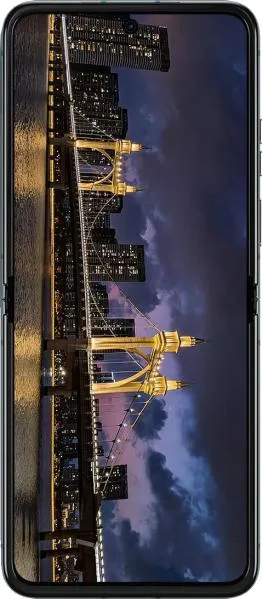
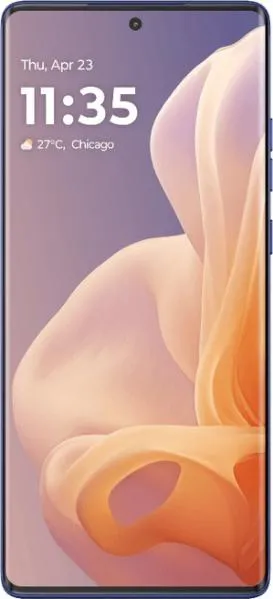
1. Specifications Comparison
| Feature | Motorola Razr 40 Ultra | Motorola Moto G85 | Practical Impact |
|---|---|---|---|
| Design | |||
| Dimensions (mm) | 170.8 x 74 x 7 | 161.9 x 73.1 x 7.6 | Razr 40 Ultra significantly more compact when folded, but thicker when unfolded. G85 is a more traditional candybar design. |
| Weight (g) | 184.5 | 171 | Razr 40 Ultra slightly heavier despite smaller size due to folding mechanism. |
| Foldable | Yes | No | Razr offers portability advantage and external display functionality. G85 is more durable and less complex. |
| Display | |||
| Display Type | Foldable LTPO AMOLED | P-OLED | Razr's folding screen allows for compact storage, but crease may be visible. G85 offers larger, uninterrupted display. |
| Size (inches) | 6.9 | 6.67 | Comparable screen real estate when unfolded, but Razr offers a 3.6" external display for quick interactions. |
| Resolution | 1080 x 2640 | 1080 x 2400 | Similar sharpness; Razr slightly taller aspect ratio. |
| Refresh Rate (Hz) | 165 | 120 | Razr provides smoother scrolling and animations, beneficial for gaming and fast-paced content. |
| Performance | |||
| Chipset | Snapdragon 8+ Gen 1 | Snapdragon 6s Gen 3 | Razr significantly more powerful, enabling smoother multitasking, demanding gaming, and faster app loading. |
| CPU | Octa-core (1x3.19 GHz X2 & 3x2.75 GHz A710 & 4x1.80 GHz A510) | Octa-core (2x2.3 GHz A78 & 6x2.0 GHz A55) | Razr's superior CPU architecture offers significantly better performance. |
| GPU | Adreno 730 | Adreno 619 | Razr's GPU provides a substantial advantage in graphics-intensive tasks like gaming. |
| RAM (GB) | 8 (reviewed model) | 12 (reviewed model) | While the G85 has more RAM in the reviewed model, the Razr's superior processor will likely result in better overall performance. |
| Camera | |||
| Main Camera (MP) | 12 | 50 | G85 has higher resolution main sensor; image quality depends on sensor size and processing, which is not fully detailed here. |
| Video Recording | Up to 4K@60fps with HDR, EIS | Up to 1080p@60fps | Razr offers higher resolution and frame rate video recording with HDR. |
| Battery | |||
| Capacity (mAh) | 3800 | 5000 | G85 boasts significantly larger battery capacity, likely resulting in longer battery life. Razr's smaller battery is a trade-off for its compact foldable design. |
2. Key Differences Analysis
Motorola Razr 40 Ultra Advantages:
- Portability: Foldable design provides unmatched portability.
- External Display: Enables quick interactions without unfolding.
- Flagship Performance: Significantly more powerful processor and GPU.
- Higher Quality Video Recording: Supports 4K@60fps with HDR.
- Faster Refresh Rate: Smoother display experience.
Motorola Moto G85 Advantages:
- Larger Battery: Significantly longer battery life.
- Lower Price: More budget-friendly option.
- Durability: Traditional design generally more robust.
- Larger Main Camera Sensor: Potentially better low-light performance and detail, though further sensor specifications are needed for a definitive conclusion.
3. User Profiles & Recommendations
Motorola Razr 40 Ultra: Ideal for users who prioritize portability and cutting-edge technology, willing to compromise on battery life for a compact form factor. Suitable for professionals needing a powerful device on the go, or trendsetters valuing unique design.
Motorola Moto G85: Best suited for budget-conscious users who prioritize battery life and a large screen. Good for casual users focusing on communication, media consumption, and light gaming.
4. Decision Framework
Key Questions for Buyers:
- Portability vs. Battery Life: Is ultimate portability or all-day battery life more crucial?
- Performance Needs: Do you require flagship-level performance for demanding tasks or is a mid-range chipset sufficient?
- Budget: Which phone fits your budget considering the features offered?
My Choice: Motorola Moto G85
While the Razr 40 Ultra is a fascinating piece of technology, I would choose the Motorola Moto G85. My priorities are battery life, a large screen for media consumption, and overall value. The G85 excels in these areas, offering a large battery, good display, and a more affordable price. I am not a power user and don't require the absolute best performance; the G85's capabilities are sufficient for my needs. While I appreciate the Razr's innovative design, the trade-offs in battery life and price are not worth it for my usage pattern. The potential durability concerns of a foldable phone also sway me towards the more robust G85. Ultimately, the G85 provides a better balance of features and value for my personal needs.
