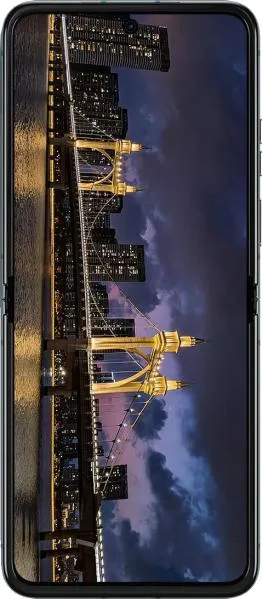
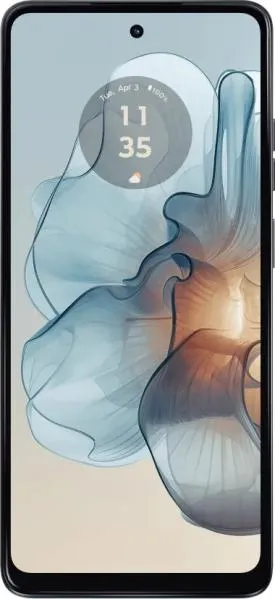
1. Specifications Comparison
| Feature | Motorola Razr 40 Ultra | Motorola Moto G24 Power | Practical Impact |
|---|---|---|---|
| Design | |||
| Dimensions (mm) | 170.8 x 74 x 7 | 163.5 x 74.5 x 9 | Razr 40 Ultra is significantly thinner and more compact when folded, but potentially less comfortable for extended use due to its narrow width. G24 Power is larger and thicker but may offer a better grip. |
| Weight (g) | 184.5 | 197 | Razr 40 Ultra is noticeably lighter, making it more pocketable, especially important given its foldable design. |
| Foldable | Yes | No | Razr 40 Ultra offers the flexibility of a large screen in a compact form factor, while G24 Power is a traditional slab phone. |
| Display | |||
| Type | Foldable LTPO AMOLED | IPS LCD | Razr 40 Ultra provides superior contrast, deeper blacks, and potentially better power efficiency due to LTPO technology (although the provided specs contradict this by saying is_ltpo: false). G24 Power's LCD is less vibrant and consumes more power. |
| Size (inches) | 6.9 | 6.56 | Razr 40 Ultra offers a larger main display for immersive content consumption. |
| Resolution | 1080 x 2640 | 720 x 1612 | Razr 40 Ultra boasts a sharper display with higher pixel density (413 ppi vs 269 ppi), resulting in clearer text and images. |
| Refresh Rate (Hz) | 165 | 90 | Razr 40 Ultra offers smoother animations and scrolling with its higher refresh rate. |
| Performance | |||
| Chipset | Snapdragon 8+ Gen 1 | Helio G85 | Razr 40 Ultra's flagship Snapdragon processor delivers significantly faster performance, enabling demanding tasks and gaming. G24 Power's Helio G85 is geared towards basic usage. |
| CPU | Octa-core (1x3.19 GHz Cortex-X2 & 3x2.75 GHz Cortex-A710 & 4x1.80 GHz Cortex-A510) | Octa-core (2x2.0 GHz Cortex-A75 & 6x1.7 GHz Cortex-A55) | The Razr's CPU architecture is more powerful and efficient. |
| GPU | Adreno 730 | Mali-G52 MC2 | Razr 40 Ultra provides a substantially more powerful GPU for gaming and graphics-intensive applications. |
| RAM (GB) | 8/12 | 8 | Both phones offer sufficient RAM for multitasking, but the Razr offers a 12GB option for even smoother performance. |
| Camera | |||
| Main Camera (MP) | 12 | 50 | While G24 Power has a higher megapixel count, image quality depends on factors beyond resolution. Razr's larger sensor pixel size (not specified) and aperture (f/1.5) likely result in better low-light performance. |
| Video Recording | Up to 4K@60fps with HDR, EIS | 1080p@30fps | Razr 40 Ultra supports higher resolution and frame rate video recording with HDR and image stabilization. |
| Battery | |||
| Capacity (mAh) | 3800 | 6000 | G24 Power has a significantly larger battery capacity, potentially offering much longer battery life. Razr 40 Ultra's smaller battery is likely a trade-off for its slim foldable design. |
2. Key Differences Analysis
Motorola Razr 40 Ultra Advantages:
- Significantly more powerful: Superior processor, GPU, and higher refresh rate display enable demanding tasks, gaming, and a smoother overall experience.
- Premium Display: Foldable AMOLED with higher resolution and refresh rate provides vibrant colors, deep blacks, and smooth scrolling.
- More compact when folded: Easier portability.
Motorola Moto G24 Power Advantages:
- Much longer battery life: The massive 6000mAh battery likely lasts significantly longer on a single charge.
- Lower price: Offers a budget-friendly option.
Trade-offs:
- Razr 40 Ultra: Sacrifices battery life for slim design and performance. Higher price point.
- G24 Power: Compromises performance and display quality for battery life and affordability. Lacks the flexibility of a foldable design.
3. User Profiles & Recommendations
Motorola Razr 40 Ultra: Ideal for users who prioritize performance, a premium display, and a compact foldable design and are willing to compromise on battery life and pay a premium. Use cases: demanding mobile gaming, content creation, multitasking, showcasing cutting-edge technology.
Motorola Moto G24 Power: Best suited for budget-conscious users who prioritize long battery life and reliability for basic tasks. Use cases: communication, web browsing, social media, light media consumption, as a secondary device.
4. Decision Framework
Key Questions for Buyers:
- What is your budget? The Razr 40 Ultra is significantly more expensive.
- What are your primary use cases? Demanding tasks and gaming vs. basic communication and web browsing.
- How important is portability and design? Foldable design and compact form factor vs. a traditional larger phone with longer battery life.
Scenario-Based Recommendations:
- Heavy user, gamer, tech enthusiast: Razr 40 Ultra
- Budget-conscious, light user, prioritizing battery life: G24 Power
My Choice: Motorola Razr 40 Ultra
While the Moto G24 Power offers incredible battery life at an attractive price, the Razr 40 Ultra aligns better with my personal needs. I value performance, a smooth and vibrant display, and the innovative foldable design. I'm willing to compromise on battery life (and carry a portable charger if needed) for the significant gains in processing power, display quality, and the convenience of a pocketable device with a large screen. The Razr 40 Ultra offers a more future-proof device for demanding tasks and media consumption. The superior camera capabilities for video recording (4K@60fps with HDR and EIS) are also a major selling point for me.
