1. Specifications Comparison
| Feature | Motorola Razr 40 Ultra | Motorola Edge 50 Fusion | Practical Impact |
|---|---|---|---|
| Design | |||
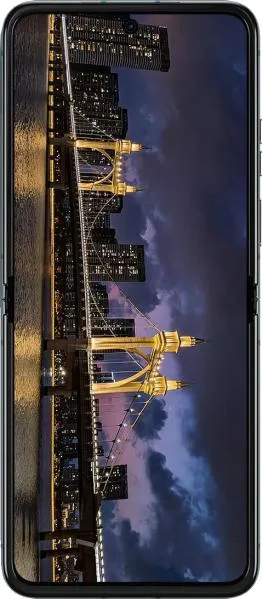
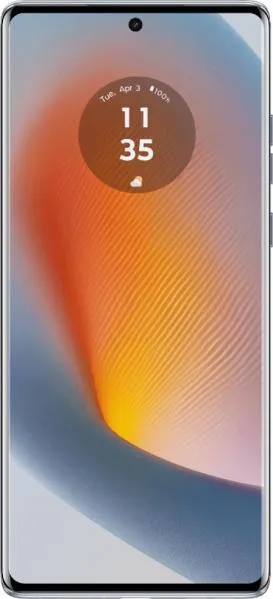
| Dimensions (mm) | 170.8 x 74 x 7 | 161.9 x 73.1 x 7.9 | Razr 40 Ultra significantly more compact when folded, but thicker when unfolded. Edge 50 Fusion is a more traditional slab design. |
| Weight (g) | 184.5 | 174.9 | Razr 40 Ultra slightly heavier but feels denser due to the folding mechanism. |
| Foldable | Yes | No | Razr's foldable design offers portability and a unique form factor but introduces potential durability concerns. |
| Display | |||
| Display Type | Foldable LTPO AMOLED | P-OLED | Razr uses a flexible AMOLED for folding, potentially with slight crease visibility. Edge 50 Fusion utilizes a standard rigid P-OLED. |
| Size (inches) | 6.9 | 6.7 | Razr offers slightly larger screen real estate. |
| Resolution (px) | 1080 x 2640 | 1080 x 2400 | Similar pixel density, but Razr's taller aspect ratio provides more vertical space. |
| Refresh Rate (Hz) | 165 | 120/144 (Region Dependent) | Razr has a potentially smoother display experience due to the higher refresh rate, but this depends on region for the Edge 50 Fusion. |
| Performance | |||
| Chipset | Snapdragon 8+ Gen 1 | Snapdragon 7s Gen 2 | Razr 40 Ultra features a significantly more powerful processor, resulting in better performance for demanding tasks and gaming. |
| CPU | Octa-core (1x3.19 GHz X2 & 3x2.75 GHz A710 & 4x1.80 GHz A510) | Octa-core (4x2.4 GHz A78 & 4x1.95 GHz A55) | Razr's CPU architecture and clock speeds offer superior processing power compared to the Edge 50 Fusion. |
| GPU | Adreno 730 | Adreno 710 | Razr offers significantly better graphics performance, beneficial for gaming and visually demanding applications. |
| RAM (GB) | 8/12 | 8/12 | Both offer comparable RAM options, sufficient for multitasking. |
| Camera | |||
| Main Camera (MP) | 12 | 50 | Edge 50 Fusion boasts higher resolution, but image quality depends on sensor size and processing, not just megapixels. Razr information is incomplete. |
| Ultrawide (MP) | 13 | 13 | Comparable ultrawide resolutions. |
| Selfie (MP) | 32 | 32 | Comparable selfie camera resolutions. |
| Battery | |||
| Capacity (mAh) | 3800 | 5000 | Edge 50 Fusion has a significantly larger battery, likely resulting in longer battery life. |
2. Key Differences Analysis
Motorola Razr 40 Ultra Advantages:
- Form Factor: The foldable design offers unparalleled portability and a unique aesthetic.
- Performance: Significantly more powerful processor and GPU, ideal for demanding tasks and gaming.
- Higher Refresh Rate Display: Smoother scrolling and animations.
Motorola Edge 50 Fusion Advantages:
- Battery Life: Larger battery capacity likely translates to significantly longer usage time.
- Potentially More Durable: Traditional slab design generally more robust than foldable phones.
- Lower Price: While both are mid-range, the Edge 50 Fusion is likely more affordable.
3. User Profiles & Recommendations
Motorola Razr 40 Ultra: Ideal for users who prioritize portability and a unique, stylish device and are willing to compromise on battery life for a compact form factor. Best for users who value top-tier performance in a compact size.
Motorola Edge 50 Fusion: Best suited for users who prioritize battery life, durability, and value. Ideal for those seeking a reliable, all-around performer without the premium price or fragility of a foldable.
4. Decision Framework
Key Questions for Buyers:
- Form Factor Priority: Is a compact, foldable design a must-have, or is a traditional smartphone preferred?
- Performance Needs: Are demanding applications and games a regular part of your usage?
- Battery Life Importance: Is all-day battery life without recharging crucial?
Scenario-Based Recommendations:
- Heavy User: If you need top performance and long battery life, the Edge 50 Fusion is a safer bet.
- Style-Conscious User: If a unique design is paramount, the Razr 40 Ultra stands out.
- On-the-Go User: If portability trumps all else, the Razr 40 Ultra's compact folded size is hard to beat.
My Choice: Motorola Edge 50 Fusion
While the Razr 40 Ultra is undeniably cool, the Edge 50 Fusion offers a more practical package for my needs. The significantly larger battery capacity and more robust traditional design outweigh the novelty of a foldable phone. I prioritize all-day battery life and a durable device. The Edge 50 Fusion's performance, while not as powerful as the Razr, is still sufficient for most everyday tasks. I also appreciate the potential cost savings with the Edge 50 Fusion. While the Razr's higher refresh rate is attractive, the difference between 120Hz/144Hz and 165Hz is negligible in real-world usage for me. Ultimately, the Edge 50 Fusion provides a better balance of performance, battery life, durability, and value.
