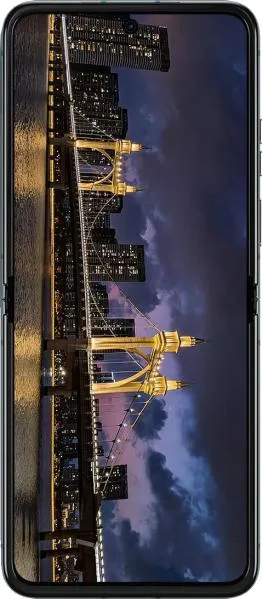
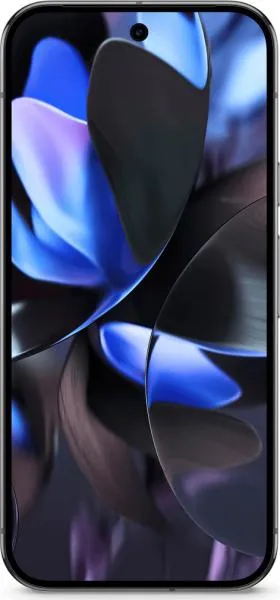
1. Specifications Comparison
| Feature | Motorola Razr 40 Ultra | Google Pixel 9 Pro XL | Practical Impact |
|---|---|---|---|
| Design | |||
| Form Factor | Foldable | Standard | Razr offers portability and novelty; Pixel prioritizes a larger, traditional screen. |
| Dimensions (mm) | 170.8 x 74 x 7 | 162.8 x 76.6 x 8.5 | Razr is significantly thinner when folded but taller unfolded; Pixel is wider and thicker overall. |
| Weight (g) | 184.5 | 221 | Razr is noticeably lighter, enhancing portability; Pixel's weight is typical for its size. |
| Display | |||
| Display Type | Foldable LTPO AMOLED | LTPO OLED | Razr's folding display allows for a compact form factor; Pixel's traditional display provides a larger viewing area. |
| Size (inches) | 6.9 | 6.8 | Negligible size difference in unfolded state. |
| Resolution | 1080 x 2640 | 1344 x 2992 | Pixel offers significantly sharper visuals due to higher resolution. |
| Refresh Rate (Hz) | 165 | 120 | Razr's higher refresh rate results in smoother animations and scrolling; Pixel's 120Hz is still excellent. |
| Peak Brightness (nits) | 1400 | 3000 | Pixel's vastly superior peak brightness ensures excellent outdoor visibility. |
| Performance | |||
| Chipset | Snapdragon 8+ Gen 1 | Google Tensor G4 | Both are powerful chipsets, but Tensor G4 is newer and potentially more efficient. Real-world performance differences might be minimal for average users. |
| CPU | Octa-core (1x3.19 GHz Cortex-X2 & 3x2.75 GHz Cortex-A710 & 4x1.80 GHz Cortex-A510) | Octa-core (1x3.1 GHz Cortex-X4 & 3x2.6 GHz Cortex-A720 & 4x1.92 GHz Cortex-A520) | Pixel's Cortex-X4 core might offer slightly better single-core performance; overall performance should be comparable. |
| RAM (GB) | 8 (Some versions have 12GB) | 16 | Pixel's significantly larger RAM enables better multitasking and app retention. |
| Camera | |||
| Main Camera (MP) | 12 | 50 | Pixel's higher resolution main camera likely captures more detail. Sensor size and processing are crucial but unspecified for Razr. |
| Video Recording | Up to 4K@60fps | Up to 8K@30fps | Pixel offers higher resolution video recording. |
| DXOMARK Score | Not Available | 158 (Mobile), 148 (Selfie) | Pixel's excellent DXOMARK scores suggest superior camera performance, but real-world testing is necessary. |
| Battery | |||
| Capacity (mAh) | 3800 | 5060 | Pixel's significantly larger battery likely provides much longer battery life. |
2. Key Differences Analysis
Motorola Razr 40 Ultra Advantages:
- Portability: The folding design makes it incredibly compact.
- Novelty: The unique form factor is eye-catching and conversation-starting.
- Higher Refresh Rate Display: Smoother scrolling and animations compared to Pixel.
Google Pixel 9 Pro XL Advantages:
- Larger, Sharper Display: Provides a more immersive viewing experience.
- Significantly Better Battery Life: Longer usage time between charges.
- More Powerful Camera System: Higher resolution sensors, 8K video recording, and excellent DXOMARK scores suggest superior image quality.
- More RAM: Improved multitasking and app performance.
- Brighter Display: Superior outdoor visibility.
- Longer Software Support: Pixel phones typically receive more OS and security updates.
3. User Profiles & Recommendations
Motorola Razr 40 Ultra: Ideal for users who prioritize portability and style above all else. Best for those who value a compact phone for easy carrying and are willing to compromise on battery life and camera performance.
Google Pixel 9 Pro XL: Suitable for users who prioritize a large, high-quality display, long battery life, exceptional camera performance, and consistent software updates. Best for power users, photographers, and videographers.
4. Decision Framework
Key Questions for Buyers:
- How important is portability? If ultimate portability is paramount, the Razr is the clear winner.
- What is your budget? The Razr is in a lower price range.
- What are your primary use cases? For media consumption, photography, and demanding tasks, the Pixel is better suited. For basic communication and portability, the Razr is sufficient.
My Choice: Google Pixel 9 Pro XL
While the Motorola Razr 40 Ultra's foldable design is intriguing, the Pixel 9 Pro XL offers a more well-rounded package for my needs. I prioritize a large, high-quality display for media consumption, a long-lasting battery for extended use, and a powerful camera system for capturing high-quality photos and videos. The Pixel's superior specifications in these areas, coupled with the promise of longer software support, make it the better choice for me. The significantly larger RAM is crucial for smooth multitasking, which is essential for my workflow. Although the Razr's portability is appealing, I am willing to sacrifice some compactness for the Pixel's overall superior performance and features. The price difference is justified by the significant improvements in key areas.
