1. Specifications Comparison
| Feature | Motorola Razr 40 Ultra | Google Pixel 8a | Practical Impact |
|---|---|---|---|
| Design | |||
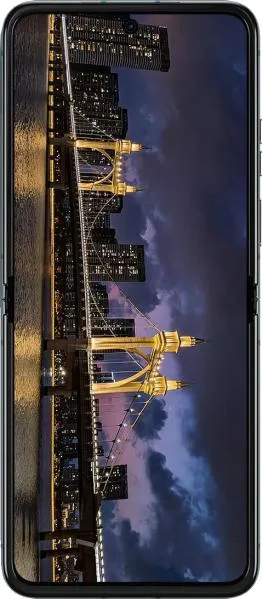
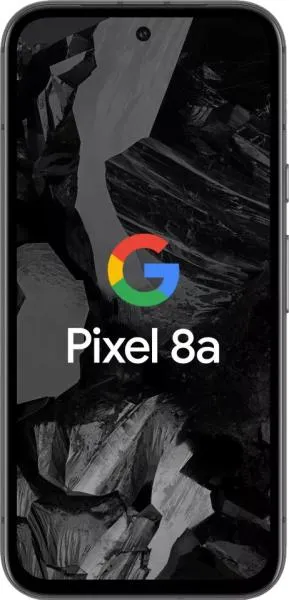
| Form Factor | Foldable | Standard | Razr offers portability and a unique form factor, Pixel 8a is a traditional slab phone. |
| Dimensions (mm) | 170.8 x 74 x 7 | 152.1 x 72.7 x 8.9 | Razr is significantly thinner when folded but taller when unfolded. Pixel 8a is easier to pocket. |
| Weight (g) | 184.5 | 188 | Negligible weight difference. |
| Display | |||
| Display Type | Foldable LTPO AMOLED | OLED | Razr's foldable display allows for a larger screen in a compact device. Pixel 8a has a standard, durable OLED. |
| Size (inches) | 6.9 | 6.1 | Razr provides more screen real estate for media consumption and multitasking. |
| Resolution | 1080 x 2640 | 1080 x 2400 | Similar sharpness despite different aspect ratios. Razr's taller display might be better for scrolling. |
| Refresh Rate (Hz) | 165 | 120 | Razr offers smoother animations and scrolling. |
| Peak Brightness (nits) | 1400 | 2000 (Claimed, no data provided) | Pixel 8a potentially offers better outdoor visibility, though real-world testing is needed to confirm the 2000 nits claim. |
| Performance | |||
| Chipset | Snapdragon 8+ Gen 1 | Google Tensor G3 | Both are powerful chips, but Tensor G3 is newer and likely offers better AI performance. Snapdragon 8+ Gen 1 is known for its strong overall performance. |
| CPU | Octa-core (1x3.19 GHz Cortex-X2 & 3x2.75 GHz Cortex-A710 & 4x1.80 GHz Cortex-A510) | Nona-core (1x3.0 GHz Cortex-X3 & 4x2.45 GHz Cortex-A715 & 4x2.15 GHz Cortex-A510) | Tensor G3 has a newer core architecture, potentially offering performance and efficiency benefits. |
| GPU | Adreno 730 | Immortalis-G715s MC10 | Adreno 730 has a proven track record in gaming. Immortalis-G715s MC10 performance needs further real-world evaluation. |
| RAM (GB) | 8 | 8 | Both offer ample RAM for smooth multitasking. |
| Camera | |||
| Main Camera (MP) | 12 | 64 | Pixel 8a has higher resolution, potentially capturing more detail. |
| Ultrawide (MP) | 13 | 13 | Similar resolution. Practical difference will depend on lens quality and software processing. |
| Selfie (MP) | 32 | 13 | Razr has a much higher resolution selfie camera. |
| Video Capabilities | Up to 4K@60fps with HDR, EIS | Up to 4K@60fps with OIS, up to 1080p@240fps | Both offer excellent video recording capabilities. Pixel offers higher slow-motion recording. |
| Battery | |||
| Capacity (mAh) | 3800 | 4492 | Pixel 8a has a significantly larger battery, potentially lasting longer on a single charge. Foldable phones often have smaller batteries due to space constraints. |
2. Key Differences Analysis
Motorola Razr 40 Ultra Advantages:
- Form Factor: The foldable design offers unparalleled portability and a unique user experience.
- External Display: Large external display allows for more functionality without unfolding. (Not explicitly in provided data but widely known)
- High Refresh Rate Display: Smoother scrolling and animations.
- Higher Resolution Selfie Camera: Better for video calls and self-portraits.
Google Pixel 8a Advantages:
- Larger Battery: Longer battery life.
- Newer Chipset and CPU: Potentially better performance and AI capabilities.
- Higher Resolution Main Camera: More detailed photos.
- Superior Software Experience: Pixel phones are known for clean Android experience and timely updates. (General knowledge, not explicitly in data)
- Longer Software Support: Pixel phones generally receive longer OS and security updates.
3. User Profiles & Recommendations
Motorola Razr 40 Ultra: Users who prioritize portability and a unique, stylish device. Ideal for those who value compactness and are willing to compromise on battery life for it.
Google Pixel 8a: Users who prioritize performance, camera quality, battery life, and a clean software experience with long-term updates. Suitable for those who prefer a traditional smartphone form factor.
4. Decision Framework
Key Questions for Buyers:
- Form Factor Preference: Do you value portability and a unique foldable design over a traditional smartphone?
- Battery Life Importance: How crucial is all-day battery life for your usage?
- Camera Needs: Do you prioritize a high-resolution main camera or a high-resolution selfie camera?
Scenario-Based Recommendations:
- Heavy User: Pixel 8a for its larger battery.
- Frequent Traveler: Razr 40 Ultra for its portability.
- Photography Enthusiast: Pixel 8a for its camera capabilities.
My Choice: Google Pixel 8a
While the Razr 40 Ultra's foldable design is intriguing, the Pixel 8a's combination of a larger battery, newer processor, superior camera system (particularly the main camera), and the promise of longer software updates makes it a more compelling choice for me. I prioritize performance, reliability, and a clean software experience, which the Pixel 8a delivers. The longer battery life is also a significant factor, as I tend to use my phone heavily throughout the day. While the Razr's form factor is innovative, the potential trade-offs in battery life and durability are not something I'm willing to compromise on. The Pixel 8a provides a more well-rounded package for my needs.
