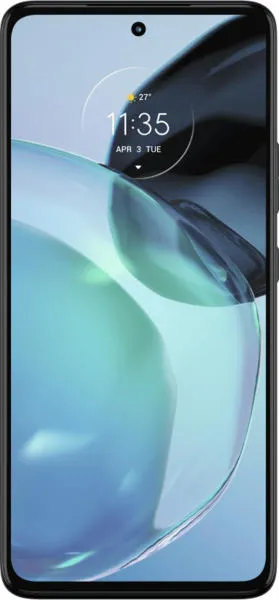
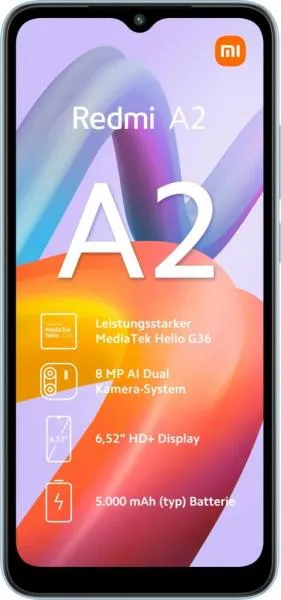
Let's dive into a comparative analysis of the Motorola Moto G72 and the Xiaomi Redmi A2, dissecting their technical specifications and translating them into real-world implications for you.
1. Specifications Breakdown
| Feature | Motorola Moto G72 | Xiaomi Redmi A2 | Real-World Implications |
|---|---|---|---|
| Design | |||
| Dimensions (mm) | 160.5 x 74.4 x 7.9 | 164.9 x 76.8 x 9.1 | Moto G72 is slightly smaller and significantly thinner. More pocketable and comfortable for one-handed use. |
| Weight (g) | 166 | 192 | Moto G72 is noticeably lighter, reducing hand fatigue during extended use. |
| Build Material | Plastic | Plastic | Similar build materials suggest comparable durability, though individual testing would confirm this. |
| Display | |||
| Type | P-OLED | IPS LCD | Moto G72's OLED offers deeper blacks, richer colors, and potentially better battery efficiency due to pixel self-lighting. |
| Size | 6.6" | 6.52" | Negligible size difference; both offer ample screen real estate. |
| Resolution | 1080 x 2400 | 720 x 1600 | Moto G72 boasts significantly sharper visuals due to higher resolution (Full HD+ vs. HD+). |
| Refresh Rate | 120Hz | - | Moto G72's higher refresh rate delivers smoother scrolling and animations, enhancing the overall user experience. |
| Performance | |||
| Chipset | Helio G99 (6nm) | Helio G36 (12nm) | Moto G72's more advanced and power-efficient chipset translates to noticeably faster performance and better multitasking. |
| CPU | Octa-core (2x2.2 GHz Cortex-A76 & 6x2.0 GHz Cortex-A55) | Octa-core (4x2.2 GHz Cortex-A53 & 4x1.7 GHz Cortex-A53) | Moto G72's CPU architecture provides a significant performance advantage, especially in demanding tasks. |
| RAM | 6/8GB | 2/3GB | Moto G72 offers more RAM, enabling smoother multitasking and better handling of memory-intensive applications. |
| Camera | |||
| Main Camera | 108MP | 8MP | Moto G72's higher resolution main camera promises significantly more detail and better low-light performance. |
| Front Camera | 16MP | 5MP | Moto G72's selfie camera boasts higher resolution for sharper self-portraits. |
| Battery Life | |||
| Capacity | 5000mAh | 5000mAh | Similar battery capacities suggest comparable battery life, but real-world usage will depend on other factors like the display and chipset. |
| Charging | proprietary fast charging | 10W | Moto G72 will likely charge faster. |
2. Key Insights
The Moto G72 clearly positions itself as the more powerful and feature-rich device. Its advantages lie in a superior display (OLED with 120Hz refresh rate), a significantly faster processor (Helio G99), more RAM, and a higher resolution camera system. The overall user experience will be smoother, faster, and visually more appealing.
The Redmi A2, on the other hand, focuses on affordability. While it offers a large display and long-lasting battery, it compromises on performance, camera quality, and display resolution.
3. User Profiles and Recommendations
Moto G72: Ideal for users who prioritize performance, a smooth user experience, a vibrant display, and mobile photography. Gamers, content creators, and those who multitask heavily will appreciate its capabilities.
Redmi A2: Best suited for budget-conscious users who primarily use their phones for basic tasks like calling, texting, browsing, and social media. It's a good option for those seeking a simple, reliable device without demanding high performance.
4. Buying Decision Framework
Questions to Consider:
- What is your budget? The Redmi A2 is significantly cheaper.
- What are your primary phone usage patterns? For basic tasks, the Redmi A2 might suffice. For demanding tasks or gaming, the Moto G72 is necessary.
- How important are display quality and camera performance to you? The Moto G72 significantly outperforms the Redmi A2 in both areas.
Scenario-Based Recommendations:
- Student on a tight budget: Redmi A2
- Casual user who prioritizes battery life: Potentially either, real world battery tests needed.
- Mobile gamer or content creator: Moto G72
- User who values a smooth and responsive user experience: Moto G72
My Choice: Motorola Moto G72
While the Redmi A2 offers excellent value for its price, I would choose the Motorola Moto G72. The significantly improved performance, superior display, and more capable camera system are worth the price difference for me. I value a smooth and responsive user experience, and the Moto G72's hardware ensures that. The 120Hz OLED display is a major draw, providing a visually immersive experience. While I appreciate the Redmi A2's budget-friendly approach, the compromises in performance and features would ultimately detract from my daily usage.
