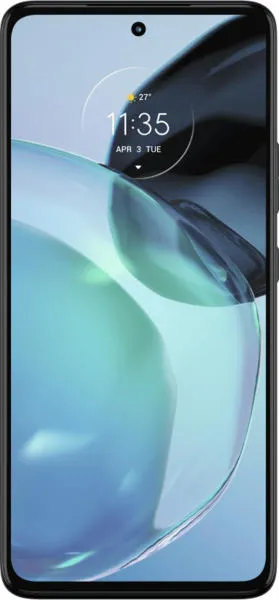
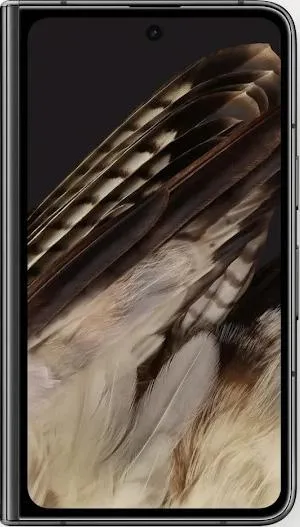
Let's dive into a comparative analysis of the Motorola Moto G72 and the Google Pixel Fold, two phones occupying different tiers in the Android ecosystem.
1. Specifications Breakdown
| Feature | Motorola Moto G72 | Google Pixel Fold | Real-World Implications |
|---|---|---|---|
| Design | |||
| Dimensions (mm) | 160.5 x 74.4 x 7.9 | 139.7 x 158.7 x 5.8 | Pixel Fold significantly wider due to folding design; Moto G72 thinner and lighter for easier one-handed use |
| Weight (g) | 166 | 283 | Pixel Fold's weight reflects its complex hinge and larger display; Moto G72 more pocketable |
| Foldable | No | Yes | Pixel Fold offers tablet-like experience when unfolded; Moto G72 traditional smartphone form factor |
| Display | |||
| Size (inches) | 6.6 | 7.6 (unfolded) 5.8 (folded) | Pixel Fold provides significantly larger screen real estate when unfolded; smaller external display |
| Type | P-OLED | Foldable OLED | Pixel Fold's folding display introduces durability concerns; Moto G72's P-OLED offers vibrant colors |
| Refresh Rate (Hz) | 120 | 120 | Both offer smooth scrolling and animations |
| Resolution (px) | 1080 x 2400 | 1840 x 2208 (unfolded) 1080 x 2092 (folded) | Pixel Fold sharper when unfolded; comparable to Moto G72 when folded |
| Performance | |||
| Chipset | Helio G99 | Google Tensor G2 | Tensor G2 significantly more powerful, enabling superior multitasking and AI capabilities; G99 decent for everyday tasks |
| CPU | Octa-core (2x2.2 GHz A76 & 6x2.0 GHz A55) | Octa-core (2x2.85 GHz X1 & 2x2.35 GHz A78 & 4x1.80 GHz A55) | Tensor G2 offers faster processing speeds and improved efficiency |
| RAM (GB) | 8 | 12 | Pixel Fold's larger RAM handles demanding applications and multitasking with ease |
| Camera | |||
| Main Camera (MP) | 108 | 48 | Moto G72 boasts higher megapixel count; Pixel Fold relies on Google's computational photography prowess |
| Video | 1080p@60fps | 4K@60fps | Pixel Fold captures higher resolution video with HDR |
| Battery Life | |||
| Capacity (mAh) | 5000 | 4821 | Moto G72 likely offers longer battery life due to lower power consumption and larger battery |
2. Key Insights
- Performance: The Pixel Fold, powered by the Tensor G2, significantly outperforms the Moto G72 in processing power and AI capabilities. The Moto G72's Helio G99 is sufficient for everyday tasks, but the Pixel Fold handles demanding applications and multitasking more effectively.
- Display: The Pixel Fold's foldable OLED offers a unique, expansive experience when unfolded, transforming into a tablet-sized screen. However, the Moto G72's traditional P-OLED provides vibrant colors and a more pocketable form factor.
- Camera: While the Moto G72 boasts a higher megapixel count, the Pixel Fold leverages Google's advanced computational photography algorithms to potentially deliver superior image quality. The Pixel Fold also offers superior video recording capabilities.
- Battery: The Moto G72, with its larger 5000mAh battery and less demanding hardware, likely provides longer battery life compared to the Pixel Fold.
3. User Profiles and Recommendations
- Moto G72: Ideal for budget-conscious users seeking a reliable smartphone for everyday tasks like communication, web browsing, and light media consumption. Its long battery life is a significant advantage.
- Pixel Fold: Best suited for power users and early adopters who value innovation and a unique user experience. The foldable design enables multitasking and content consumption on a larger scale, but comes at a premium price.
4. Buying Decision Framework
- What is your budget? The Moto G72 is significantly more affordable than the Pixel Fold.
- Do you prioritize performance or battery life? The Pixel Fold offers superior performance, while the Moto G72 likely provides longer battery life.
- Is a foldable screen a must-have feature? The Pixel Fold's unique form factor offers a tablet-like experience, while the Moto G72 provides a more traditional smartphone experience.
My Choice: As a tech journalist who values cutting-edge technology and the flexibility of a larger screen for productivity, I would choose the Pixel Fold. While the price is significantly higher and battery life might be a concern, the innovative foldable design, superior performance powered by the Tensor G2, and advanced camera capabilities outweigh the drawbacks for my specific needs. The ability to seamlessly transition from a phone to a mini-tablet for tasks like editing documents, watching videos, and multitasking is a compelling proposition. I'm willing to compromise on battery life for the unique user experience and raw power the Pixel Fold offers.
