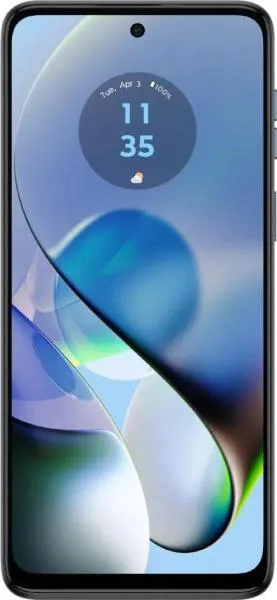
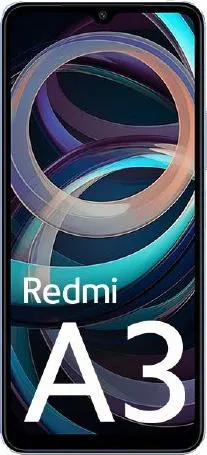
1. Specifications Comparison
| Feature | Motorola Moto G54 | Xiaomi Redmi A3 | Practical Impact |
|---|---|---|---|
| Design | |||
| Dimensions | 161.6 x 73.8 x 8 mm | 168.3 x 76.3 x 8.3 mm | Moto G54 is noticeably smaller and thinner, easier for one-handed use and pocket portability. |
| Weight | 177g | 193g | Moto G54 is lighter, reducing hand fatigue during extended use. |
| Display | |||
| Size | 6.5" | 6.71" | Redmi A3 offers a slightly larger screen for media consumption, but may be less manageable. |
| Type | IPS LCD, 120Hz | IPS LCD, 90Hz, 500 nits (HBM) | Moto G54's 120Hz refresh rate provides smoother scrolling and animations compared to Redmi A3's 90Hz. We lack peak brightness data for the G54 to compare outdoor visibility. |
| Resolution | 1080 x 2400 | 720 x 1650 | Moto G54 has a significantly sharper display (405 ppi vs 268 ppi), resulting in clearer text and images. |
| Performance | |||
| Chipset | Mediatek Dimensity 7020 (6 nm) | Mediatek Helio G36 (12 nm) | Dimensity 7020 is built on a more advanced process (6nm vs 12nm), leading to better performance and power efficiency. |
| CPU | Octa-core (2x2.2 GHz Cortex-A78 & 6x2.0 GHz Cortex-A55) | Octa-core (4x2.2 GHz Cortex-A53 & 4x1.6 GHz Cortex-A53) | Moto G54 features more powerful CPU cores (Cortex-A78), resulting in significantly faster app loading, multitasking, and overall responsiveness. |
| GPU | IMG BXM-8-256 | PowerVR GE8320 | Moto G54's GPU is more capable, enabling smoother gaming and graphics-intensive tasks. |
| RAM/Storage | 256GB/8GB | 128GB/4GB or 128GB/6GB | Moto G54 offers double the storage and significantly more RAM, enabling smoother multitasking and accommodating more apps and files. |
| Battery | |||
| Capacity | 5000 mAh | 5000 mAh | Both phones have the same battery capacity, but real-world battery life will depend on software optimization and usage patterns. G54's more efficient chipset likely contributes to longer battery life. |
| Other | |||
| OS | Android 13 | Android 14 | Redmi A3 ships with a newer Android version, potentially offering newer features and longer software support. |
| Sensors | Accelerometer, Gyro, Proximity, Compass, Fingerprint (side-mounted) | Accelerometer, Compass, Fingerprint (side-mounted) | Moto G54 has a gyroscope sensor, crucial for certain games and AR applications. Redmi A3 lacks this sensor. |
| Video | 1080p@30/60fps | 1080p@30fps | Moto G54 can record video at 60fps, providing smoother footage. |
2. Key Differences Analysis
Moto G54 Advantages:
- Significantly better performance: The Dimensity 7020 chipset, superior CPU and GPU, and more RAM offer a much smoother and faster user experience.
- Sharper Display: Higher resolution and refresh rate lead to a more visually appealing and responsive experience.
- More Storage: Double the storage capacity allows for more apps, photos, and videos.
- Smaller & Lighter: More comfortable for one-handed use and portability.
Redmi A3 Advantages:
- Newer Android Version: Potentially longer software support and access to newer features.
- Lower Price: Expected given the "low price" designation, making it more budget-friendly.
Trade-offs:
- Performance vs. Price: Moto G54 offers significantly better performance but at a higher price.
- Screen Size vs. Handheld Comfort: Redmi A3 has a larger screen but is less comfortable for one-handed use.
3. User Profiles & Recommendations
Moto G54: Users who prioritize performance, a smooth display, ample storage, and a comfortable form factor. Suitable for gaming, multitasking, media consumption, and photography.
Redmi A3: Budget-conscious users who primarily need a large screen for basic tasks like browsing, social media, and calling. Suitable for users who prioritize affordability over performance.
4. Decision Framework
Key Questions:
- What is your budget? Redmi A3 is a budget option, while Moto G54 is mid-range.
- What are your primary use cases? Gaming and demanding tasks benefit from Moto G54's performance; basic tasks are well-handled by Redmi A3.
- How important is performance and display quality? Moto G54 excels in these areas.
Scenario-Based Recommendations:
- Student on a tight budget: Redmi A3
- Gamer or power user: Moto G54
- Casual user who values a smooth experience: Moto G54
My Choice: Motorola Moto G54
Why: While the Redmi A3 offers a newer Android version and a lower price, the Moto G54's significant advantages in performance, display quality, and storage make it a much more compelling device for my needs. I prioritize a smooth and responsive user experience, which the G54 delivers thanks to its powerful processor, faster refresh rate, and ample RAM. The sharper display is also a major plus for media consumption and general usage. While the Redmi A3 is a good budget option, the performance difference would likely be noticeable in everyday use. The slightly smaller size of the G54 is also preferable for me in terms of portability and one-handed use.
