1. Specifications Comparison
| Feature | Motorola Moto G54 | Xiaomi Redmi 13 | Practical Impact |
|---|---|---|---|
| Design | |||
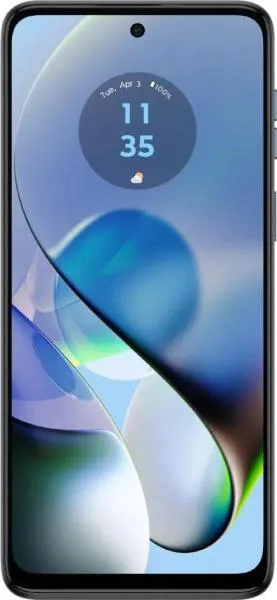
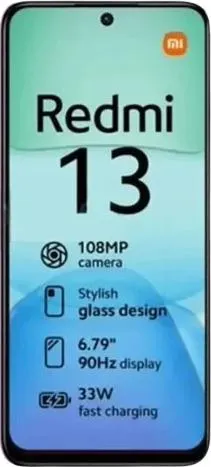
| Dimensions | 161.6 x 73.8 x 8 mm | 168.6 x 76.3 x 8.3 mm | Redmi 13 is noticeably larger and slightly thicker. Moto G54 will be easier to hold and pocket. |
| Weight | 177g | 205g | Redmi 13 is significantly heavier, potentially leading to fatigue during extended use. |
| Build Materials | Not specified | Not specified | Cannot compare build quality and durability without more information. |
| Display | |||
| Size | 6.5" | 6.79" | Redmi 13 offers a larger screen for more immersive media consumption. |
| Type | IPS LCD | IPS LCD | Both use the same display technology, expecting similar color accuracy and viewing angles. |
| Refresh Rate | 120Hz | 90Hz | Moto G54's higher refresh rate will result in smoother scrolling and animations. |
| Resolution | 1080 x 2400 | 1080 x 2460 | Negligible difference in sharpness due to similar pixel density. |
| Peak Brightness | Not specified | 550 nits (HBM) | Redmi 13's specified peak brightness suggests better outdoor visibility. Moto G54's unknown brightness makes comparison impossible. |
| Performance | |||
| Chipset | Mediatek Dimensity 7020 (6nm) | Mediatek Helio G91 Ultra (12nm) | Moto G54 uses a more power-efficient and likely more powerful chipset due to smaller process node (6nm vs 12nm). |
| CPU | Octa-core (2x2.2 GHz Cortex-A78 & 6x2.0 GHz Cortex-A55) | Octa-core (2x2.0 GHz Cortex-A75 & 6x1.8 GHz Cortex-A55) | Moto G54's CPU features faster cores, likely resulting in better performance for demanding tasks. |
| GPU | IMG BXM-8-256 | Mali-G52 MC2 | Difficult to compare GPUs directly without benchmarks. Expect Moto G54 to have a slight edge due to the newer chipset. |
| RAM | 8GB | 8GB | Same RAM capacity, implying similar multitasking capabilities. |
| Storage | 256GB | 256GB | Identical storage capacity. |
| Battery | |||
| Capacity | 5000 mAh | 5030 mAh | Negligible difference in battery capacity. Real-world battery life will depend more on software optimization and usage patterns. |
| Camera | |||
| Video Capabilities | 1080p@30/60fps | 1080p@30fps | Moto G54 can record at 60fps, offering smoother video footage. No detailed camera specs provided to compare image quality. |
| Software | |||
| OS | Android 13 | Android 14 | Redmi 13 ships with a newer Android version, potentially offering newer features and longer software support. |
| Sensors | Accelerometer, gyro, proximity, compass, Fingerprint (side-mounted) | Accelerometer, compass, Fingerprint (side-mounted) | Moto G54 has a gyroscope sensor, crucial for certain apps and games requiring motion sensing. It also has a proximity sensor, which is standard but importantly missing from the Redmi's listed specs. |
2. Key Differences Analysis
Moto G54 Advantages:
- Smoother Display: 120Hz refresh rate provides a more fluid user experience.
- Superior Performance: More powerful and efficient chipset (Dimensity 7020).
- Better Video Recording: Capability to record at 60fps.
- More Compact Design: Easier to handle and pocket.
- Gyroscope for Enhanced Motion Sensing: Important for gaming and certain apps.
Xiaomi Redmi 13 Advantages:
- Larger Display: More immersive for media consumption.
- Newer Android Version: Potentially longer software support and newer features.
- Slightly Larger Battery: Potentially slightly longer battery life, though real-world usage will vary.
- Lower Price: Positioned in the "low price" range compared to Moto G54's "medium price."
3. User Profiles & Recommendations
Moto G54: Users who prioritize performance, a smooth display, and a compact form factor. Suitable for gaming, multitasking, and content creation.
Xiaomi Redmi 13: Budget-conscious users who prioritize a large screen for media consumption. Suitable for casual browsing, video watching, and basic tasks.
4. Decision Framework
Key Questions for Buyers:
- What is your budget? The Redmi 13 is significantly cheaper.
- Do you prioritize performance or screen size? Moto G54 excels in performance, while Redmi 13 offers a larger display.
- How important is software updates and longevity to you? Redmi 13 ships with Android 14, suggesting potentially longer support.
My Choice: Motorola Moto G54
While the Redmi 13 offers a larger display and lower price, the Moto G54's superior performance, smoother 120Hz display, more compact design, and inclusion of a gyroscope make it a more compelling overall package for my needs. I value a responsive and fluid user experience, which the Moto G54 is better equipped to deliver thanks to its more powerful chipset and higher refresh rate display. The slightly higher price is a worthwhile trade-off for these benefits. Additionally, the lack of clearly defined sensors in the Redmi 13 is concerning. While price is a factor, the overall user experience offered by the Moto G54 makes it the better choice in my opinion.
