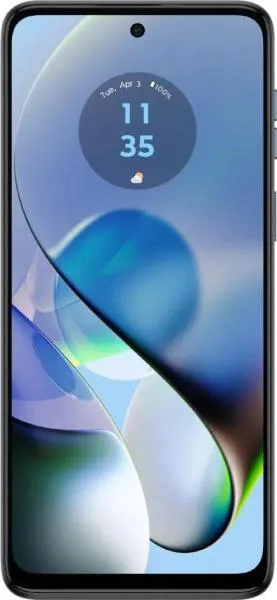
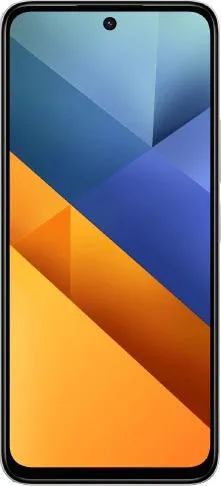
1. Specifications Comparison
| Feature | Motorola Moto G54 | Xiaomi Poco M6 4G | Practical Impact |
|---|---|---|---|
| Design | |||
| Dimensions | 161.6 x 73.8 x 8 mm | 168.6 x 76.3 x 8.3 mm | The Moto G54 is noticeably smaller and thinner, making it more pocketable and easier to handle. |
| Weight | 177g | 205g | The Moto G54 is significantly lighter, reducing hand fatigue during extended use. |
| Display | |||
| Size | 6.5" | 6.79" | The Poco M6 4G offers a larger screen for more immersive media consumption but might be less comfortable for one-handed use. |
| Type | IPS LCD, 120Hz | IPS LCD, 90Hz, 550 nits (HBM) | Both use LCD technology. The Moto G54's 120Hz refresh rate provides smoother scrolling and animations compared to the Poco M6 4G's 90Hz. We don't have peak brightness for the Moto G54 to compare with the Poco M6 4G's 550 nits HBM. |
| Resolution | 1080 x 2400 | 1080 x 2460 | Both offer similar sharpness due to nearly identical pixel densities. The slightly taller aspect ratio on the Poco M6 4G provides a bit more vertical screen real estate. |
| Performance | |||
| Chipset | Mediatek Dimensity 7020 (6 nm) | Mediatek Helio G91 Ultra (12 nm) | The Dimensity 7020 in the Moto G54, built on a smaller 6nm process, is likely more power-efficient and offers better performance than the 12nm Helio G91. |
| CPU | Octa-core (2x2.2 GHz Cortex-A78 & 6x2.0 GHz Cortex-A55) | Octa-core (2x2.0 GHz Cortex-A75 & 6x1.8 GHz Cortex-A55) | The Moto G54 boasts faster and more modern CPU cores, resulting in snappier performance and better multitasking. |
| GPU | IMG BXM-8-256 | Mali-G52 MC2 | The IMG BXM-8-256 in the Moto G54 generally offers superior graphics performance for gaming and demanding applications compared to the Mali-G52 MC2. |
| RAM | 8GB | 8GB | Both phones have the same amount of RAM, enabling similar multitasking capabilities. |
| Storage | 256GB | 256GB | Both offer identical storage capacity. |
| Battery | |||
| Capacity | 5000 mAh | 5030 mAh | Negligible difference in battery capacity. Real-world battery life will depend more on software optimization and usage patterns. |
| Other | |||
| OS | Android 13 | Android 14 | Poco M6 4G ships with the newer Android version, potentially offering more features and longer software support. |
| Sensors | Accelerometer, gyro, proximity, compass, Fingerprint (side-mounted) | Accelerometer, compass, Fingerprint (side-mounted) | The Moto G54 includes a gyroscope sensor, crucial for certain AR applications and gaming experiences, which the Poco M6 4G lacks. |
| Video Capabilities | 1080p@30/60fps | 1080p@30fps | The Moto G54 can record video at 60fps, resulting in smoother footage. |
2. Key Differences Analysis
Moto G54 Advantages:
- Superior Performance: The more efficient and powerful chipset, coupled with faster CPU and GPU, translates to a smoother user experience, especially for gaming and multitasking.
- Smoother Display: The 120Hz refresh rate provides a noticeably more fluid visual experience.
- More Compact Design: Smaller and lighter build enhances portability and one-handed usability.
- Gyroscope Sensor: Enables AR applications and enhances gaming experiences.
- 60fps Video Recording: Allows for smoother video capture.
Poco M6 4G Advantages:
- Larger Display: Offers a more immersive experience for media consumption.
- Newer Android Version: Potentially longer software updates and newer features.
- Lower Price: Offers a more budget-friendly option.
3. User Profiles & Recommendations
Moto G54: Users who prioritize performance, a smooth display, a compact design, and gaming capabilities. Suitable for those who frequently multitask, play mobile games, or value a comfortable in-hand feel.
Poco M6 4G: Budget-conscious users who prioritize a large display for media consumption and casual usage. Suitable for those who primarily use their phones for browsing, social media, and watching videos. Not ideal for demanding gaming or heavy multitasking.
4. Decision Framework
Key Questions for Buyers:
- What is your budget? The Poco M6 4G is the more affordable option.
- What is your primary use case? Gaming and multitasking favor the Moto G54, while media consumption favors the Poco M6 4G.
- Do you prioritize performance or screen size? Moto G54 excels in performance, while Poco M6 4G offers a larger display.
My Choice: Motorola Moto G54
While the Poco M6 4G offers a larger display and a lower price, the Moto G54's significant performance advantage, smoother 120Hz display, more compact design, and inclusion of a gyroscope sensor make it the better overall device for me. I prioritize a smooth and responsive user experience, which the Moto G54 delivers thanks to its superior hardware. The slightly higher price is justified by the noticeable difference in daily usage. The smaller form factor also appeals to my preference for a more pocketable phone. While the Poco M6 4G's larger screen is tempting for media consumption, the performance difference would be a constant compromise I'd rather avoid.
