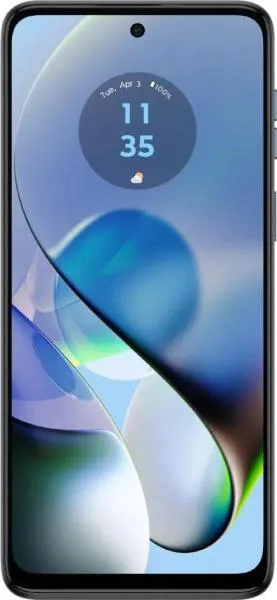

1. Specifications Comparison
| Feature | Motorola Moto G54 | Samsung Galaxy M15 | Practical Impact |
|---|---|---|---|
| Design | |||
| Dimensions | 161.6 x 73.8 x 8 mm | 160.1 x 76.8 x 9.3 mm | The Moto G54 is noticeably thinner and slightly shorter, making it more pocketable. The Galaxy M15 is wider. |
| Weight | 177g | 217g | The Moto G54 is significantly lighter, reducing hand fatigue during extended use. |
| Build Materials | Not specified | Not specified | Cannot compare build quality and durability without further information. |
| Display | |||
| Display Type | IPS LCD, 120Hz | Super AMOLED, 90Hz, 800 nits (HBM) | The Galaxy M15's AMOLED display offers richer colors, deeper blacks, and potentially better outdoor visibility due to higher brightness. The Moto G54's 120Hz refresh rate provides smoother scrolling and animations. |
| Resolution | 1080 x 2400 | 1080 x 2340 | Virtually identical resolutions resulting in similar sharpness on both devices. |
| Refresh Rate | 120Hz | 90Hz | The Moto G54 will feel smoother during scrolling and gaming. |
| Performance | |||
| Chipset | Mediatek Dimensity 7020 (6 nm) | Mediatek Dimensity 6100+ (6 nm) | The Dimensity 7020 in the Moto G54 is generally considered a slightly more powerful chipset, likely offering better performance in demanding tasks and gaming. |
| CPU | Octa-core (2x2.2 GHz Cortex-A78 & 6x2.0 GHz Cortex-A55) | Octa-core (2x2.2 GHz Cortex-A76 & 6x2.0 GHz Cortex-A55) | While clock speeds are similar, the Cortex-A78 cores in the G54 are newer and architecturally more advanced than the A76 cores in the M15, leading to potentially better performance. |
| GPU | IMG BXM-8-256 | Mali-G57 MC2 | The BXM-8-256 generally provides better gaming performance compared to the Mali-G57 MC2. |
| RAM/Storage | 8GB/256GB | 6GB/128GB | The Moto G54 offers double the RAM and storage, enabling smoother multitasking and more space for apps and files. The lower RAM on the M15 might lead to more frequent app closures in the background. |
| Camera | |||
| Video Capabilities | 1080p@30/60fps | 1080p@30fps (EIS) | The Moto G54 offers more video recording options including 60fps, resulting in smoother footage. The M15 has Electronic Image Stabilization (EIS) for potentially steadier videos at 30fps. Detailed camera specifications (sensor size, aperture) are missing, limiting a comprehensive comparison. |
| Battery | |||
| Capacity | 5000 mAh | 6000 mAh | The Galaxy M15 has a larger battery, potentially offering longer battery life. Real-world usage will vary depending on individual usage patterns. |
2. Key Differences Analysis
Moto G54 Advantages:
- Superior Performance: The Dimensity 7020 chipset, coupled with 8GB of RAM, provides a noticeable performance advantage for demanding tasks and gaming.
- Smoother Display: The 120Hz refresh rate provides a more fluid user experience.
- Lighter and Slimmer: More comfortable for one-handed use and pocket portability.
- More Storage: Double the storage capacity of the Galaxy M15.
Samsung Galaxy M15 Advantages:
- Larger Battery: Potentially longer battery life.
- AMOLED Display: Richer colors and deeper blacks. Potentially better outdoor visibility although peak brightness figures are missing for comparison.
3. User Profiles & Recommendations
Moto G54: Suitable for users who prioritize performance, a smooth display, and a lightweight design. Ideal for gaming, multitasking, and media consumption.
Samsung Galaxy M15: Suitable for users who prioritize battery life and vibrant display quality. Best for users who primarily use their phone for communication, social media, and light browsing. Good for users who watch a lot of videos.
4. Decision Framework
Key Questions for Buyers:
- What is your budget? Both are mid-range but slight price differences might exist.
- What are your primary use cases? Gaming, multitasking, or general use?
- Which features are most important? Performance, battery life, display quality, or design?
Scenario-Based Recommendations:
- Heavy Gamer: Moto G54 for its superior performance and 120Hz display.
- Power User: Moto G54 for its performance and larger RAM.
- Casual User focused on Battery: Samsung Galaxy M15 for its larger battery.
- Media Consumption Focused User: Samsung Galaxy M15 for its AMOLED display.
My Choice: Motorola Moto G54
While the Samsung Galaxy M15 offers a larger battery and an AMOLED display, I would choose the Motorola Moto G54. The significantly lighter and thinner design, coupled with the noticeably more powerful processor and smoother 120Hz refresh rate display, are crucial factors for me. I prioritize a fluid and responsive user experience, especially for tasks like multitasking and occasional gaming. The double RAM and storage in the G54 are also significant advantages, ensuring smoother performance in the long run. While battery life is important, I find the performance and usability benefits of the Moto G54 more compelling. The superior performance will likely make the phone feel faster and more responsive in day-to-day use, which I value more than a slightly larger battery.
