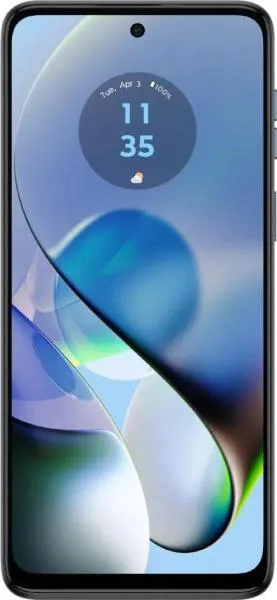
1. Specifications Comparison
| Feature | Motorola Moto G54 | Phone 8 | Practical Impact |
|---|---|---|---|
| Design | |||
| Dimensions | 161.6 x 73.8 x 8 mm | 162 x 75.1 x 8.7 mm | Phone 8 is slightly larger and thicker. |
| Weight | 177g | 191g | Phone 8 is noticeably heavier. |
| Build Materials | Not specified | Not specified | Cannot compare build quality and durability. |
| Display | |||
| Size | 6.5" | 6.78" | Phone 8 offers a larger viewing area. |
| Type | IPS LCD, 120Hz | LTPO AMOLED, 1B colors, 120Hz, HDR | Phone 8's AMOLED display will provide significantly better contrast, color accuracy, and power efficiency due to LTPO technology. HDR support also enhances visual quality. |
| Resolution | 1080 x 2400 | 1264 x 2780 | Phone 8 has a sharper display with higher pixel density (450 vs 405 ppi). |
| Peak Brightness | Not specified | 6000 nits | Phone 8 will be significantly more readable in direct sunlight. Lack of data for the Moto G54 limits comparison. |
| Refresh Rate | 120Hz | 120Hz | Both phones offer smooth scrolling and animations. |
| Performance | |||
| Chipset | Mediatek Dimensity 7020 (6 nm) | Qualcomm Snapdragon 7+ Gen 3 (4 nm) | Phone 8's Snapdragon chip is built on a smaller process node (4nm vs 6nm), suggesting better performance and power efficiency. The 7+ Gen 3 generally outperforms the Dimensity 7020 in benchmarks. |
| CPU | Octa-core (2x2.2 GHz Cortex-A78 & 6x2.0 GHz Cortex-A55) | Octa-core (1x2.8 GHz Cortex-X4 & 4x2.6 GHz Cortex-A720 & 3x1.9 GHz Cortex-A520) | Phone 8's CPU features a more powerful core architecture leading to superior performance, especially in demanding tasks. |
| GPU | IMG BXM-8-256 | Adreno 732 | Phone 8's Adreno 732 GPU offers better gaming and graphics performance compared to the IMG BXM-8-256. |
| RAM | 8GB | 12GB | Phone 8 provides more RAM, enabling smoother multitasking and better performance with demanding applications. |
| Storage | 256GB | 512GB | Phone 8 offers double the storage capacity. |
| Battery | |||
| Capacity | 5000 mAh | 5500 mAh | Phone 8 has a slightly larger battery capacity. Real-world battery life depends on numerous factors including the display and chip efficiency. |
| Camera | |||
| Video Capabilities | 1080p@30/60fps | 4K@30/60fps, 1080p@30/60/120fps (OIS, EIS) | Phone 8 supports higher resolution video recording (4K) and benefits from optical (OIS) and electronic (EIS) image stabilization for smoother footage. Detailed camera sensor specifications are missing, limiting a full comparison. |
2. Key Differences Analysis
Phone 8 Advantages:
- Superior Display: AMOLED with HDR, higher brightness, and sharper resolution.
- Significantly Better Performance: More powerful CPU and GPU, more RAM.
- Enhanced Video Recording: 4K resolution with OIS and EIS.
- Larger Storage: Double the storage capacity of the Moto G54.
Moto G54 Advantages:
- Lighter and Slightly Smaller: Potentially more comfortable for one-handed use.
3. User Profiles & Recommendations
Moto G54: Budget-conscious users who prioritize a lighter phone for basic tasks like calling, texting, web browsing, and social media.
Phone 8: Users who value a premium display, high performance for demanding apps and gaming, excellent camera capabilities, and ample storage.
4. Decision Framework
Key Questions:
- What is your budget? Phone 8 is likely more expensive.
- What are your primary smartphone usage patterns? (e.g., gaming, photography, social media)
- Do you prioritize display quality and performance, or portability and affordability?
My Choice: Phone 8
While lacking a specific model name makes it slightly more abstract, I would choose Phone 8. The superior display, significantly better performance (CPU, GPU, RAM), larger storage, and enhanced video recording capabilities outweigh the slight size and weight differences. The Snapdragon 7+ Gen 3 is a significant performance jump over the Dimensity 7020, and the AMOLED display's quality will be noticeably better in everyday use. While the Moto G54 offers a more manageable size and weight, Phone 8 provides a more future-proof and enjoyable overall user experience. The lack of pricing makes a definitive value assessment impossible, but assuming a reasonable price difference within the "medium price" range, Phone 8 provides a compelling package.
