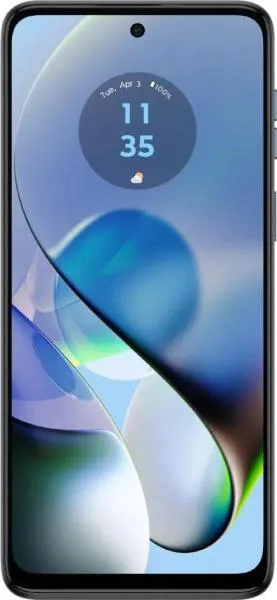

1. Specifications Comparison
| Feature | Motorola Moto G54 | Google Pixel 8 Pro | Practical Impact |
|---|---|---|---|
| Design | |||
| Dimensions | 161.6 x 73.8 x 8 mm | 162.6 x 76.5 x 8.8 mm | Pixel 8 Pro is slightly larger and thicker. |
| Weight | 177g | 213g | Moto G54 is significantly lighter, more comfortable for extended use. |
| Build Materials | Not specified | Not specified | Cannot compare build quality and durability. |
| Display | |||
| Size | 6.5" | 6.7" | Pixel 8 Pro offers a larger viewing area. |
| Type | IPS LCD, 120Hz | LTPO OLED, 120Hz, HDR10+ | Pixel 8 Pro's OLED provides deeper blacks, higher contrast, and HDR support for richer visuals. |
| Resolution | 1080 x 2400 | 1344 x 2992 | Pixel 8 Pro boasts a sharper display with higher pixel density (489 vs 405 ppi). |
| Peak Brightness | Not specified | 2400 nits | Pixel 8 Pro's extreme brightness ensures excellent outdoor visibility. Missing Moto G54 data prevents comparison. |
| Refresh Rate | 120Hz | 120Hz | Both phones offer smooth scrolling and animations. |
| Performance | |||
| Chipset | Mediatek Dimensity 7020 (6 nm) | Google Tensor G3 (4 nm) | Tensor G3, built on a smaller process, likely offers better performance and power efficiency. |
| CPU | Octa-core (2x2.2 GHz Cortex-A78 & 6x2.0 GHz Cortex-A55) | Nona-core (1x3.0 GHz Cortex-X3 & 4x2.45 GHz Cortex-A715 & 4x2.15 GHz Cortex-A510) | Pixel 8 Pro's more modern CPU architecture should deliver superior performance, especially in demanding tasks. |
| GPU | IMG BXM-8-256 | Immortalis-G715s MC10 | Pixel 8 Pro likely offers significantly better graphics performance for gaming and visually intensive applications. |
| RAM | 8GB | 12GB | Pixel 8 Pro's larger RAM enables better multitasking and smoother performance with multiple apps. |
| Storage | 256GB | 256GB, 512GB, 1TB | Pixel offers more storage options for users needing ample space. |
| Battery | |||
| Capacity | 5000 mAh | 5050 mAh | Negligible difference in battery capacity. Real-world battery life depends on optimization and usage. |
| Charging Speed | Not specified | Not specified | Cannot compare charging speeds. |
| Camera | Not specified | Not specified | Camera quality comparison is impossible without detailed sensor and feature information. |
2. Key Differences Analysis
Moto G54 Advantages:
- Lighter and potentially more affordable: Significantly lighter, making it more comfortable for one-handed use and extended periods. It likely falls into a lower price bracket within the "medium price" range.
Pixel 8 Pro Advantages:
- Superior Display: Brighter, sharper OLED with HDR support offers a dramatically better visual experience.
- Higher Performance: More powerful processor, GPU, and larger RAM translate to smoother performance, better multitasking, and enhanced gaming capabilities.
- More Storage Options: Offers higher storage tiers for users with extensive media libraries or demanding applications.
- Advanced Software Features: Likely benefits from exclusive Google software features and faster updates due to being a flagship Google phone.
3. User Profiles & Recommendations
Moto G54: Budget-conscious users prioritizing a lightweight phone for everyday tasks like communication, web browsing, and light media consumption.
Pixel 8 Pro: Power users, photographers, and videographers who demand top-tier performance, a brilliant display, and the latest software features. Gamers would also benefit from the superior hardware.
4. Decision Framework
Key Questions:
- What is your budget? The Pixel 8 Pro is a flagship device and will command a significantly higher price.
- What are your primary use cases? For basic tasks, the Moto G54 may suffice. Demanding tasks and gaming require the Pixel 8 Pro's power.
- How important is display quality? The Pixel 8 Pro's superior display is a major differentiator.
Scenario-Based Recommendations:
- Limited budget, basic usage: Moto G54
- Prioritize performance and display: Pixel 8 Pro
- Heavy gamer or multimedia consumer: Pixel 8 Pro
My Choice: Google Pixel 8 Pro
While lacking specific pricing information, the Pixel 8 Pro's substantial performance advantage, superior display, larger RAM, and access to Google's ecosystem make it the clear winner for me. I prioritize a smooth user experience, excellent visuals, and having the latest software features. The weight difference is noticeable but not a deal-breaker considering the significant gains in other areas. The Moto G54's lighter weight is appealing, but the compromises in performance and display would be too significant for my personal preferences and usage.
