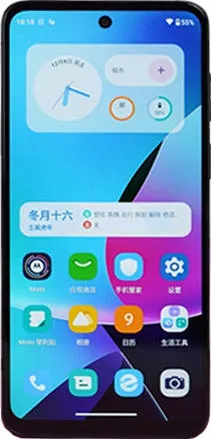
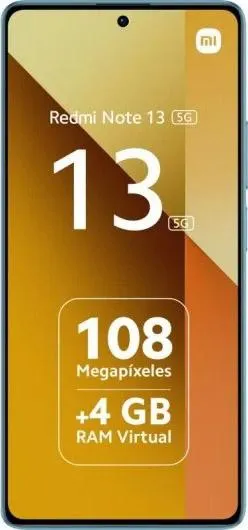
Motorola Moto G53 vs. Xiaomi Redmi Note 13: A Comparative Analysis
Let's dive into a detailed comparison of the Motorola Moto G53 and the Xiaomi Redmi Note 13, dissecting their specifications and uncovering what they truly offer in terms of real-world performance.
1. Specifications Breakdown
| Feature | Motorola Moto G53 | Xiaomi Redmi Note 13 | Real-World Implications |
|---|---|---|---|
| Design | |||
| Dimensions (mm) | 162.7 x 74.7 x 8.2 | 161.1 x 75 x 7.6 | Redmi Note 13 is slightly more compact and thinner. |
| Weight (g) | 183 | 174.5 | Redmi Note 13 is noticeably lighter, improving one-handed use. |
| Display | |||
| Type | IPS LCD, 120Hz | AMOLED, 120Hz | Redmi Note 13 offers deeper blacks, vibrant colors, and potentially better power efficiency. |
| Size | 6.5" | 6.67" | Redmi Note 13 has a slightly larger screen. |
| Resolution | 720 x 1600 | 1080 x 2400 | Redmi Note 13 boasts significantly sharper visuals due to higher resolution (395 ppi vs. 270 ppi). |
| Performance | |||
| Chipset | Snapdragon 480+ 5G | Dimensity 6080 | Redmi Note 13 likely offers better CPU and GPU performance, leading to smoother multitasking and gaming. |
| CPU | Octa-core (2x2.2 GHz & 6x1.8 GHz) | Octa-core (2x2.4 GHz & 6x2.0 GHz) | Redmi Note 13's faster clock speeds suggest improved responsiveness. |
| RAM | 4/6/8GB | 6/8/12GB | Redmi Note 13 offers configurations with more RAM, beneficial for heavy multitasking. |
| Camera | |||
| Main | 50MP | 108MP | Redmi Note 13's higher resolution main camera potentially captures more detail. |
| Front | 8MP | 16MP | Redmi Note 13 has a higher resolution selfie camera. |
| Battery Life | |||
| Capacity | 5000 mAh | 5000 mAh | Similar battery capacities suggest comparable battery life, although real-world usage can vary. |
| Other | |||
| OS | Android 13 | Android 13 | Both run on the latest Android version. |
| Price Range | Medium | Low | Redmi Note 13 offers better value for its specifications. |
2. Key Insights
The Redmi Note 13 significantly outperforms the Moto G53 in display and performance, thanks to its AMOLED screen, higher resolution, and a more powerful processor. While both phones offer 5G connectivity and similar battery capacities, the Redmi Note 13's faster processor could potentially translate to slightly better battery efficiency in certain tasks. The Moto G53's main advantage lies in its cleaner software experience, with Motorola traditionally offering a near-stock Android experience with minimal bloatware.
3. User Profiles and Recommendations
- Moto G53: This phone is best suited for budget-conscious users who prioritize a clean Android experience and reliable 5G connectivity. It's ideal for casual users primarily focused on communication, web browsing, and light media consumption.
- Redmi Note 13: This phone caters to users seeking a more powerful and feature-rich device without breaking the bank. Its superior display, performance, and camera make it a compelling option for mobile gaming, photography enthusiasts, and those who consume a lot of media on their phones.
4. Buying Decision Framework
- What is your budget? The Redmi Note 13 offers significantly better value in the "low price" segment compared to the Moto G53 in the "medium price" range.
- What are your primary phone usage patterns? For casual use, the Moto G53 suffices. For demanding tasks like gaming or photography, the Redmi Note 13 is the clear winner.
- How important is display quality? If you value vibrant colors and deep blacks, the Redmi Note 13's AMOLED display is a must-have.
My Choice: I would choose the Xiaomi Redmi Note 13. The superior display, significantly better performance from the Dimensity 6080, and higher resolution cameras make it a much more compelling device for my needs. While I appreciate Motorola's clean software approach, the Redmi Note 13's advantages in key areas like display and performance outweigh that benefit, especially considering its lower price point. The improved sharpness of the display and the smoother performance offered by the Redmi Note 13 would greatly enhance my daily user experience. I am willing to adapt to MIUI in exchange for the significant hardware upgrades.
