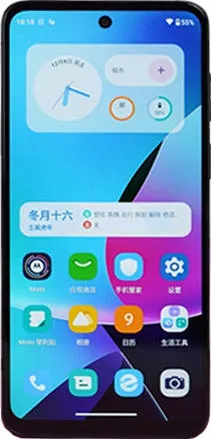
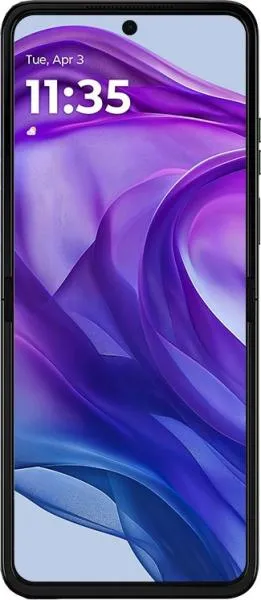
Motorola Moto G53 vs. Motorola Razr 50 Ultra: A Deep Dive
Let's dissect the Motorola Moto G53 and the Motorola Razr 50 Ultra, two phones occupying different niches within Motorola's lineup. We'll go beyond the spec sheet to understand what these numbers mean for you, the user.
1. Specifications Breakdown
| Feature | Motorola Moto G53 | Motorola Razr 50 Ultra | Real-World Implications |
|---|---|---|---|
| Design | |||
| Dimensions (mm) | 162.7 x 74.7 x 8.2 | 171.4 x 74 x 7.1 | Razr 50 Ultra is significantly more compact when folded, making it incredibly pocketable despite its larger unfolded size. |
| Weight (g) | 183 | 189 | Negligible difference in weight; both are comfortable for daily use. |
| Foldable | No | Yes | Razr offers a unique form factor, transforming from a compact device to a full-sized smartphone. |
| Display | |||
| Size (inches) | 6.5 | 6.9 | Razr offers a more immersive viewing experience when unfolded. |
| Resolution (px) | 720 x 1600 | 1080 x 2640 | Razr boasts much sharper visuals due to its higher resolution and pixel density. |
| Display Type | IPS LCD, 120Hz | Foldable LTPO AMOLED, 1B colors, Dolby Vision, 165Hz, HDR10+ | Razr's AMOLED delivers superior contrast, vibrant colors, and smoother animations thanks to the higher refresh rate and LTPO. |
| Performance | |||
| Chipset | Snapdragon 480+ 5G | Snapdragon 8s Gen 3 | Razr significantly outperforms the G53 in demanding tasks, gaming, and multitasking due to its flagship-level processor. |
| CPU | Octa-core (2.2 GHz) | Octa-core (3.0 GHz) | Razr's higher clock speeds translate to faster app launches, smoother performance, and better responsiveness. |
| RAM (GB) | 4/6/8 | 12 | Razr's ample RAM allows for seamless multitasking and effortless switching between apps. |
| Camera | |||
| Main Camera (MP) | 50 | 50 | While both have 50MP sensors, the Razr likely utilizes a superior sensor and image processing for better image quality. |
| Selfie Camera (MP) | 8 | 32 | Razr offers a much higher resolution selfie camera for sharper and more detailed self-portraits. |
| Battery Life | |||
| Capacity (mAh) | 5000 | 4000 | G53's larger battery likely provides longer battery life, while the Razr's power-hungry display and processor consume more power. |
2. Key Insights
- Performance: The Razr 50 Ultra is a clear winner in terms of performance, thanks to its flagship Snapdragon 8s Gen 3 processor and ample RAM. The G53, with its Snapdragon 480+, is geared towards everyday tasks and lighter usage.
- Display: The Razr's foldable AMOLED display offers a stunning visual experience with vibrant colors, deep blacks, and a high refresh rate. The G53's LCD panel is functional but lacks the vibrancy and smoothness of the Razr.
- Form Factor: The Razr's unique folding design makes it incredibly compact when closed, fitting easily into pockets. The G53 is a more traditional slab-style phone.
- Battery: While the G53 has a larger battery capacity, the Razr's more demanding hardware might result in comparable real-world battery life.
3. User Profiles and Recommendations
- Moto G53: Ideal for budget-conscious users who prioritize battery life and reliable performance for everyday tasks like browsing, social media, and communication.
- Razr 50 Ultra: Perfect for users who value cutting-edge technology, a unique form factor, and top-tier performance for demanding tasks, gaming, and multimedia consumption. The foldable design is a statement piece.
4. Buying Decision Framework
- What is your budget? The G53 is significantly more affordable than the Razr 50 Ultra.
- What level of performance do you need? For basic tasks, the G53 suffices. For demanding applications and gaming, the Razr is the better choice.
- How important is portability and a unique design? The Razr's foldable design offers unparalleled portability and a futuristic aesthetic.
My Choice: The Motorola Razr 50 Ultra
While the Moto G53 represents excellent value, I would choose the Razr 50 Ultra. The foldable form factor is genuinely innovative, solving the age-old problem of large screen sizes hindering pocketability. As a tech enthusiast, I appreciate pushing boundaries, and the Razr embodies that. The powerful processor, stunning display, and unique design outweigh the battery life trade-off and higher price for my personal needs. I'm willing to sacrifice some battery life for the sheer innovation and powerful performance the Razr 50 Ultra offers. It's a device that sparks conversation and delivers a premium mobile experience.
