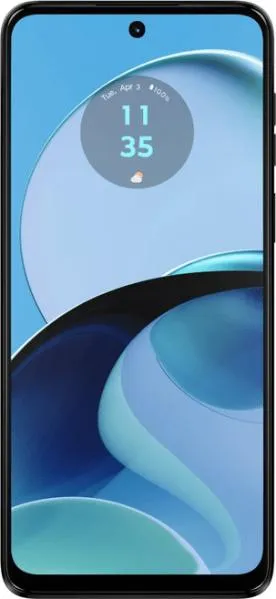
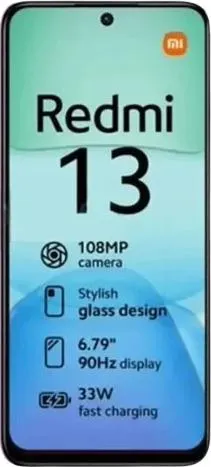
1. Specifications Comparison
| Feature | Motorola Moto G14 | Xiaomi Redmi 13 | Practical Impact |
|---|---|---|---|
| Design | |||
| Dimensions (mm) | 161.5 x 73.8 x 8 | 168.6 x 76.3 x 8.3 | Redmi 13 is noticeably larger and slightly thicker. Moto G14 might be more comfortable for one-handed use and pocketability. |
| Weight (g) | 177 | 205 | Redmi 13 is significantly heavier, potentially leading to fatigue during extended use. |
| Build Materials | Not specified | Not specified | Cannot compare build quality and durability without material information. |
| Display | |||
| Size (inches) | 6.5 | 6.79 | Redmi 13 offers a larger screen for more immersive media consumption and multitasking. |
| Type | IPS LCD | IPS LCD | Both use LCD technology, expecting similar color accuracy and viewing angles. |
| Resolution | 1080 x 2400 | 1080 x 2460 | Virtually identical resolutions; sharpness will be comparable on both devices. |
| Refresh Rate (Hz) | Not specified | 90 | Redmi 13's 90Hz refresh rate will provide smoother scrolling and animations, resulting in a more fluid user experience. |
| Peak Brightness (nits) | Not specified | 550 (HBM) | Redmi 13's specified peak brightness ensures better visibility in direct sunlight. We lack data for the Moto G14 to compare. |
| Performance | |||
| Chipset | Unisoc Tiger T616 (12 nm) | Mediatek Helio G91 Ultra (12 nm) | Both chipsets are aimed at budget devices; performance differences might be subtle in everyday tasks. Benchmarks are needed for definitive comparison. |
| CPU | Octa-core (2x2.0 GHz Cortex-A75 & 6x1.8 GHz Cortex-A55) | Octa-core (2x2.0 GHz Cortex-A75 & 6x1.8 GHz Cortex-A55) | Identical CPU configurations suggest similar processing power. |
| GPU | Mali-G57 MP1 | Mali-G52 MC2 | Different GPUs; performance differences in gaming and graphics-intensive tasks are likely. Further investigation required. |
| RAM | 8GB | 8GB | Equal RAM capacity should provide similar multitasking capabilities. |
| Storage | 256GB | 256GB | Both offer the same storage capacity. |
| Battery | |||
| Capacity (mAh) | 5000 | 5030 | Negligible difference in battery capacity. Real-world battery life will depend on software optimization and usage patterns. |
| Other | |||
| OS | Android 13 | Android 14 | Redmi 13 ships with a newer Android version, offering potential features and security updates not available on the Moto G14. |
| Sensors | accelerometer, gyro, proximity, Fingerprint (side-mounted) | accelerometer, compass, Fingerprint (side-mounted) | Moto G14 has a gyroscope sensor, beneficial for certain apps and games requiring motion sensing. Redmi 13 includes a compass. |
2. Key Differences Analysis
Redmi 13 Advantages:
- Higher Refresh Rate Display: Smoother and more responsive user experience.
- Larger Display: More immersive media consumption.
- Newer OS: Access to latest Android features and security updates.
- Higher Specified Brightness: Better outdoor visibility.
Moto G14 Advantages:
- Lighter and More Compact: Easier to handle and carry.
- Gyroscope Sensor: Enhanced gaming and motion-sensing applications.
Trade-offs:
- Redmi 13: Larger size and weight might be less comfortable for some users.
- Moto G14: Lower refresh rate may feel less fluid compared to the Redmi 13. Lack of specified brightness leaves outdoor visibility uncertain.
3. User Profiles & Recommendations
Moto G14: Users prioritizing one-handed usability, portability, and budget-conscious buyers who don't heavily engage in media consumption or gaming.
Redmi 13: Users who prioritize a large, smooth display for media consumption, gaming, and multitasking, and value having the latest Android features.
4. Decision Framework
Key Questions:
- How important is screen size and refresh rate?
- Do you prioritize one-handed usability and portability?
- What is your budget and how important is the latest software?
My Choice: Xiaomi Redmi 13
While the Moto G14 offers a more compact design, the Redmi 13's 90Hz display, larger screen, and newer Android OS are significant advantages for my personal use. I prioritize a fluid user experience and enjoy media consumption on my phone. The slightly larger size and weight are acceptable trade-offs for these benefits. The confirmed higher brightness is also a plus for outdoor use. While lacking specific benchmark data for the processors and GPUs, the everyday performance difference is likely to be minimal, making the user experience improvements of the Redmi 13 the deciding factor. The uncertainty around the Moto G14's display brightness and refresh rate further reinforces my choice.
