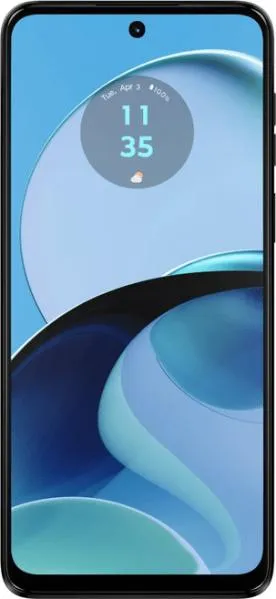

1. Specifications Comparison
| Feature | Motorola Moto G14 | Samsung Galaxy M35 | Practical Impact |
|---|---|---|---|
| Design | |||
| Dimensions | 161.5 x 73.8 x 8 mm | 162.3 x 78.6 x 9.1 mm | The Galaxy M35 is slightly larger and thicker. |
| Weight | 177 g | 222 g | The Moto G14 is noticeably lighter, making it more comfortable for extended use. |
| Display | |||
| Size | 6.5" | 6.6" | Negligible difference in screen real estate. |
| Type | IPS LCD | Super AMOLED | The Galaxy M35's AMOLED display offers richer colors, deeper blacks, and better power efficiency. |
| Resolution | 1080 x 2400 | 1080 x 2340 | Virtually identical pixel density, resulting in similar sharpness. |
| Refresh Rate | Not specified | 120 Hz | The 120Hz refresh rate on the M35 will provide a significantly smoother and more responsive user experience, especially for gaming and scrolling. |
| Brightness (Peak) | Not specified | 1000 nits (HBM) | The M35's higher peak brightness will ensure better visibility in direct sunlight. The lack of data for the G14 prevents a complete comparison. |
| Performance | |||
| Chipset | Unisoc Tiger T616 (12 nm) | Exynos 1380 (5 nm) | The Exynos 1380, built on a smaller process node, should offer significantly better performance and power efficiency compared to the Unisoc T616. |
| CPU | Octa-core (2x2.0 GHz Cortex-A75 & 6x1.8 GHz Cortex-A55) | Octa-core (4x2.4 GHz Cortex-A78 & 4x2.0 GHz Cortex-A55) | The M35 has faster and more powerful CPU cores, leading to smoother multitasking and app performance. |
| GPU | Mali-G57 MP1 | Mali-G68 MP5 | The M35's GPU is significantly more powerful, enabling better gaming performance and smoother graphics rendering. |
| RAM | 8GB | 8GB | Both phones have the same amount of RAM. |
| Storage | 256GB | 256GB | Both phones offer the same storage capacity. |
| Camera | |||
| Video Capabilities | 1080p@30fps | 4K@30fps, 1080p@60fps, 720p@480fps (all with EIS) | The Galaxy M35 offers significantly better video recording capabilities, including 4K resolution, higher frame rates, and Electronic Image Stabilization (EIS). Lack of detailed camera specs limits further analysis. |
| Battery | |||
| Capacity | 5000 mAh | 6000 mAh | The Galaxy M35 boasts a larger battery capacity, potentially translating to longer battery life. |
| Other | |||
| OS | Android 13 | Android 14 | The M35 ships with a newer version of Android, potentially offering more features and longer software support. |
| USB | USB Type-C 2.0 | USB Type-C 2.0, OTG | The M35 supports On-The-Go (OTG) for connecting peripherals like flash drives. |
2. Key Differences Analysis
Motorola Moto G14 Advantages:
- Lighter and potentially more affordable: Its lower weight enhances one-handed usability and portability. Belonging to a lower price range makes it potentially more budget-friendly.
Samsung Galaxy M35 Advantages:
- Superior Performance: The Exynos 1380 chipset and more powerful GPU provide a significantly smoother and faster user experience.
- Better Display: The AMOLED display with a 120Hz refresh rate offers vibrant colors, deep blacks, and fluid animations.
- Enhanced Camera: The capability to record 4K video and higher frame rates makes it a better choice for content creation.
- Larger Battery: The 6000mAh battery potentially provides longer usage time.
- Newer OS: Android 14 may offer features and security updates not available on Android 13.
Trade-offs:
- The Galaxy M35's superior performance and features come at the cost of a higher price and a heavier, slightly larger device. The Moto G14 prioritizes affordability and portability over cutting-edge performance.
3. User Profiles & Recommendations
Motorola Moto G14: Budget-conscious users who prioritize basic functionality, lightweight design, and affordability. Suitable for:
- Casual users primarily focused on calling, texting, and light web browsing.
- Users seeking a secondary phone.
- Students or seniors on a budget.
Samsung Galaxy M35: Users who demand smooth performance, a vibrant display, a capable camera, and long battery life. Suitable for:
- Mobile gamers.
- Content creators who shoot photos and videos.
- Users who consume a lot of media on their phones.
- Users who multitask heavily.
4. Decision Framework
Key Questions for Buyers:
- What is your budget? The Moto G14 is expected to be significantly more affordable.
- What are your primary phone usage patterns? Casual users may find the Moto G14 sufficient, while power users will appreciate the M35's performance.
- Do you prioritize portability and comfort or performance and features? The G14 is lighter and easier to handle, while the M35 offers a more premium experience.
My Choice: Samsung Galaxy M35
While the Motorola Moto G14 offers excellent value for its anticipated price, the Samsung Galaxy M35 is the superior device overall. The significantly faster processor, smoother 120Hz AMOLED display, enhanced camera capabilities, and larger battery make it a more compelling choice for my needs. I prioritize a fluid user experience, long battery life, and a great display, and I'm willing to pay a premium for these features. The slightly larger size and weight are acceptable trade-offs for the substantial performance gains. The newer Android OS also suggests longer-term software support, which is a crucial factor in my decision.
