1. Specifications Comparison
| Feature | Motorola Moto G14 | Samsung Galaxy M15 | Practical Impact |
|---|---|---|---|
| Design | |||
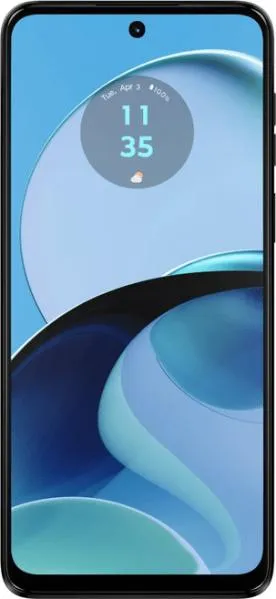
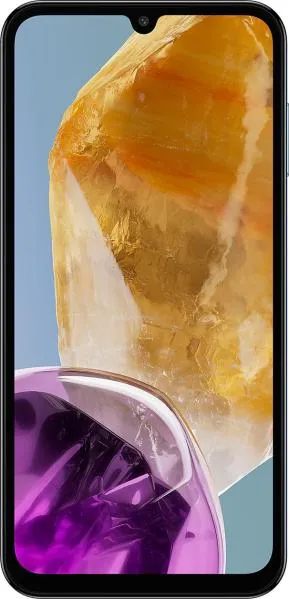
| Dimensions | 161.5 x 73.8 x 8 mm | 160.1 x 76.8 x 9.3 mm | The Moto G14 is noticeably thinner and slightly shorter. The Galaxy M15 is wider. |
| Weight | 177g | 217g | The Moto G14 is significantly lighter, making it more comfortable for extended use. |
| Build Materials | Not specified | Not specified | Cannot compare build quality and durability without more information. |
| Display | |||
| Display Type | IPS LCD | Super AMOLED, 90Hz | The Galaxy M15's Super AMOLED display offers richer colors, deeper blacks, and better power efficiency. Its 90Hz refresh rate provides a smoother user experience for scrolling and gaming. |
| Size | 6.5" | 6.5" | Same screen size. |
| Resolution | 1080 x 2400 | 1080 x 2340 | Virtually identical resolutions, resulting in similar sharpness. |
| Refresh Rate | Not specified | 90Hz | The 90Hz refresh rate on the Galaxy M15 provides smoother scrolling and animations. |
| Peak Brightness | Not specified | 800 nits (HBM) | The Galaxy M15's higher peak brightness (800 nits) ensures better visibility in direct sunlight. We lack data for the Moto G14. |
| Performance | |||
| Chipset | Unisoc Tiger T616 (12nm) | Mediatek Dimensity 6100+ (6nm) | The Dimensity 6100+ in the Galaxy M15, built on a smaller process node (6nm vs 12nm), should offer better performance and power efficiency compared to the Unisoc T616. |
| CPU | Octa-core (2x2.0 GHz Cortex-A75 & 6x1.8 GHz Cortex-A55) | Octa-core (2x2.2 GHz Cortex-A76 & 6x2.0 GHz Cortex-A55) | The Galaxy M15 boasts newer and faster CPU cores (Cortex-A76 vs A75), promising a performance advantage. |
| GPU | Mali-G57 MP1 | Mali-G57 MC2 | The Galaxy M15 likely has a slightly more powerful GPU due to the "MC2" designation, potentially offering better gaming performance. Further benchmarks are needed to confirm. |
| RAM | 8GB | 6GB | More RAM in the Moto G14 can contribute to smoother multitasking, though the Galaxy M15's superior processor might offset this difference. |
| Storage | 256 GB | 128 GB | Double the storage on the Moto G14 allows for storing more files and apps. |
| Battery | |||
| Capacity | 5000 mAh | 6000 mAh | Significantly larger battery in the Galaxy M15 should translate to longer battery life. |
| Other | |||
| OS | Android 13 | Android 14 | The Galaxy M15 ships with a newer Android version, offering potential feature and security advantages. |
| Price Range | Low | Medium | The Moto G14 is expected to be more affordable. |
2. Key Differences Analysis
Motorola Moto G14 Advantages:
- Lighter and Thinner: More comfortable for one-handed use and carrying.
- Larger Storage: More space for apps, photos, and videos.
- Lower Price: Better value for budget-conscious buyers.
Samsung Galaxy M15 Advantages:
- Superior Display: AMOLED technology with a 90Hz refresh rate offers a more vibrant and smoother visual experience.
- More Powerful Processor: Faster performance for demanding tasks and gaming.
- Larger Battery: Longer battery life for extended usage.
- Newer Android Version: Access to the latest features and security updates.
3. User Profiles & Recommendations
Moto G14: Ideal for budget-conscious users prioritizing affordability, a lightweight design, and ample storage. Suitable for everyday tasks like browsing, social media, and light gaming.
Galaxy M15: Best suited for users who value a premium display, smooth performance, and long battery life. A good choice for multimedia consumption, mobile gaming, and demanding applications.
4. Decision Framework
Key Questions for Buyers:
- What is your budget? The Moto G14 is a budget-friendly option, while the Galaxy M15 sits in the mid-range.
- What are your performance needs? For demanding tasks and gaming, the Galaxy M15's superior processor is preferable.
- How important is display quality? The Galaxy M15's AMOLED display with a 90Hz refresh rate offers a significantly better visual experience.
My Choice: Samsung Galaxy M15
While the Moto G14 offers excellent value for its price, the Samsung Galaxy M15's superior display, more powerful processor, larger battery, and newer Android version make it a more compelling overall package for me. The benefits of a smoother, more vibrant display, longer battery life, and improved performance outweigh the price difference and larger storage capacity of the Moto G14 in my personal use case. I prioritize a fluid and responsive user experience, and the Galaxy M15 delivers on that front. The lighter weight of the G14 is tempting, but the overall performance and feature set of the M15 are more important to me.
