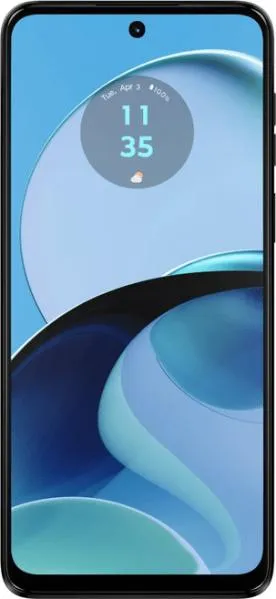
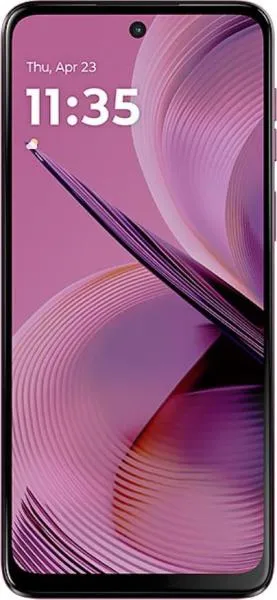
1. Specifications Comparison
| Feature | Motorola Moto G14 | Motorola Moto G55 | Practical Impact |
|---|---|---|---|
| Design | |||
| Dimensions | 161.5 x 73.8 x 8 mm | 161.6 x 73.8 x 8.1 mm | Virtually identical in size and feel. |
| Weight | 177g | 179g | Negligible weight difference. |
| Display | |||
| Size | 6.5" | 6.49" | Negligible size difference. |
| Type | IPS LCD | IPS LCD | Similar display technology, expect comparable color accuracy and viewing angles. |
| Resolution | 1080 x 2400 | 1080 x 2400 | Identical resolution, resulting in similar sharpness. |
| Refresh Rate | Not specified | 120Hz | Significant difference: The Moto G55's 120Hz refresh rate will provide a much smoother and more responsive user experience, especially noticeable in scrolling and gaming. |
| Peak Brightness | Not specified | Not specified | Cannot compare without data. |
| Performance | |||
| Chipset | Unisoc Tiger T616 (12 nm) | Mediatek Dimensity 7025 (6 nm) | The 6nm process in the G55 suggests better power efficiency and potentially better performance than the 12nm T616. |
| CPU | Octa-core (2x2.0 GHz Cortex-A75 & 6x1.8 GHz Cortex-A55) | Octa-core (2x2.5 GHz Cortex-A78 & 6x2.0 GHz Cortex-A55) | The G55 has faster and more modern CPU cores (Cortex-A78 vs A75), leading to significantly improved performance in demanding tasks and multitasking. |
| GPU | Mali-G57 MP1 | IMG BXM-8-256 | Difficult to compare directly without benchmarks. Expect the G55 to handle graphics better due to the overall more powerful chipset. |
| RAM | 8GB | 8GB | Same RAM capacity, multitasking performance should be similar, though the G55's superior CPU might provide a slight edge. |
| Storage | 256GB | 256GB | Identical storage capacity. |
| Battery | |||
| Capacity | 5000 mAh | 5000 mAh | Identical battery capacity. However, real-world battery life will depend on factors like software optimization and display refresh rate (G55's 120Hz may consume more power). |
| Software | |||
| OS | Android 13 | Android 14 | G55 comes with the latest Android version, offering potential new features and longer software support. |
| Other | |||
| NFC | Yes | Yes | Both support contactless payments. |
| USB | USB Type-C 2.0 | USB Type-C 2.0 | Same data transfer speeds. |
| Sensors | accelerometer, gyro, proximity, Fingerprint (side-mounted) | accelerometer, gyro, proximity, compass, Fingerprint (side-mounted) | G55 adds a compass, a minor addition for navigation. |
| Video Capabilities | 1080p@30fps | 1080p@30fps, 1080p@60fps | G55 can record smoother 60fps video. |
2. Key Differences Analysis
Moto G55 Advantages:
- Significantly smoother display: The 120Hz refresh rate is a major differentiator, making everyday interactions feel more fluid.
- More powerful processor: The Dimensity 7025 offers a noticeable performance boost for demanding tasks and multitasking.
- More recent software: Android 14 provides newer features and potentially longer software updates.
- Smoother video recording: Capability to record at 60fps provides higher quality video.
Moto G14 Advantages:
- Potentially lower price: Belonging to a lower price range, the G14 offers better value if budget is a primary concern.
Trade-offs:
- G55: Higher price for improved performance and features. The 120Hz display may impact battery life.
- G14: Lower performance and fewer features for a lower price.
3. User Profiles & Recommendations
Moto G14: Ideal for budget-conscious users who prioritize basic smartphone functionality - calling, texting, social media, and light web browsing. Not recommended for gamers or power users.
Moto G55: Suitable for users who want a smooth and responsive experience, play mobile games occasionally, and value having the latest software. Good for those who prioritize display quality and performance but are still price-sensitive.
4. Decision Framework
Key Questions:
- What is your budget? The G14 is a budget option, while the G55 sits in the mid-range.
- How important is performance and a smooth display? The G55 significantly outperforms the G14 in these areas.
- How long do you plan to keep your phone? The G55 with Android 14 likely offers longer software support.
Scenario-based Recommendations:
- Tight Budget: Moto G14
- Balanced needs and price: Moto G55
- Prioritize Performance and Latest Features: Moto G55
My Choice: Motorola Moto G55
While the Moto G14 offers a lower price point, the Moto G55's superior performance, smoother 120Hz display, and newer Android version make it a much more compelling device overall. The difference in chipset and refresh rate significantly impacts daily usage, offering a vastly improved user experience. The slightly higher price is a worthwhile investment for the long-term benefits of smoother performance, longer software support, and better future-proofing. The improved video recording capabilities are also a welcome addition. Unless budget is extremely tight, the G55 offers significantly more value.
