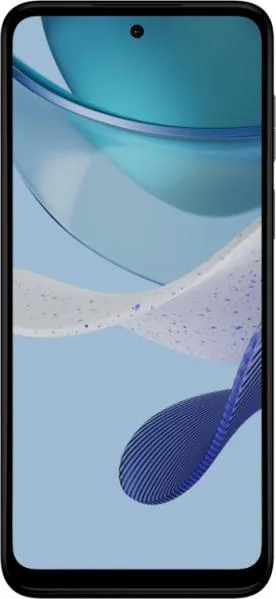

1. Specifications Comparison
| Feature | Motorola Moto G (2023) | ZTE nubia Z50S Pro | Practical Impact |
|---|---|---|---|
| Design | |||
| Dimensions (mm) | 164 x 75 x 8.4 | 163.9 x 76.3 x 8.3 | Z50S Pro is slightly shorter and wider, negligible difference in thickness. |
| Weight (g) | 189 | 228 | Moto G is significantly lighter, more comfortable for extended use. |
| Build Material | Not specified | Not specified | Cannot compare build quality and durability. |
| Display | |||
| Display Type | IPS LCD, 120Hz | AMOLED, 1B colors, 120Hz | Z50S Pro offers superior contrast, deeper blacks, and potentially brighter display due to AMOLED technology. Both have smooth scrolling thanks to 120Hz. |
| Size (inches) | 6.5 | 6.8 | Z50S Pro has a slightly larger screen, providing more immersive content consumption. |
| Resolution | 720 x 1600 | 1260 x 2800 | Z50S Pro boasts much higher resolution, resulting in sharper text and images. |
| Pixel Density (PPI) | 270 | 452 | Significantly sharper visuals on the Z50S Pro. |
| Performance | |||
| Chipset | Snapdragon 480+ 5G | Snapdragon 8+ Gen 2 | Z50S Pro provides significantly faster processing speeds, smoother multitasking, and better gaming performance. |
| CPU | Octa-core (2x2.2 GHz & 6x1.8 GHz) | Octa-core (1x3.36 GHz & 2x2.8 GHz & 2x2.8 GHz & 3x2.0 GHz) | Z50S Pro has a much more powerful CPU architecture. |
| GPU | Adreno 619 | Adreno 740 | Z50S Pro offers dramatically better graphics performance for demanding games and applications. |
| RAM | 4GB | 12GB | Z50S Pro allows for much more efficient multitasking and smoother operation of demanding apps. |
| Camera | |||
| Main Camera | 48MP | 54MP, Sony IMX800 sensor | Z50S Pro likely offers better image quality due to a larger sensor and potentially better processing. |
| Additional Cameras | 2MP Macro, 8MP Selfie | 8MP Telephoto, 50MP Wide Angle, 16MP Selfie | Z50S Pro provides significantly more versatile camera options with telephoto and wide-angle lenses. |
| Video Recording | 1080p@30fps | Up to 8K@30fps | Z50S Pro offers significantly higher resolution video recording capabilities. |
| Battery | |||
| Capacity | 5000 mAh | 5100 mAh | Negligible difference in battery capacity. Real-world battery life will depend on usage and optimization. |
| Charging Speed | Not specified | Not specified | Cannot compare charging speeds. |
2. Key Differences Analysis
Motorola Moto G (2023) Advantages:
- Lighter and More Affordable: Significantly lighter and less expensive, making it ideal for budget-conscious buyers.
ZTE nubia Z50S Pro Advantages:
- Superior Performance: Flagship-level processor and ample RAM offer a dramatically smoother and faster user experience.
- High-Quality Display: AMOLED display with a higher resolution and pixel density delivers vibrant colors and sharper visuals.
- Versatile Camera System: Includes telephoto and wide-angle lenses for a broader range of photography options.
- Enhanced Connectivity: Supports newer Wi-Fi standards (Wi-Fi 7) and NFC for mobile payments and device pairing.
3. User Profiles & Recommendations
Motorola Moto G (2023):
- Ideal User: Budget-conscious users who prioritize basic functionality (calling, texting, web browsing) and a lightweight design.
- Use Cases: Casual use, light gaming, social media browsing.
ZTE nubia Z50S Pro:
- Ideal User: Power users, gamers, photography enthusiasts, and those seeking a premium smartphone experience.
- Use Cases: Demanding mobile gaming, professional photography, video editing, multitasking.
4. Decision Framework
Key Questions for Buyers:
- What is your budget? The Moto G (2023) is a budget-friendly option, while the Z50S Pro is a premium device.
- What are your primary smartphone needs? Basic functionality vs. high performance and advanced features.
- Do you prioritize specific features? Consider camera quality, display quality, battery life, and processing power.
Scenario-Based Recommendations:
- Limited Budget: Moto G (2023)
- Best Performance: ZTE nubia Z50S Pro
- Best Camera System: ZTE nubia Z50S Pro
My Choice: ZTE nubia Z50S Pro
While the Motorola Moto G (2023) offers excellent value for its price, I would choose the ZTE nubia Z50S Pro. The significantly improved performance, superior display, versatile camera system, and future-proof connectivity outweigh the higher price and increased weight. The Snapdragon 8+ Gen 2, coupled with 12GB of RAM, ensures a smooth and responsive experience for years to come. The AMOLED display and advanced camera features cater to my preference for high-quality visuals and creative photography. Although heavier, the overall package offered by the Z50S Pro aligns better with my needs as a power user.
