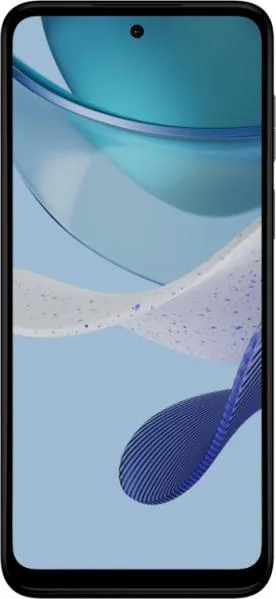

1. Specifications Comparison
| Feature | Motorola Moto G (2023) | Xiaomi Redmi Note 13 Pro+ | Practical Impact |
|---|---|---|---|
| Design | |||
| Dimensions (mm) | 164 x 75 x 8.4 | 161.4 x 74.2 x 8.9 | Redmi is slightly shorter, narrower, but thicker. Negligible difference in hand feel. |
| Weight (g) | 189 | 199 | Redmi is slightly heavier, but the difference is minimal. |
| Build | Not specified | Not specified | Build quality cannot be compared without further information. |
| Display | |||
| Display Type | IPS LCD, 120Hz | AMOLED, 120Hz, Dolby Vision, HDR10+ | Redmi offers significantly better contrast, colors, and peak brightness due to AMOLED technology and HDR support. Moto G's 120Hz refresh rate makes both phones feel smooth. |
| Size (inches) | 6.5 | 6.67 | Redmi has a slightly larger screen. |
| Resolution | 720 x 1600 | 1220 x 2712 | Redmi has a much sharper display with significantly higher pixel density (446 ppi vs 270 ppi). Images and text will be crisper on the Redmi. |
| Performance | |||
| Chipset | Snapdragon 480+ 5G (8 nm) | Dimensity 7200 Ultra (4 nm) | Redmi's Dimensity chip offers significantly better performance and efficiency due to its more advanced architecture and manufacturing process. |
| CPU | Octa-core (2x2.2 GHz Kryo 460 & 6x1.8 GHz Kryo 460) | Octa-core (2x2.8 GHz Cortex-A715 & 6x2.0 GHz Cortex-A510) | Redmi has a more powerful CPU, resulting in faster app loading, smoother multitasking, and better gaming performance. |
| GPU | Adreno 619 | Mali-G610 MC4 | Redmi boasts a more powerful GPU, enabling smoother gaming and graphics-intensive tasks. |
| RAM | 4GB | 8GB/12GB/16GB | Redmi offers significantly more RAM, leading to superior multitasking capabilities and less frequent app reloading. |
| Camera | |||
| Main Camera | 48MP, f/1.7 | 200MP, f/1.65, OIS | Redmi has a much higher resolution sensor with OIS, likely resulting in significantly better detail, low-light performance, and video stabilization. |
| Video Recording | 1080p@30fps | 4K@30fps with EIS | Redmi offers much higher resolution video recording with electronic image stabilization. |
| Battery | |||
| Capacity (mAh) | 5000 | 5000 | Similar battery capacity, but Redmi's more efficient chip might result in longer battery life. |
2. Key Differences Analysis
Motorola Moto G (2023) Advantages:
- Potentially Lower Price: Likely more affordable than the Redmi Note 13 Pro+.
Xiaomi Redmi Note 13 Pro+ Advantages:
- Significantly Superior Display: Brighter, sharper, more vibrant AMOLED with HDR support.
- Much Better Performance: Faster processor, more powerful GPU, and more RAM for smoother multitasking and gaming.
- Superior Camera System: Higher resolution main sensor with OIS, capable of 4K video recording.
- More Advanced Features: NFC for mobile payments.
Trade-offs:
- Price: The Redmi Note 13 Pro+ comes at a higher price for its superior features.
3. User Profiles & Recommendations
Motorola Moto G (2023):
- Ideal User: Budget-conscious users who prioritize basic smartphone functionality (calling, texting, web browsing, social media) and don't demand high performance or advanced features.
- Use Cases: Casual use, light web browsing, social media, basic photography.
Xiaomi Redmi Note 13 Pro+:
- Ideal User: Users who value performance, a high-quality display, a good camera, and advanced features like NFC. Gamers, mobile photographers, and power users would appreciate this phone.
- Use Cases: Demanding mobile gaming, high-quality photography and videography, content creation, multitasking.
4. Decision Framework
Key Questions for Buyers:
- What is your budget? The Moto G is a budget-friendly option, while the Redmi Note 13 Pro+ is a mid-range device.
- What are your primary smartphone usage patterns? For basic tasks, the Moto G suffices. For demanding tasks and multimedia consumption, the Redmi is better.
- Which features are most important to you? Prioritize display quality, performance, camera, or battery life according to your needs.
My Choice: Xiaomi Redmi Note 13 Pro+
While the Motorola Moto G (2023) offers a budget-friendly option, the Xiaomi Redmi Note 13 Pro+ provides a significantly better overall experience. The superior AMOLED display, much more powerful processor and GPU, increased RAM, advanced camera system with OIS, and inclusion of NFC justify the higher price. The Redmi Note 13 Pro+ offers a future-proof device capable of handling demanding tasks and providing a premium user experience. The significant jump in performance, camera quality, and display technology make it a worthwhile investment for most users beyond those strictly seeking the absolute lowest price.
