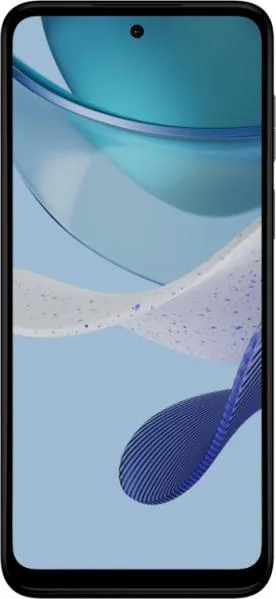
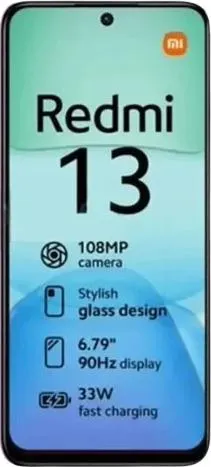
1. Specifications Comparison
| Feature | Motorola Moto G (2023) | Xiaomi Redmi 13 | Practical Impact |
|---|---|---|---|
| Design | |||
| Dimensions (mm) | 164 x 75 x 8.4 | 168.6 x 76.3 x 8.3 | Redmi 13 is slightly larger and heavier. |
| Weight (g) | 189 | 205 | Moto G (2023) is noticeably lighter for one-handed use. |
| Display | |||
| Size (inches) | 6.5 | 6.79 | Redmi 13 offers a larger screen for media consumption. |
| Resolution (px) | 720 x 1600 | 1080 x 2460 | Redmi 13 has a significantly sharper and more detailed display. |
| Refresh Rate (Hz) | 120 | 90 | Moto G (2023)'s higher refresh rate provides smoother scrolling and animations. |
| Display Type | IPS LCD | IPS LCD | Both use LCD technology, but Redmi 13's LTPS variant might offer slightly better color accuracy and power efficiency. This is not confirmed as screen brightness specs are missing for comparison. |
| Performance | |||
| Chipset | Snapdragon 480+ 5G | MediaTek Helio G91 Ultra | Redmi 13's chipset is generally considered more powerful for demanding tasks and gaming. |
| CPU | Octa-core (2x2.2 GHz & 6x1.8 GHz) | Octa-core (2x2.0 GHz & 6x1.8 GHz) | While core counts are similar, architectural differences likely favor the Redmi 13 in performance. |
| GPU | Adreno 619 | Mali-G52 MC2 | Redmi 13's GPU should offer better gaming performance. |
| RAM | 4GB | 8GB | Redmi 13 has double the RAM, enabling better multitasking and app performance. |
| Camera | |||
| Main Camera (MP) | 48 | 108 | Redmi 13 boasts a much higher resolution main camera, potentially capturing more detail. Real-world image quality depends on sensor and processing, which are not fully detailed. |
| Selfie Camera (MP) | 8 | 13 | Redmi 13 has a higher resolution selfie camera. |
| Video Recording | 1080p@30fps | 1080p@30fps | Both offer similar basic video recording capabilities. Redmi 13 specs mention 120fps slow-motion, but resolution is not specified. |
| Battery | |||
| Capacity (mAh) | 5000 | 5030 | Negligible difference in battery capacity. Real-world battery life depends on optimization and usage. |
| Other | |||
| NFC | No | Yes | Redmi 13 supports contactless payments and data transfer via NFC. |
| Price Range | Medium | Low | Redmi 13 offers significantly better value for its price. |
2. Key Differences Analysis
Motorola Moto G (2023) Advantages:
- Lighter and more compact: Easier for one-handed use and portability.
- Higher refresh rate display: Smoother user experience for scrolling and animations.
Xiaomi Redmi 13 Advantages:
- Sharper and larger display: More immersive media consumption and better viewing experience.
- Significantly more powerful: Better performance for demanding tasks and gaming.
- More RAM: Superior multitasking capabilities.
- Higher resolution cameras: Potential for more detailed photos and videos. (Dependent on unspecified sensor and processing quality).
- NFC: Enables contactless payments and data transfer.
- Lower price: Offers excellent value for its specifications.
3. User Profiles & Recommendations
Motorola Moto G (2023):
- Ideal User: Budget-conscious users prioritizing a lightweight phone for basic tasks like calling, texting, and web browsing. Users sensitive to motion smoothness will appreciate the 120Hz display.
- Use Cases: Casual social media, light web browsing, making calls, and sending texts.
Xiaomi Redmi 13:
- Ideal User: Users seeking a well-rounded phone with a large, sharp display, strong performance for gaming and multitasking, and good camera capabilities at an affordable price.
- Use Cases: Mobile gaming, media consumption (videos, photos), multitasking, photography enthusiasts on a budget.
4. Decision Framework
Key Questions for Buyers:
- What is your budget? The Redmi 13 provides significantly better value in the low price range.
- What are your primary use cases? Gaming and media consumption favor the Redmi 13, while basic tasks with a focus on portability favor the Moto G (2023).
- Is NFC important to you? If contactless payments are essential, the Redmi 13 is the only option.
My Choice: Xiaomi Redmi 13
The Redmi 13 offers a compelling combination of performance, display quality, features (like NFC), and an attractive price point. While the Moto G (2023) has its strengths in portability and a smooth display, the Redmi 13's overall package is significantly more appealing. The larger, sharper display, more powerful processor, increased RAM, and higher resolution camera make it a clear winner in terms of value and versatility. Even if ultimate portability is desired, the tradeoffs in performance and features on the Moto G (2023) are too significant given the Redmi 13's lower price.
