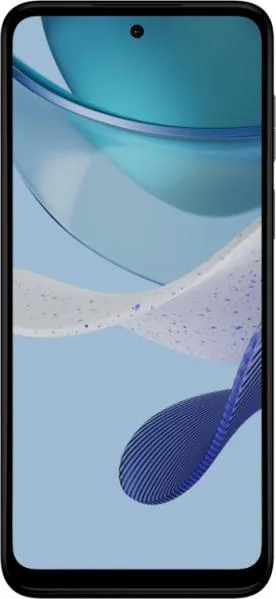

1. Specifications Comparison
| Feature | Motorola Moto G (2023) | Samsung Galaxy S24+ | Practical Impact |
|---|---|---|---|
| Design | |||
| Dimensions (mm) | 164 x 75 x 8.4 | 158.5 x 75.9 x 7.7 | S24+ is slightly smaller and thinner, potentially more pocketable. |
| Weight (g) | 189 | 196 | Negligible weight difference in real-world usage. |
| Build Materials | Not specified | Not specified | Cannot compare build quality and durability. |
| Display | |||
| Display Type | IPS LCD, 120Hz | Dynamic LTPO AMOLED 2X, 120Hz | S24+ offers significantly better contrast, colors, and outdoor visibility with its AMOLED technology. |
| Display Size (inches) | 6.5 | 6.7 | S24+ has a slightly larger screen for more immersive content consumption. |
| Resolution | 720 x 1600 | 1440 x 3120 | S24+ boasts much sharper visuals due to significantly higher resolution. |
| Peak Brightness | Not specified | 2600 nits | S24+ should offer superior readability in direct sunlight. Missing Moto G brightness limits comparison. |
| Performance | |||
| Chipset | Snapdragon 480+ 5G (8 nm) | Snapdragon 8 Gen 3 (4 nm) | S24+ will deliver significantly faster performance in demanding tasks and gaming due to a much more powerful processor. |
| CPU | Octa-core (2x2.2 GHz Kryo 460 & 6x1.8 GHz Kryo 460) | Octa-core (1x3.39 GHz Cortex-X4 & 3x3.1 GHz Cortex-A720 & 2x2.9 GHz Cortex-A720 & 2x2.2 GHz Cortex-A520) | S24+'s CPU architecture provides a substantial performance advantage. |
| GPU | Adreno 619 | Adreno 750 | S24+ offers a much more capable GPU, resulting in smoother gaming and graphics rendering. |
| RAM | 4GB | 12GB | S24+ allows for significantly better multitasking and smoother performance with more apps open. |
| Camera | |||
| Rear Camera | 48MP Main, 2MP Macro | 50MP Main, 12.2MP Ultrawide, 10MP Telephoto | S24+ provides greater versatility with its triple camera setup, including ultrawide and telephoto lenses. Superior sensor and features in the S24+ will likely result in much better image quality. |
| Front Camera | 8MP | 12MP | S24+ likely offers improved selfie quality. |
| Video Recording | 1080p@30fps | Up to 8K@30fps | S24+ offers significantly higher resolution video recording capabilities. |
| Battery | |||
| Capacity | 5000 mAh | 4900 mAh | Similar battery capacities; real-world battery life will depend on software optimization and usage patterns. |
2. Key Differences Analysis
Motorola Moto G (2023) Advantages:
- Potentially Lower Price: Positioned in the "medium price" range, it likely costs significantly less than the S24+.
Samsung Galaxy S24+ Advantages:
- Superior Performance: The Snapdragon 8 Gen 3 and 12GB RAM provide a massive performance advantage for demanding tasks and gaming.
- High-Quality Display: The Dynamic AMOLED 2X display offers vibrant colors, deep blacks, and excellent outdoor visibility.
- Versatile Camera System: The triple camera system with ultrawide and telephoto lenses allows for a wider range of photography options.
- Faster Charging & Data Transfer: USB 3.2 offers significantly faster data transfer and charging compared to USB 2.0 on the Moto G.
3. User Profiles & Recommendations
Motorola Moto G (2023): Ideal for budget-conscious users who prioritize basic communication, web browsing, and light media consumption.
Samsung Galaxy S24+: Suitable for power users, gamers, photography enthusiasts, and anyone who demands top-tier performance, display quality, and camera capabilities.
4. Decision Framework
Key Questions for Buyers:
- What is your budget? The Moto G is a budget-friendly option, while the S24+ is a premium device.
- What are your primary smartphone usage patterns? For basic tasks, the Moto G may suffice. For demanding applications, the S24+ is a better choice.
- How important are display quality, camera performance, and overall speed? The S24+ excels in these areas.
My Choice: Samsung Galaxy S24+
While the Motorola Moto G (2023) might be a decent budget option, the Samsung Galaxy S24+ is the clear winner for me. The significantly superior performance, stunning display, versatile camera system, and future-proof features justify the higher price. As someone who values a smooth and responsive user experience, high-quality visuals, and the ability to capture great photos and videos, the S24+ aligns perfectly with my needs. The Moto G's lower resolution display, less powerful processor, and limited camera capabilities would be significant compromises I'm not willing to make. Even without knowing the exact price difference, the substantial jump in quality and performance makes the S24+ the preferred choice.
